Experts Slam Taikoo Shing Traffic Proposal as Counterproductive, Propose Alternative Solutions
SingTao · 1 SOURCESabout 2 hours ago2 MIN
Summary
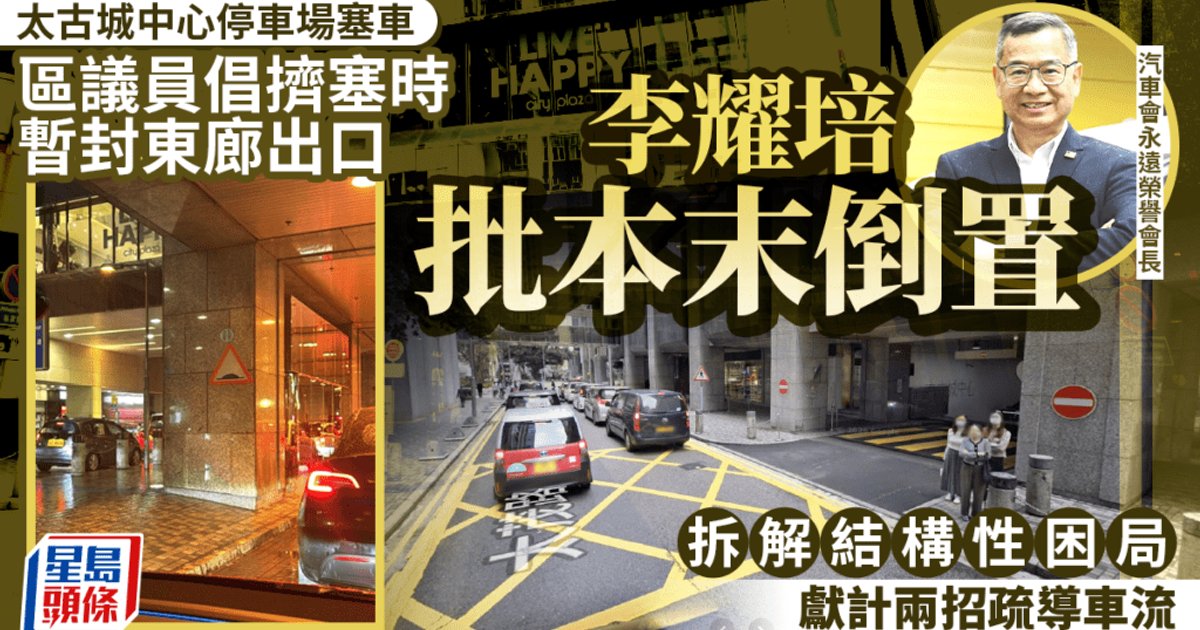
Heavy rainfall in early August triggered severe congestion at Cityplaza's carpark in Taikoo Shing, trapping numerous drivers for hours and sparking heated debate over traffic management. A district councillor's proposal to temporarily close the Eastern Harbour Crossing exit has drawn sharp criticism from automobile experts who call it counterproductive. Lee Yiu-pui, Honorary Life President of The Hong Kong Automobile Association, has identified structural design flaws and poor management practices as the root causes and proposed targeted solutions to address the issue.
Key Points
- Early August rainfall caused Cityplaza carpark congestion, leaving drivers trapped for extended periods with some still charged full parking fees despite the ordeal
- Lee Yiu-pui attributed the problem to "congenital deficiency and acquired mismanagement," noting that Taikoo Shing's roads were designed decades ago without anticipating modern vehicle volumes, featuring narrow single-lane two-way roads
- The carpark exit on B2 and B3 levels forces vehicles up a steep ramp to ground level, then across a mandatory pedestrian crossing where they must yield indefinitely, creating a critical bottleneck
- When the carpark reaches capacity, staff fail to control entry queues, causing vehicle backlogs on Taikoo Shing Road and Tai Mou Road that reverse into the carpark exit, creating a vicious cycle
- Lee condemned the Eastern Harbour Crossing closure proposal as "cutting off one's nose to spite one's face," warning it would merely transfer and worsen congestion, potentially affecting Causeway Bay
Why It Matters
This incident highlights how inadequate infrastructure planning and poor operational management can turn routine traffic into a public ordeal. Lee's proposed solutions—traffic lights at pedestrian crossings and proper queue management—offer actionable improvements that mall operators should implement rather than shifting the burden onto public roads. The debate reflects broader challenges Hong Kong faces in balancing commercial development with residential traffic needs in established neighborhoods.
This incident highlights how inadequate infrastructure planning and poor operational management can turn routine traffic into a public ordeal. Lee's proposed solutions—traffic lights at pedestrian crossings and proper queue management—offer actionable improvements that mall operators should implement rather than shifting the burden onto public roads. The debate reflects broader challenges Hong Kong faces in balancing commercial development with residential traffic needs in established neighborhoods.