Red Cross Hot Action Day: Former Observatory Chiefs Visit Subdivided Flat Residents
AM730 · 3 SOURCESabout 2 hours ago2 MIN
Summary
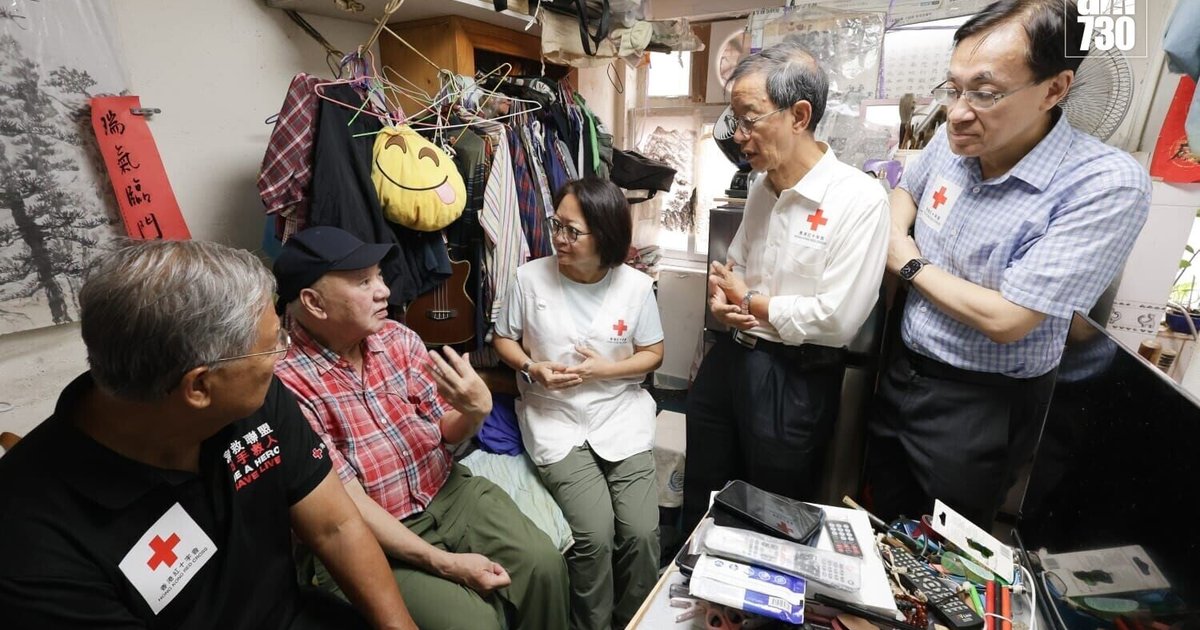
The Hong Kong Red Cross organized a Hot Action Day on Tuesday, partnering with three former Hong Kong Observatory directors to visit residents living in inadequate housing conditions in Mong Kok. Former Observatory Director Sham Chi-ming, former Director Lam Chiu-ying, and former Assistant Director Leung Wing-mo toured subdivided flats and rooftop homes, experiencing firsthand the extreme heat conditions faced by low-income residents. The initiative aimed to raise awareness about the health threats posed by increasingly frequent extreme heat events while providing practical solutions and relief supplies to those most vulnerable.
Key Points
- Three former Observatory chiefs visited elderly resident Uncle Chan, an 80-year-old with mobility issues who cannot use air conditioning due to health conditions
- Red Cross provided home decluttering services, ice pads, and circulating fans to help residents cope with heat
- Lam Chiu-ying emphasized that while fans help below 35°C, air conditioning becomes essential at 39°C or above, stating "one won't talk about environmental protection at that moment"
- Red Cross Hot Night Aid programme offers $150 per night to over 200 families, covering approximately 6 nights of electricity costs with maximum 4 assistance rounds
- Leung Wing-mo urged the government to address mouse infestations, environmental issues, and heat problems comprehensively rather than in isolation
Why It Matters
These visits highlight how Hong Kong's most vulnerable residents face impossible choices between health, safety, and cooling costs during extreme heat events. As climate change intensifies, inadequate housing residents—often elderly, low-income, or disabled—bear the greatest burden of rising temperatures. The initiative calls for systemic solutions addressing housing quality, energy affordability, and urban environmental management to protect those least able to cope with extreme weather.
These visits highlight how Hong Kong's most vulnerable residents face impossible choices between health, safety, and cooling costs during extreme heat events. As climate change intensifies, inadequate housing residents—often elderly, low-income, or disabled—bear the greatest burden of rising temperatures. The initiative calls for systemic solutions addressing housing quality, energy affordability, and urban environmental management to protect those least able to cope with extreme weather.