Typhoon Zitan Forces Chang'e-7 Lunar Mission to Miss 2026 Launch Window
SingTao · 4 SOURCESabout 2 hours ago5 MIN
Summary
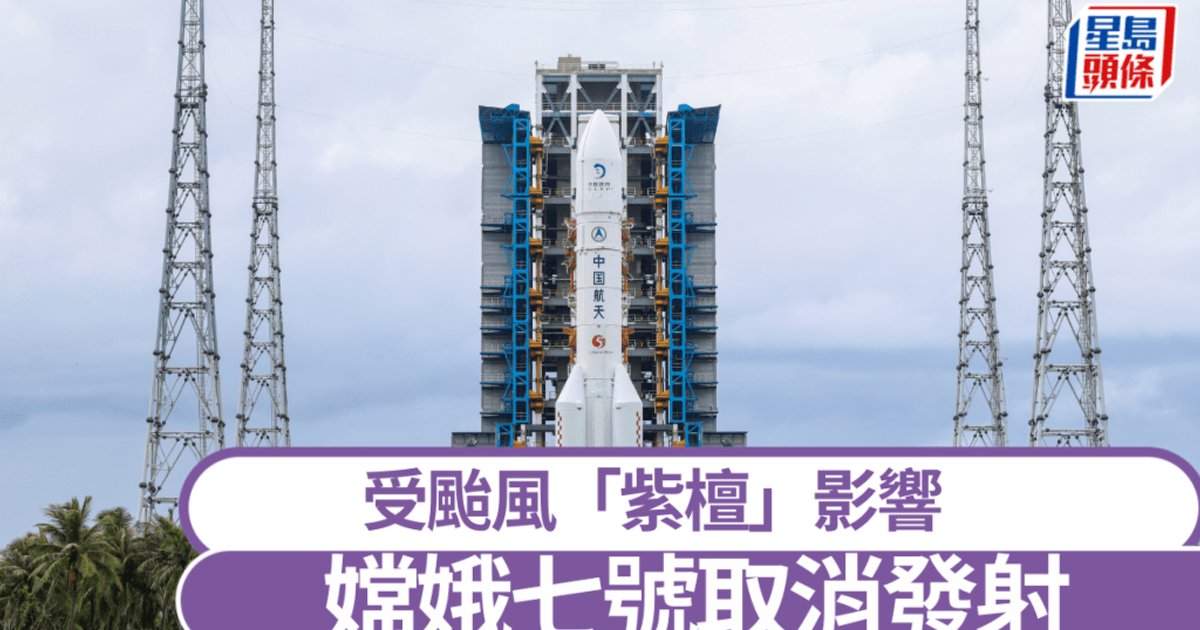
China's ambitious Chang'e-7 lunar exploration mission has been grounded for 2026 after Typhoon Zitan (Typhoon No. 19) prevented launch from the Wenchang Spacecraft Launch Site in Hainan Province. The China Manned Space Engineering Office issued a statement on the evening of December 23 confirming that after "comprehensive assessment" conducted under the principle of "stability, reliability, and nothing left to chance," the Chang'e-7 mission cannot meet launch conditions within this year's predetermined window . The spacecraft was originally scheduled to lift off imminently after its rocket-probe combination was vertically transferred to the launch area on August 19, with initial reports suggesting a possible postponement to December 25 .
Key Points
- Typhoon Zitan has been continuously circling over the Beibu Gulf, creating unsafe conditions for the launch of the Long March 5 Yaotype-14 carrier rocket .
- The Chang'e-7 probe consists of four components: an orbiter, lander, rover, and an innovative flyer designed for跳跃式探测 .
- The mission aims to land at the edge of Shackleton Crater on the lunar south pole to search for water ice deposits .
- The spacecraft carries multiple international cooperative payloads as part of China's global space diplomacy efforts .
- The launch site at Wenchang is the same facility used for previous Chang'e missions and other major Chinese space launches .
Why It Matters
The delay represents a setback for China's lunar exploration program and its goal of landing Chinese astronauts on the Moon by 2030. Chang'e-7 was designed to conduct critical precursor studies for future crewed missions by investigating lunar south pole resources. International scientific collaboration on the mission underscores China's growing role in global space exploration, and the postponement may affect coordinated research timelines with partner nations .
The delay represents a setback for China's lunar exploration program and its goal of landing Chinese astronauts on the Moon by 2030. Chang'e-7 was designed to conduct critical precursor studies for future crewed missions by investigating lunar south pole resources. International scientific collaboration on the mission underscores China's growing role in global space exploration, and the postponement may affect coordinated research timelines with partner nations .