CUHK Discovers Heart Capillaries Transform Into Bypass Arteries
Bastillepost · 3 SOURCESabout 1 hour ago2 MIN
Summary
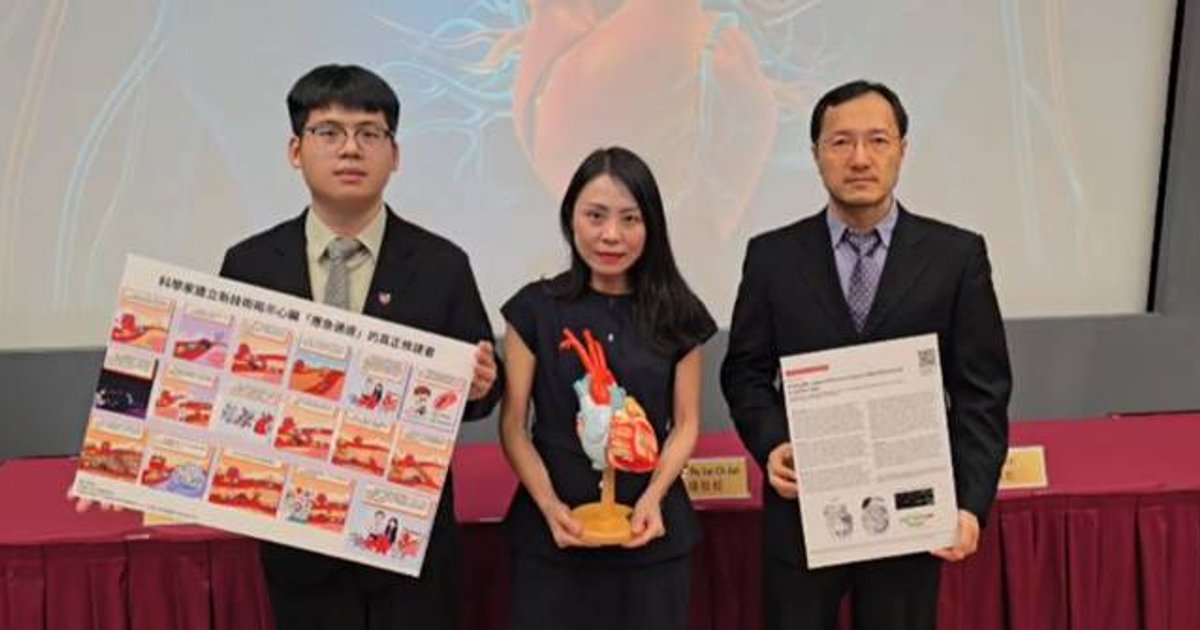
A joint research team from the Faculty of Medicine at the Chinese University of Hong Kong (CUHK) and the Chinese Academy of Sciences has made a groundbreaking discovery about heart self-repair mechanisms. The team revealed for the first time how new collateral arteries form within damaged hearts—specifically, that capillaries within the heart muscle can be "upgraded" to become functional collateral arteries, restoring blood flow to ischemic regions. This research, published in the prestigious journal Science, challenges the conventional scientific view that new arteries primarily originate from existing arteries, opening entirely new avenues for treating coronary heart disease .
Key Points
- CUHK and CAS researchers developed an innovative genetic lineage tracing technology called the "Cell Contact History Recorder" to observe capillary transformation
- The team identified vascular endothelial growth factor A (VEGFA) as the key driver that activates transcription factor YY1 to guide capillary-to-artery conversion
- In mouse studies, briefly elevating VEGFA levels significantly promoted collateral artery formation, reduced cardiac ischemia, and improved heart function
- Coronary heart disease accounts for over half of all heart disease deaths in Hong Kong, making this discovery particularly significant for local patients
- Current treatments like stent placement ("angioplasty") and bypass surgery have limitations for patients with diffuse multi-vessel blockages
Why It Matters
This discovery could transform treatment for the leading cause of death worldwide by enabling the heart to build its own natural bypass networks, potentially offering a gentler and safer alternative to invasive surgery for ischemic heart disease patients . The research team is now conducting clinical studies on VEGFA-YY1 pathway-targeted strategies that could eventually benefit millions of cardiac patients globally .
This discovery could transform treatment for the leading cause of death worldwide by enabling the heart to build its own natural bypass networks, potentially offering a gentler and safer alternative to invasive surgery for ischemic heart disease patients . The research team is now conducting clinical studies on VEGFA-YY1 pathway-targeted strategies that could eventually benefit millions of cardiac patients globally .