American Mahjong vs Hong Kong Mahjong: Two Rulesets, Two Life Philosophies
Bastillepost · 1 SOURCESabout 2 hours ago2 MIN
Summary
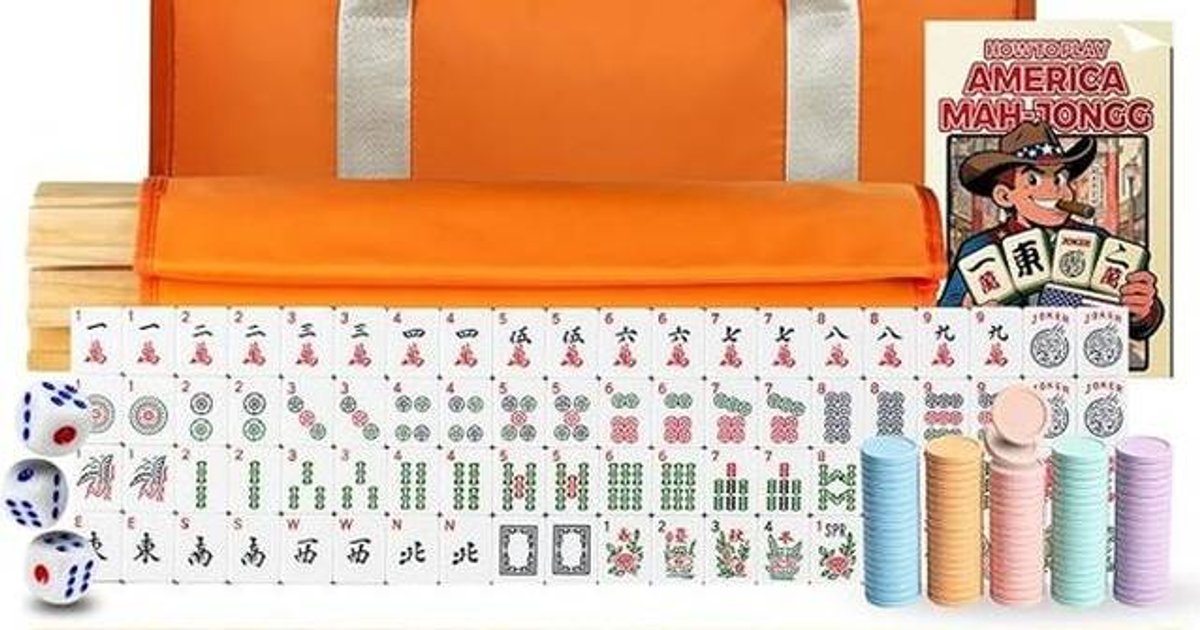
American Mahjong and Hong Kong Mahjong share the same tile origins but differ significantly in rules and cultural significance. While Hong Kong Mahjong follows the traditional 144-tile format with flexible hand combinations, American Mahjong uses 152 tiles including eight Jokers and requires players to follow an annual pattern card published by the National Mah Jongg League. The differences extend beyond gameplay to reflect contrasting social approaches—family-oriented gatherings in Hong Kong versus the party-like social clubs popular in the United States.
Key Points
- American Mahjong employs 152 tiles, adding eight Joker cards to the standard 144 used in Hong Kong . The National Mah Jongg League (NMJL) releases an annual card each spring that lists only 60 to 70 valid hand patterns, forcing all players to relearn rules yearly . The unique Charleston passing ritual at game start requires three players to pass three tiles to the right, then left, before optionally swapping with the opponent . The game was introduced to the United States by Chinese immigrants in the 1920s and modernized through the 1930s and 1960s . American Mahjong has become a social club activity, exemplified by flash mob parties in San Francisco and Julia Roberts playing with friends on Tuesday evenings .
Why It Matters
The contrast illustrates how Chinese cultural exports transform to fit local contexts—Hong Kong Mahjong emphasizes efficiency and calculation as street wisdom, while American Mahjong prioritizes ritual and social bonding through mandatory collective learning . This phenomenon of "Chinamaxxing" shows how traditional games evolve while maintaining their core appeal as social connectors across different societies .
The contrast illustrates how Chinese cultural exports transform to fit local contexts—Hong Kong Mahjong emphasizes efficiency and calculation as street wisdom, while American Mahjong prioritizes ritual and social bonding through mandatory collective learning . This phenomenon of "Chinamaxxing" shows how traditional games evolve while maintaining their core appeal as social connectors across different societies .