Singapore's Forest Housing Plan Sparks Public Outcry Over Biodiversity Loss
Thestandard · 2 SOURCESabout 2 hours ago2 MIN
Summary
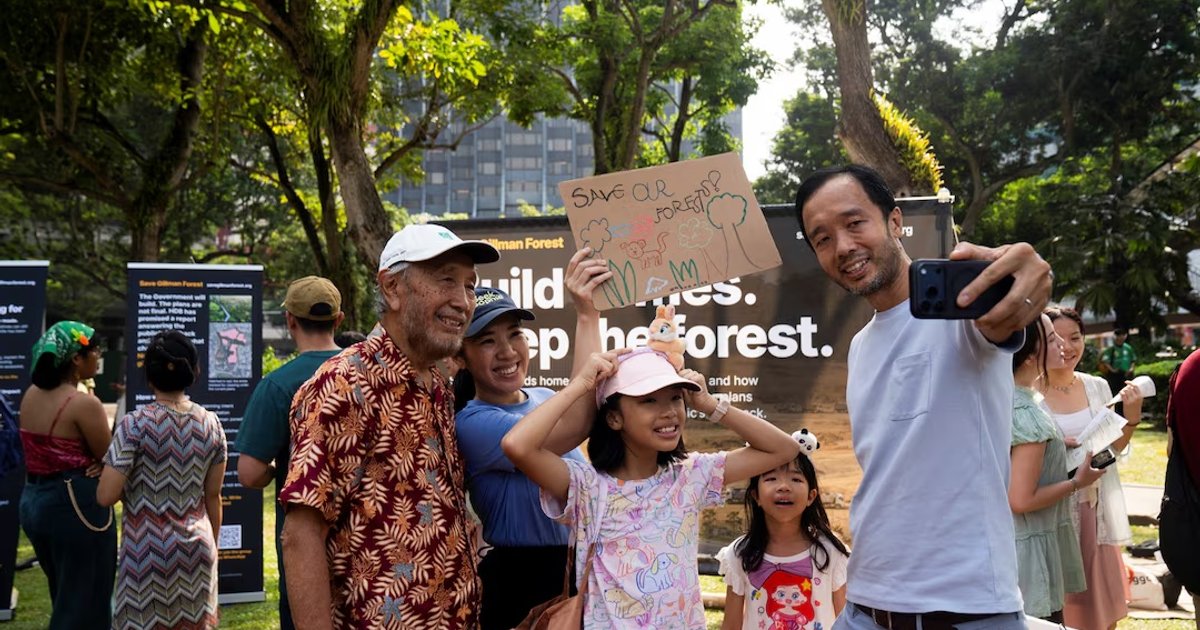
Singapore is facing unprecedented public backlash against its plan to clear much of Maju Forest for high-density public housing. The government proposed in July to develop about two-thirds of the 23-hectare secondary forest in western Singapore, sparking an outcry from conservation groups and residents. More than 49,000 people signed petitions urging authorities to prioritize brownfield sites instead, while approximately 2,000 gathered at Hong Lim Park on August 16, 2026 for a nature rally. The Ministry of National Development has since announced it will retain more greenery than originally planned, with Junior Minister Alvin Tan acknowledging this trade-off will reduce housing capacity.
Key Points
- The 23-hectare (57-acre) Maju Forest is located in western Singapore and connected to Bukit Timah-Neighbourhood Park
- Government surveys recorded 113 animal species in the forest, including 6 conservation-significant species, primarily birds
- More than 49,000 signed two petitions opposing the development, and over 700 residents wrote to their MPs demanding forest protection
- The public feedback channel closed last Friday, after which authorities pledged to preserve more greenery than initially proposed
- Junior Minister Alvin Tan said on August 14 that retaining additional green space means building fewer homes on the site
Why It Matters
Singapore, a city-state comparable in size to New York City, is confronting the tension between housing demands and environmental preservation. The Maju Forest controversy signals growing public insistence that governments explore alternative land sources before sacrificing irreplaceable ecosystems. As property prices soar across densely populated cities from Hong Kong to London, how Singapore balances these competing priorities may set a precedent for urban planning elsewhere.
Singapore, a city-state comparable in size to New York City, is confronting the tension between housing demands and environmental preservation. The Maju Forest controversy signals growing public insistence that governments explore alternative land sources before sacrificing irreplaceable ecosystems. As property prices soar across densely populated cities from Hong Kong to London, how Singapore balances these competing priorities may set a precedent for urban planning elsewhere.