Former China Richest Man Hui Ka-yin Gets Life Sentence, Prompting Investment Warning
SingTao · 1 SOURCESabout 2 hours ago4 MIN
Summary
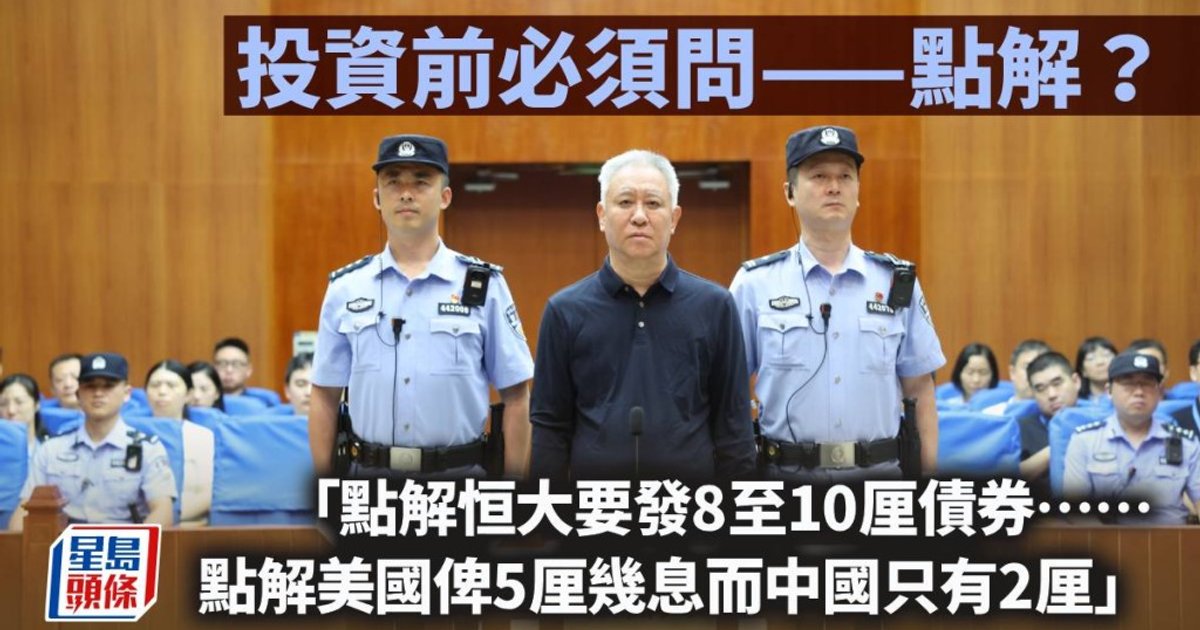
Former Chinese tycoon Hui Ka-yin has been sentenced to life imprisonment at age 67 for his role in the collapse of Evergrande, which devastated countless investors and damaged China's economy . The case highlights how sophisticated investors fell for allegedly impossible returns of 8-10 percent on bonds. A veteran financial commentator is using this cautionary tale to remind investors of a fundamental rule: always question why unusually high returns exist before committing capital.
Key Points
- Former China richest man Hui Ka-yin (許家印), 67 years old, was sentenced to life imprisonment, appearing frail with white hair in court .
- Evergrande offered bonds paying 8-10 percent annual interest, luring wealthy investors and company executives into placing their savings and borrowing additional funds .
- The author cites advice from former Hang Seng Bank chairman Henry Lee (利國偉): "Always leave something unsaid" — questioning why a company would pay 8-10 percent when banks offer only 3-4 percent .
- Current US 30-year bonds yield over 5 percent compared to Chinese bonds at around 2 percent, prompting the author to ask why such a gap exists .
- The author argues that if truly safe 5-percent investments existed, no one would bother running businesses, and the "too big to fail" theory provides false comfort .
Why It Matters
This case serves as a stark reminder that Hong Kong investors must remain vigilant against investment products promising returns that defy market logic. The widespread losses among educated, wealthy investors demonstrate that financial fraud can affect anyone, making basic due diligence essential for protecting retirement savings and family assets.
This case serves as a stark reminder that Hong Kong investors must remain vigilant against investment products promising returns that defy market logic. The widespread losses among educated, wealthy investors demonstrate that financial fraud can affect anyone, making basic due diligence essential for protecting retirement savings and family assets.