Over 1,700 Sickened in Indonesia Free Meals Food Poisoning Crisis
SCMP · 2 SOURCESabout 3 hours ago2 MIN
Summary
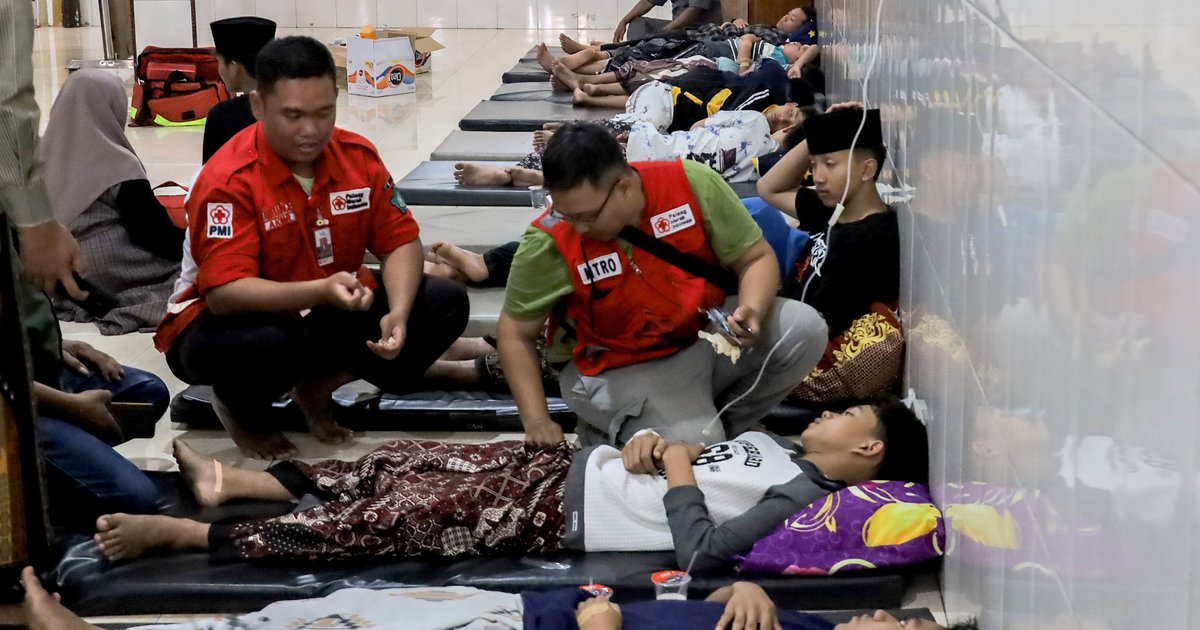
More than 1,700 students and teachers across Indonesia have fallen ill with food poisoning after eating meals provided through President Prabowo Subianto's multibillion-dollar free meals programme, with incidents reported across multiple provinces in just one week. The Makan Bergizi Gratis (MBG) scheme, designed to improve nutrition for tens of millions of children, has now been linked to a series of mass food poisoning outbreaks that have prompted parliamentary scrutiny and pledges of serious action from programme officials.
Key Points
- A total of 752 students and 25 teachers experienced food poisoning symptoms at a senior high school in Lasem, Central Java on Wednesday, with 15 requiring hospitalisation
- The suspected cause was grilled chicken distributed through the MBG programme; a food taster had noted some portions were "slimy" before serving
- The chicken was cooked at 3am and served at noon, raising concerns about food handling and storage practices at the school
- In separate incidents, 664 students fell ill in Sidoarjo, East Java on Tuesday, while 49 people in Nganjuk and 237 in Agam, West Sumatra also contracted food poisoning
- Sudaryono, head of the National Nutrition Agency overseeing the US$12.94 billion programme, told a parliamentary hearing that the poisoning cases would be handled "seriously"
Why It Matters
The wave of food poisonings strikes at the heart of one of Prabowo's signature policies, potentially undermining public trust in a programme intended to address childhood malnutrition across the world's fourth-most-populous nation. Beyond the immediate health crisis, the incidents add to mounting concerns about corruption, leadership instability and execution challenges facing the programme, which represents one of the largest school feeding initiatives in the world .
The wave of food poisonings strikes at the heart of one of Prabowo's signature policies, potentially undermining public trust in a programme intended to address childhood malnutrition across the world's fourth-most-populous nation. Beyond the immediate health crisis, the incidents add to mounting concerns about corruption, leadership instability and execution challenges facing the programme, which represents one of the largest school feeding initiatives in the world .