Elderly Woman Faces Public Housing Dilemma Over Inheriting 4-Person Flat from 100-Year-Old Mother
SingTao · 1 SOURCESabout 3 hours ago5 MIN
Summary
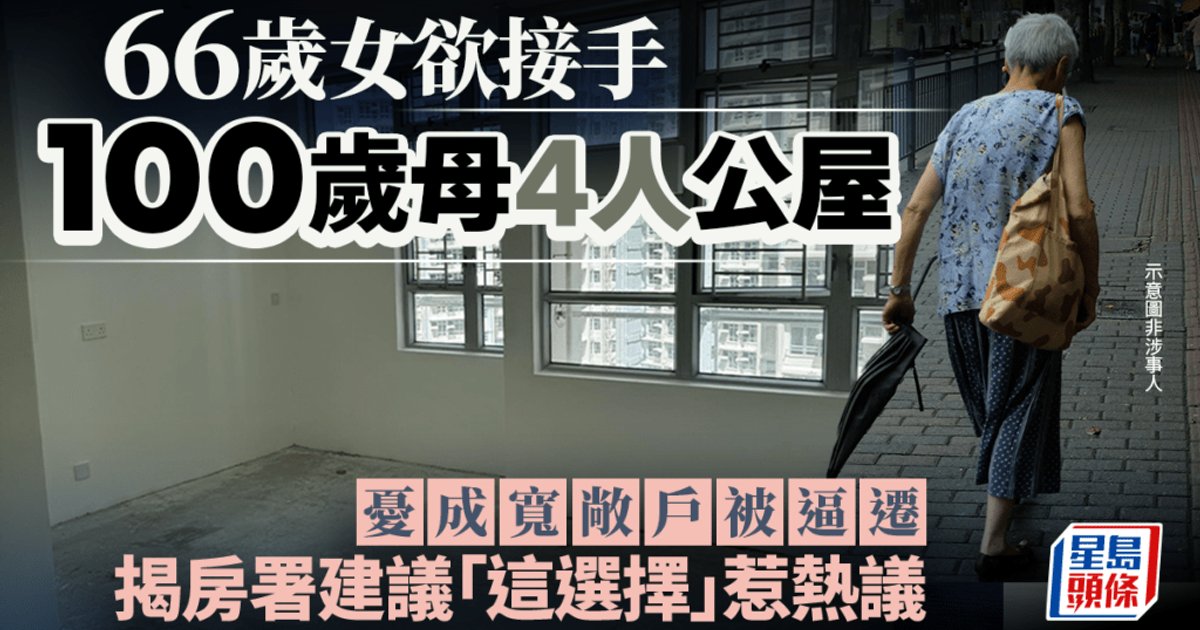
A 66-year-old Hong Kong woman is seeking advice online after considering whether to become the head tenant of her 100-year-old mother's four-person public housing unit. The mother has been residing in a care home for seven years and recently stopped returning home for occasional visits due to deteriorating health. The woman fears being reclassified as an "over-housed household" (寬敞戶) and potentially being forced to relocate to a smaller unit. However, netizens familiar with Housing Authority regulations assure her that at age 66, she qualifies for exemptions and cannot be compulsorily evicted. The Housing Department reportedly sent a letter to the mother two years ago, stating that retaining or relinquishing the household registration was entirely her choice.
Key Points
- The 66-year-old daughter wishes to take over the tenancy from her 100-year-old mother, who has lived in a care home for seven years .
- Under Housing Authority policy, households with members aged 60-69 are classified as "non-priority over-housed households" and placed last on relocation lists .
- Seniors aged 60 or above cannot be forced to relocate; they may stay if they can pay rent and care for themselves .
- If the woman waits until age 70 and voluntarily moves to a smaller unit, she can qualify for lifetime rent exemption under the Elderly Household Rent Exemption Scheme .
- The Housing Department advised the family that retaining or cancelling the household registration is a free choice with no compulsory enforcement .
Why It Matters
This case highlights the complexity of Hong Kong's public housing allocation policies and the difficult decisions facing families with elderly members in care homes. It underscores ongoing debates about equitable distribution of limited public housing resources versus the practical needs of long-term residents who have lived in their units for decades .
This case highlights the complexity of Hong Kong's public housing allocation policies and the difficult decisions facing families with elderly members in care homes. It underscores ongoing debates about equitable distribution of limited public housing resources versus the practical needs of long-term residents who have lived in their units for decades .