Former Guangdong Governor Zhu Senlin Cremated in Guangzhou
SingTao · 1 SOURCESabout 3 hours ago2 MIN
Summary
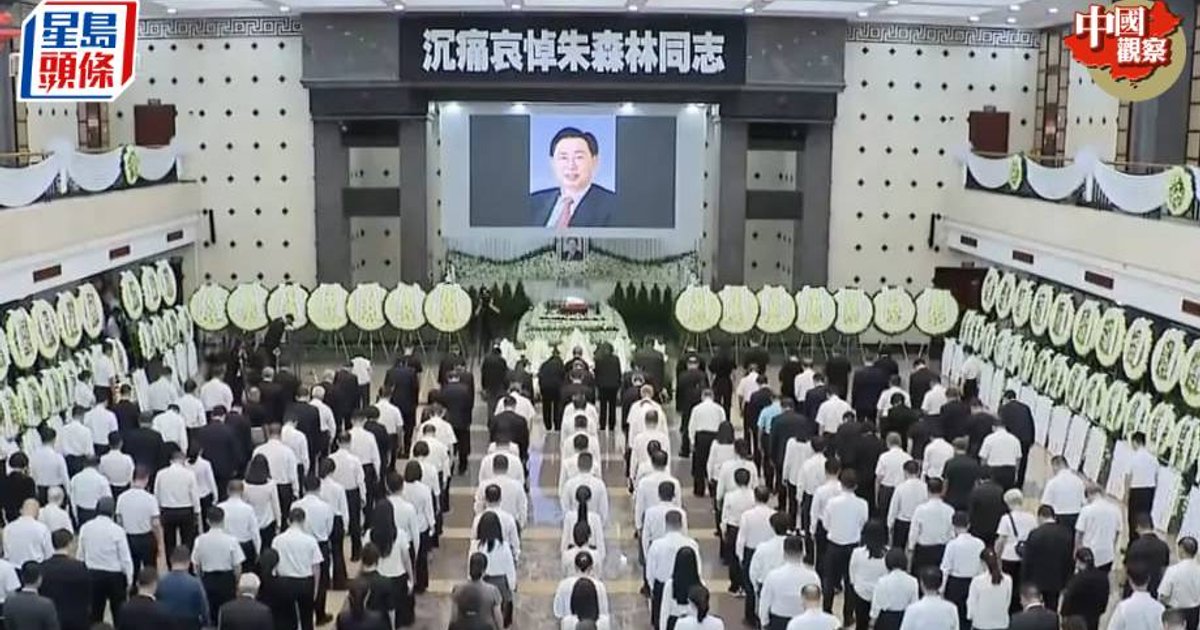
Former Guangdong governor Zhu Senlin died last week at the age of 96, and his body was cremated in Guangzhou two days ago at a funeral attended by senior provincial leaders and veteran officials from his era . Those present included Guangdong party secretary Huang Kunming, governor Meng Fanli, former Hong Kong liaison office director Gao Siren, and Zheng Yanxiong, now a vice-chairman of the National People's Congress Education, Science, Culture and Public Health Committee . Zhu, though born in Shanghai, spent decades working in Guangzhou after moving south in the 1950s and came to be regarded as part of Guangdong's local political camp . Official tributes praised his role in expanding opening-up, broadening international markets, and deepening cooperation among Guangdong, Hong Kong and Macao .
Key Points
- Zhu Senlin became Guangdong governor in 1991, succeeding Ye Xuanping, after years in provincial leadership during the reform and opening-up era .
- At the funeral, veteran colleagues from the 1980s and 1990s also appeared, including former governors Huang Huahua and Zhu Xiaodan, and former provincial legislature chief Ou Guangyuan .
- Gao Siren took over as Guangzhou party secretary when Zhu became governor, later moving to Hong Kong and serving as liaison office director from 2002 to 2009 .
- Born in Shanghai, Zhu entered Tsinghua University in 1948 and went south in the 1950s to support Guangzhou's “Three-anti” and “Five-anti” campaigns, remaining there thereafter .
- After Deng Xiaoping's 1992 southern tour remarks, Zhu drafted Guangdong's “Chasing the Dragons Plan” to catch up with the Four Asian Tigers in about 20 years .
Why It Matters
For Hong Kong readers, Zhu's career is closely tied to the early institutional links between Guangdong and Hong Kong, including policy learning, economic opening and cross-border cooperation . His record also offers a historical reference point for how Guangdong's leadership once framed Hong Kong as both a development model and a partner in regional integration .