Elderly Seeking AC in Fast Food Chains Sparks Heated Hong Kong Debate
SingTao · 1 SOURCESabout 3 hours ago2 MIN
Summary
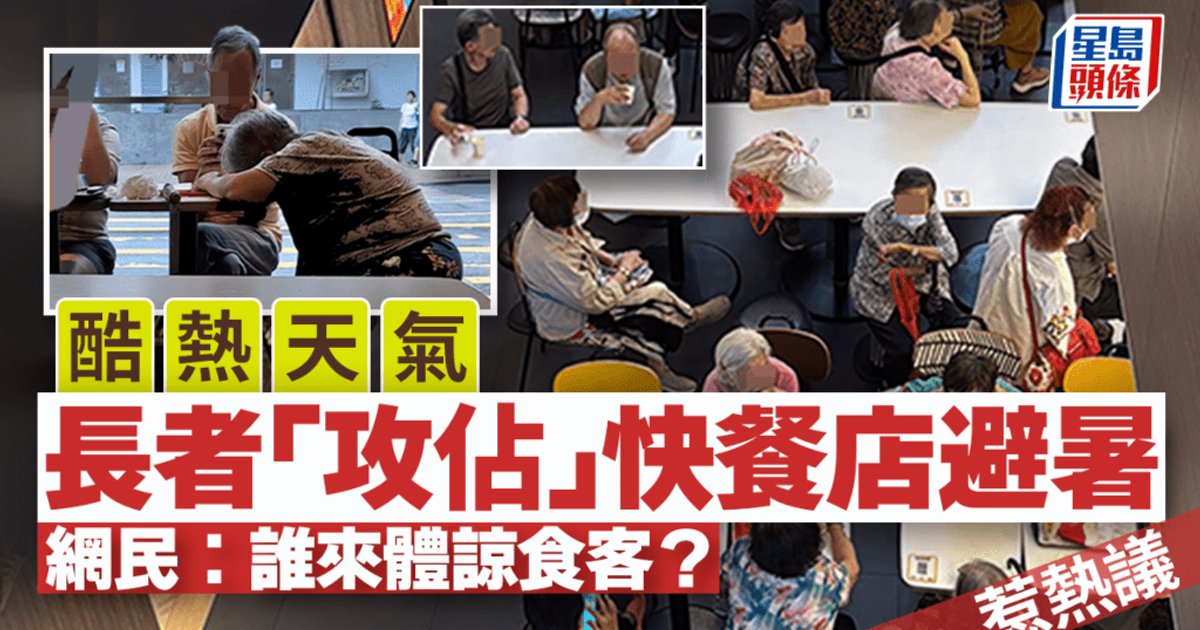
Record-breaking high temperatures have prompted elderly Hong Kong residents to flock to chain fast food restaurants for air-conditioned respite, sparking heated online debate. A social media post on Threads praising staff for not rushing elderly patrons out of the establishments ignited backlash, with critics accusing the author of hypocrisy while supporters defended the elderly's need for cool spaces. The controversy has evolved into a broader discussion about public facilities, social infrastructure, and intergenerational equity in an aging society.
Key Points
- A netizen posted on Threads about increased elderly presence in fast food restaurants during the heatwave, expressing gratitude that staff did not rush elderly patrons away
- Critics accused the original poster of being "self-righteous," demanding she open her own home with air conditioning to elderly visitors if she felt so strongly
- Some workers complained they cannot find seats during busy lunch hours, with one netizen posting a photo showing elderly occupying tables with no food or drinks purchased
- Online voices criticized the current elderly generation for allegedly consuming most of society's benefits while young taxpayers now struggle to find dining space
- Other commenters defended the elderly as simply seeking a cool place to rest, proposing expanded community facilities like "community living rooms" in public housing estates
Why It Matters
The intense debate reflects deeper societal tensions as Hong Kong faces more frequent extreme weather events driven by climate change. Beyond the immediate controversy, the discussion exposes critical gaps in community infrastructure for elderly residents and raises questions about how the government and society should balance the needs of different generations when public cooling spaces are limited. The incident may pressure authorities to consider opening more civic facilities during heat emergencies, similar to existing protocols during cold snaps or typhoons.
The intense debate reflects deeper societal tensions as Hong Kong faces more frequent extreme weather events driven by climate change. Beyond the immediate controversy, the discussion exposes critical gaps in community infrastructure for elderly residents and raises questions about how the government and society should balance the needs of different generations when public cooling spaces are limited. The incident may pressure authorities to consider opening more civic facilities during heat emergencies, similar to existing protocols during cold snaps or typhoons.