Microbiologist Explains Soy Sauce Mold After Netizens Find 'Abalone' in Bottles
SingTao · 1 SOURCESabout 3 hours ago6 MIN
Summary
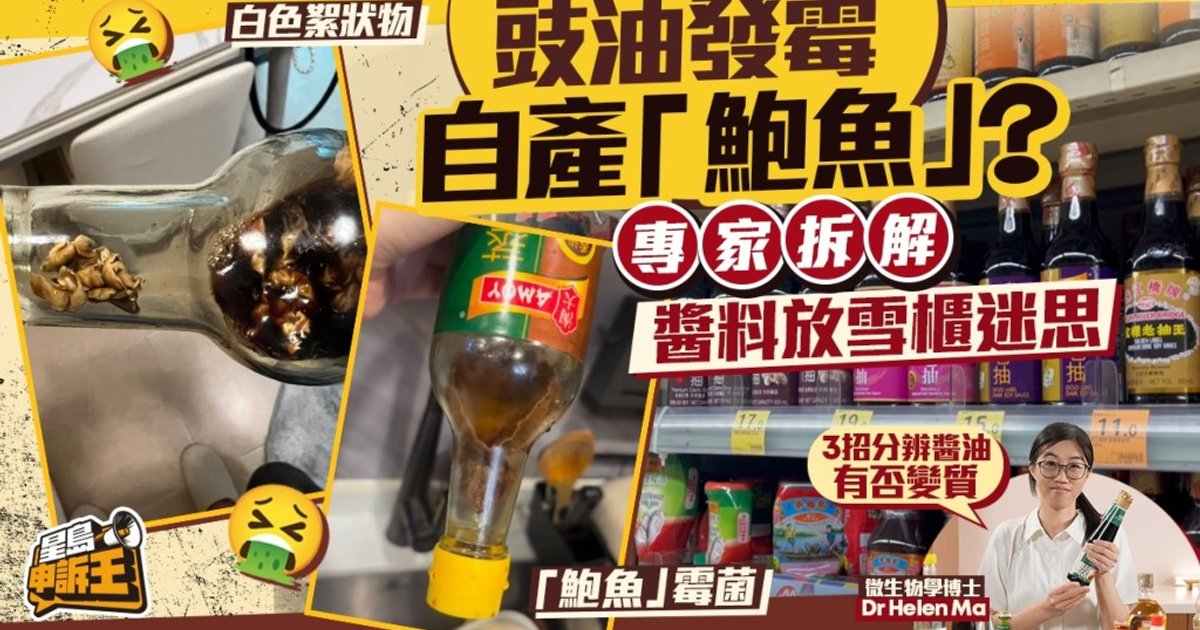
A wave of social media posts showing mysterious white flocculent objects in soy sauce bottles has sparked widespread concern among Hong Kong netizens, with some even mistaking the mold for abalone. Microbiology expert Dr. Helen Ma has stepped in to debunk the phenomenon, explaining that soy sauce contains nutrients like protein and salt that can foster fungal growth when stored improperly. She advises that opened soy sauce must be refrigerated at approximately 4 degrees Celsius and consumed within a few months to prevent spoilage.
Key Points
- Social media users in Hong Kong have been sharing photos of strange white絮状物 (flocculent substances) and「鮑魚」形狀的物體 ("abalone"-shaped objects) appearing in their soy sauce bottles, prompting shock and confusion online
- Microbiology expert Dr. Helen Ma confirmed these white substances are fungal growth, noting that if soy sauce can develop mold, it means the bottle has been neglected for an extended period
- Dr. Ma emphasized that opened soy sauce must be refrigerated at around 4°C, as Hong Kong's kitchens often lack ventilation and the climate creates a "bacterial incubator" with extreme humidity and heat
- The expert taught a「看、聞、存」("see, smell, store") method: check for visible mold, smell for wine-like or sour odors indicating spoilage, and always store opened condiments in the refrigerator
- During a blind test, Dr. Ma correctly identified two bottles of opened soy sauce stored at room temperature for over one year and two years respectively, both showing wine-like or sour smells and deemed inedible
- Besides soy sauce, other condiments like oyster sauce, ketchup, salad dressing, and fermented beans are equally prone to mold and require refrigeration after opening
- Consuming spoiled soy sauce may cause gastrointestinal discomfort, with heightened risks for elderly, children, pregnant women, and individuals with weakened immune systems
Why It Matters
With compact living spaces and kitchens lacking windows in many Hong Kong homes, improper condiment storage poses a genuine food safety risk for the city's densely populated environment . This public education from Dr. Ma addresses a common yet overlooked household practice that could affect the health of vulnerable populations, particularly during Hong Kong's hot and humid summer months when mold growth accelerates .
With compact living spaces and kitchens lacking windows in many Hong Kong homes, improper condiment storage poses a genuine food safety risk for the city's densely populated environment . This public education from Dr. Ma addresses a common yet overlooked household practice that could affect the health of vulnerable populations, particularly during Hong Kong's hot and humid summer months when mold growth accelerates .