Near-Total Lunar Eclipse to Grace Skies Across Americas and Europe This Week
AM730 · 1 SOURCESabout 2 hours ago2 MIN
Summary
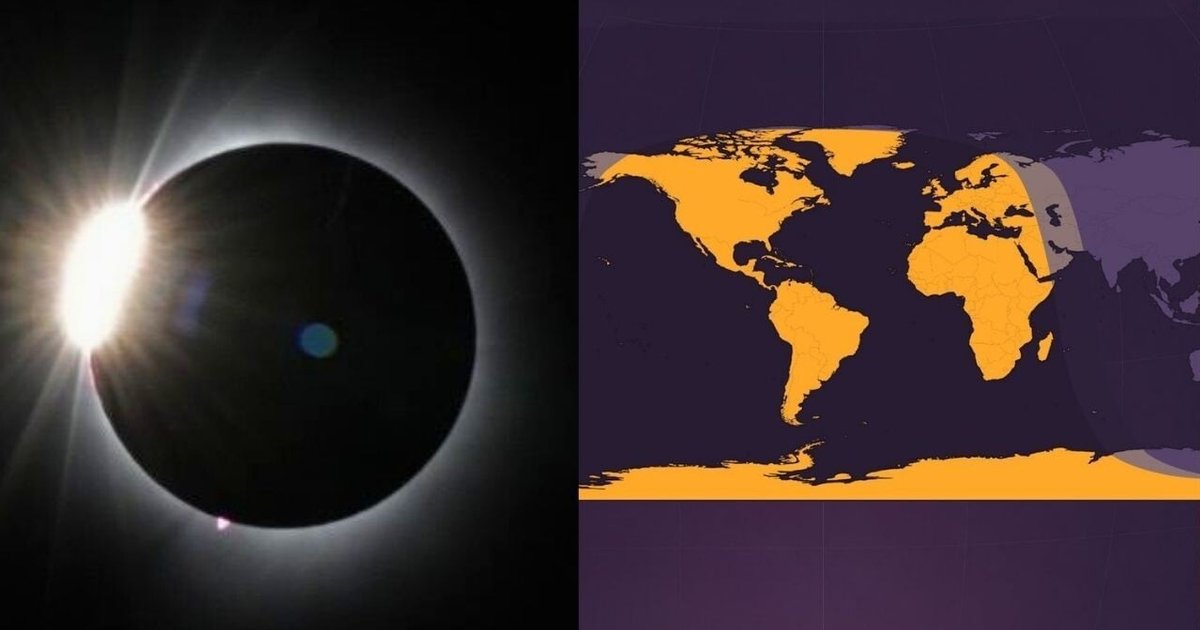
A deep partial lunar eclipse occurring on August 27-28 will darken the moon as it passes through Earth's shadow, with up to 96 percent coverage at peak. The astronomical event will be visible across multiple continents, offering billions of people a chance to witness the celestial phenomenon. North and South America will have front-row seats to the event, which peaks in the early morning hours of August 28 in Hong Kong time.
Key Points
- The moon will reach approximately 96 percent coverage in Earth's umbra, making this a deep partial eclipse that rivals a total eclipse in visual impact
- The entire event spans roughly 5.5 hours from initial penumbral contact to full exit, with the main partial phase lasting over 3 hours
- The eclipse peak is expected after midnight Eastern Time in the United States, corresponding to the morning of August 28 in Hong Kong
- Over 3 billion people across North America, South America, Europe, Africa, and the Middle East could potentially observe the event under clear skies
- Approximately 1 billion people in the United States, Canada, and Latin America will have the opportunity to view the eclipse in its entirety
Why It Matters
While the moon will display a red-orange hue typical of eclipses, the incomplete nature of this event means observers will not witness a true "blood moon" effect. This eclipse offers a convenient opportunity for amateur astronomers and casual skywatchers alike, given its favorable timing for Western Hemisphere viewers and the sheer scale of the potential audience. The 2028 eclipse will shift the viewing window eastward, placing Asia and Australia at the center of the next major lunar eclipse event.
While the moon will display a red-orange hue typical of eclipses, the incomplete nature of this event means observers will not witness a true "blood moon" effect. This eclipse offers a convenient opportunity for amateur astronomers and casual skywatchers alike, given its favorable timing for Western Hemisphere viewers and the sheer scale of the potential audience. The 2028 eclipse will shift the viewing window eastward, placing Asia and Australia at the center of the next major lunar eclipse event.