Secondary Property Short-Term Speculation Falls Below 100 Cases in July, Six-Month Low
AM730 · 2 SOURCESabout 3 hours ago2 MIN
Summary
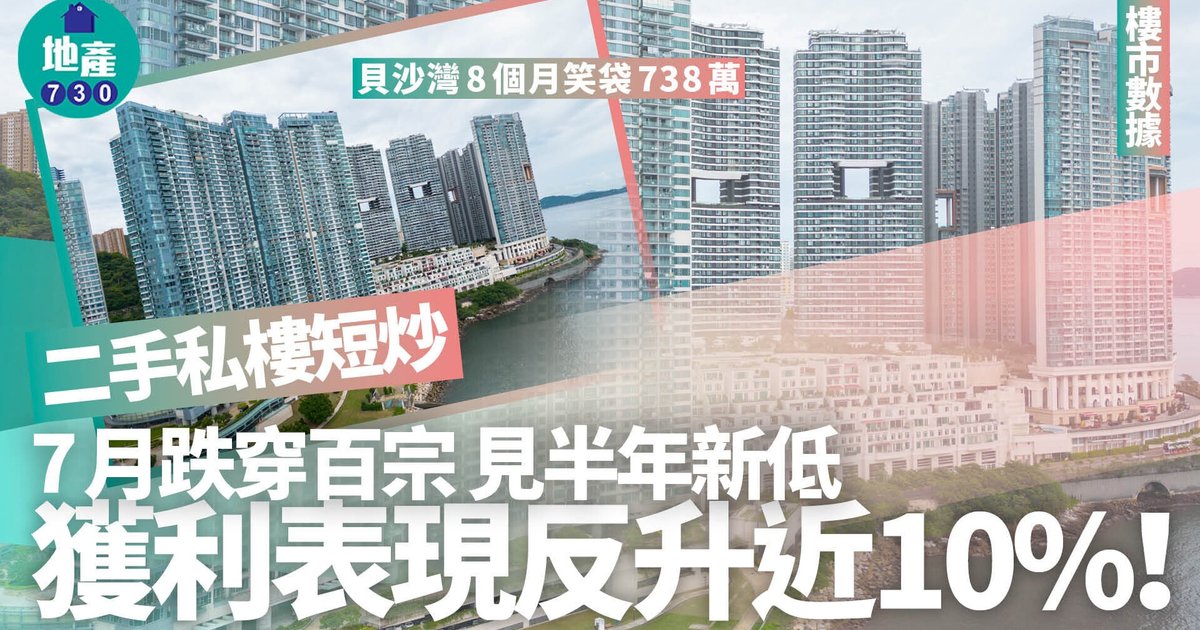
Short-term property speculation in Hong Kong's secondary market dropped to 99 cases in July 2026, falling below the 100-case threshold for the first time in six months and marking a nearly 24% decline from June. Despite the cooling activity, speculators' profitability improved, with average profit per transaction reaching approximately HK$842,000, the highest monthly average this year and representing a nearly 10% increase from June's figures .
Key Points
- July recorded 99 short-term speculation cases (properties held under one year), down nearly 24% month-over-month, the lowest since January's 71 cases
- Cases fell approximately 51% compared to the March peak of 202 cases, with speculation accounting for only 4% of known purchase-price transactions
- Average profit per case reached HK$842,000, up nearly 10% from June's HK$770,000, the highest monthly average in 2026
- The top profit case was a Bel-Air Phase 4 South Bay unit (1,288 sq ft) sold for HK$37.18 million, yielding HK$7.38 million profit after 260 days
- Properties priced below HK$4 million dominated, comprising over half of all short-term speculation cases in the first seven months of 2026
Why It Matters
The divergence between declining transaction volumes and improving profit margins suggests that remaining speculators are holding higher-quality assets and timing their exits more strategically . This trend, combined with developers' aggressive pricing of new projects, signals further challenges for secondary market liquidity and may reshape the composition of Hong Kong's property investment landscape.
The divergence between declining transaction volumes and improving profit margins suggests that remaining speculators are holding higher-quality assets and timing their exits more strategically . This trend, combined with developers' aggressive pricing of new projects, signals further challenges for secondary market liquidity and may reshape the composition of Hong Kong's property investment landscape.