Japan, Australia Sign Defense Pact for Hypersonic Missile Testing Over Next Decade
SingTao · 1 SOURCESabout 3 hours ago3 MIN
Summary
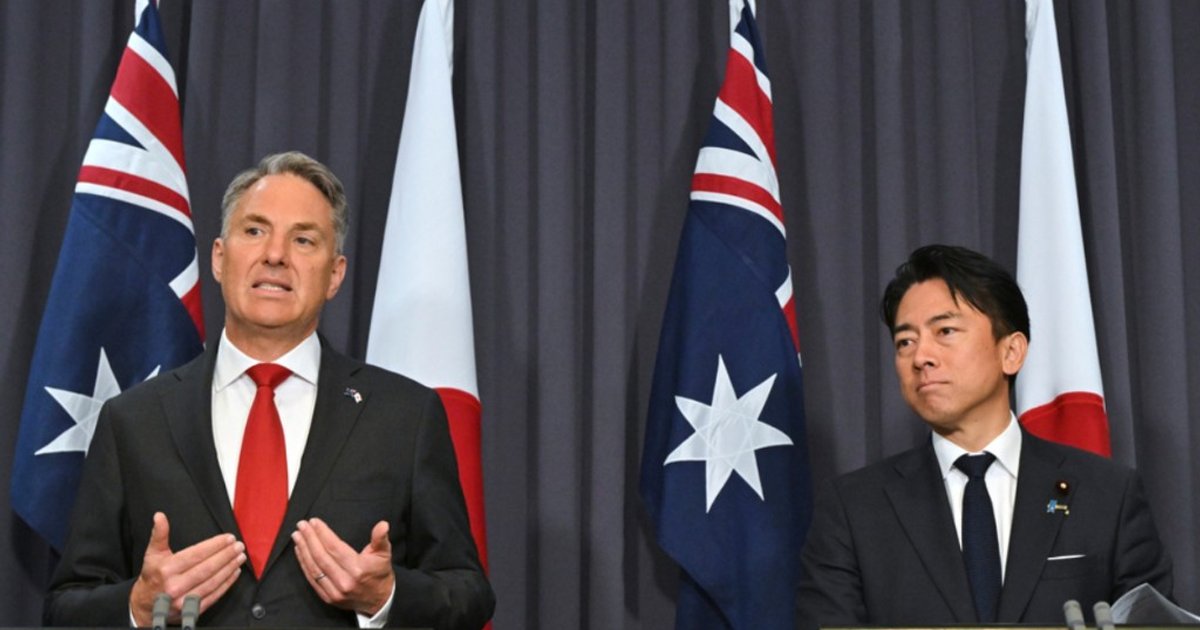
Japanese Defense Minister Shinjiro Koizumi visited Australia on December 18, meeting with Australian Deputy Prime Minister and Defense Minister Richard Marles in Canberra to announce a significant defense cooperation agreement. The deal allows Japan's Self-Defense Forces to use Australian missile test ranges over the next decade to test hypersonic missiles and other long-range projectiles, enhancing Japan's counterstrike capabilities and strengthening bilateral "strategic depth" cooperation . Additionally, both nations agreed to jointly develop a laser threat detection system called "Boobook," representing a deeper level of military-technological integration between the two allies.
Key Points
- Japan and Australia reached a new agreement on December 18 for Tokyo to use Australian missile test ranges over the next 10 years to test hypersonic missiles
- Hypersonic weapons fly at speeds exceeding Mach 5 (approximately 6,200 km/h) in the upper atmosphere, representing a capability where China and Russia currently excel
- Japan's Island Defense High-Speed Glide Vehicle (HVGP) program, renamed "Type 25 High-Speed Glide Vehicle" in March, had its deployment timeline accelerated by three years from the original 2029 target
- The Type 25 missile has a range of several hundred kilometers and flies an unpredictable trajectory, with the Australian test range arrangement described by Koizumi as "groundbreaking"
- Both nations launched the "Boobook" laser detection system project, named after an Australian owl species known for excellent night vision capabilities
- Australia finalized a A$10 billion (approximately HK$55.8 billion) deal last year to purchase upgraded Mogami-class stealth frigates from Japan
- The Australian Strategic Policy Institute noted that Japan, likely positioned on the front line of any major regional conflict, needs to distribute its defense industry assets to reduce vulnerability to missile and air attacks
Why It Matters
The Japan-Australia defense pact marks a significant expansion of bilateral military cooperation from equipment sales to strategic technology sharing, reflecting both nations' efforts to counter China's regional influence. For Hong Kong readers, this development underscores how major powers are deepening security alliances in the Indo-Pacific, potentially reshaping the regional order that has long sustained Hong Kong's international trade and financial hub status. The acceleration of Japan's missile programs and the establishment of Australian facilities as backup test sites signal a new phase of military-technological competition in the region.
The Japan-Australia defense pact marks a significant expansion of bilateral military cooperation from equipment sales to strategic technology sharing, reflecting both nations' efforts to counter China's regional influence. For Hong Kong readers, this development underscores how major powers are deepening security alliances in the Indo-Pacific, potentially reshaping the regional order that has long sustained Hong Kong's international trade and financial hub status. The acceleration of Japan's missile programs and the establishment of Australian facilities as backup test sites signal a new phase of military-technological competition in the region.