Understanding Primary and Secondary Causes of Sarcopenia
SingTao · 1 SOURCESabout 2 hours ago2 MIN
Summary
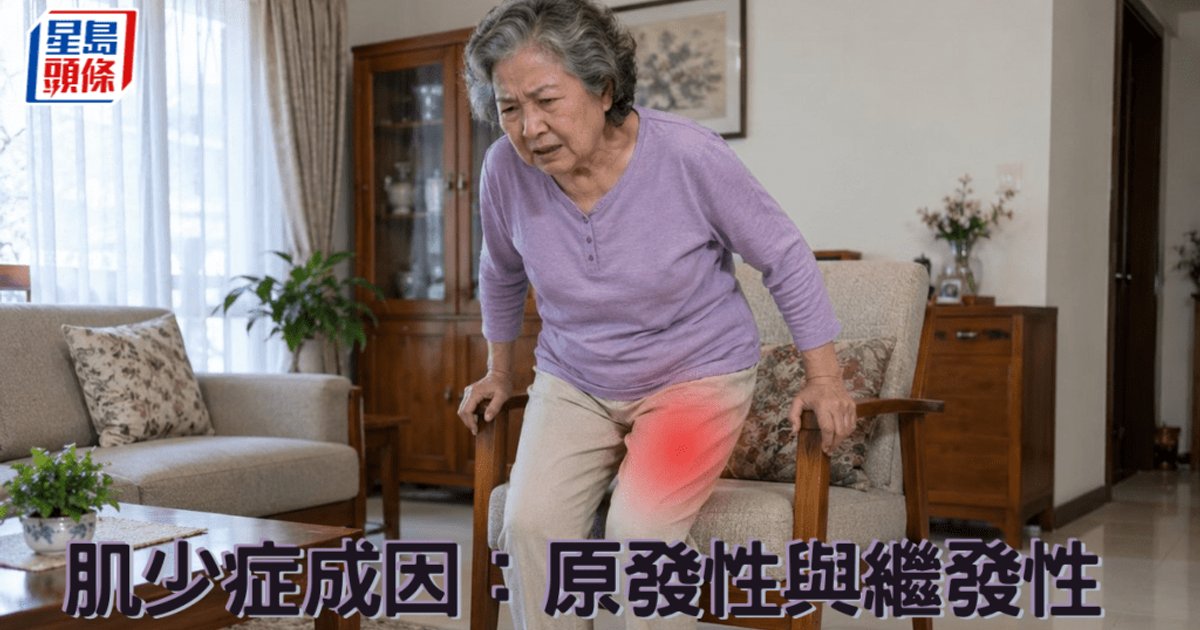
Sarcopenia is a condition defined by loss of muscle mass, reduced muscle strength and declining physical function, and the column says its causes are broadly divided into primary and secondary forms. Primary sarcopenia is linked to natural ageing alone, while secondary sarcopenia is associated with external factors or disease and can also affect younger and middle-aged adults. The article argues that while age-related muscle loss is difficult to avoid completely, secondary causes are more preventable through targeted lifestyle adjustment
Key Points
- The column defines sarcopenia as a disease centred on muscle mass loss, reduced strength and deterioration in physical function
- Primary sarcopenia, also called age-related sarcopenia, is attributed solely to natural ageing rather than illness or external injury
- From about age 40, metabolism gradually slows and muscle synthesis falls behind breakdown, leading to small annual muscle losses
- Ageing also reduces growth hormone, testosterone and IGF-1 secretion, weakening the body's ability to maintain and repair muscle tissue
- The article says secondary sarcopenia has more varied causes, including poor lifestyle or disease, and is not limited to older people
Why It Matters
For Hong Kong readers, the distinction matters because not all muscle decline should be seen as an unavoidable part of getting older. The column's framework suggests that earlier attention to lifestyle and underlying illness may help delay or improve muscle deterioration, including among adults who are not elderly