Elderly Flu Mortality Near 80%: Expert Calls for Precision Vaccine Delivery
HK01 · 1 SOURCESabout 6 hours ago2 MIN
Summary
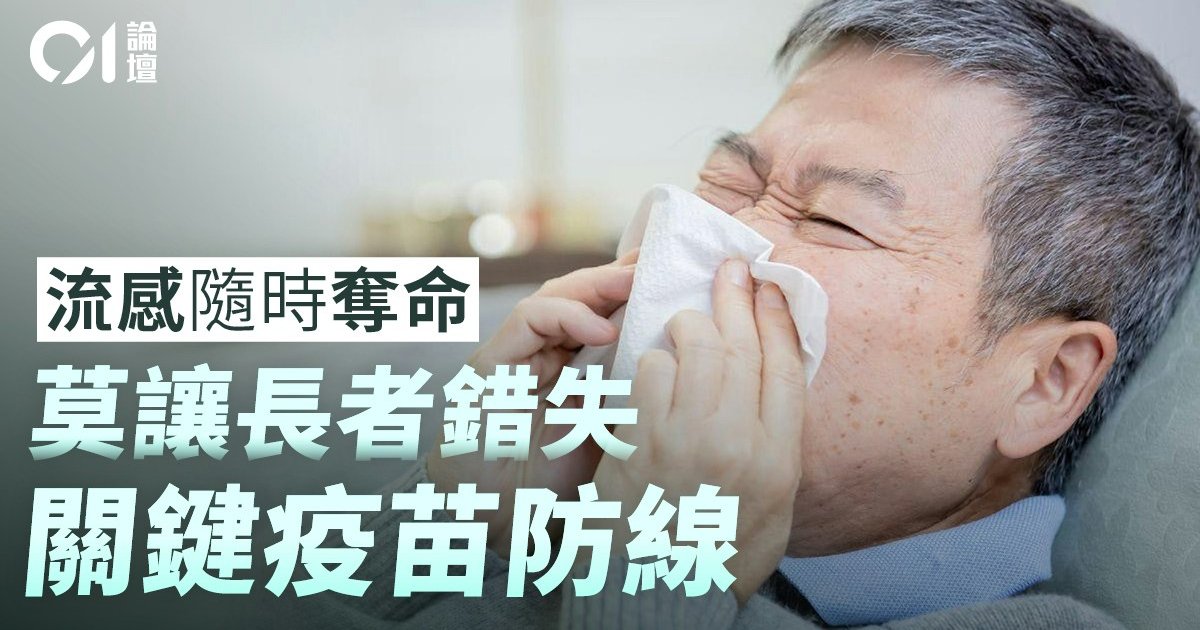
Hong Kong is experiencing sustained high influenza activity with 770 severe flu cases recorded as of October 7, 2026. Over 80% of severe cases involve elderly patients aged 65 and above, with a mortality rate of approximately 77% among this group. Health experts are urging the government to shift from passive vaccination appeals to a proactive, elderly-centered strategy that integrates community networks, primary care, and vaccine supply to protect the most vulnerable populations.
Key Points
- Hong Kong recorded 770 severe flu cases as of October 7, 2026, with over 80% involving elderly patients aged 65 and above
- Among elderly severe cases, approximately 77% resulted in death, highlighting the critical risk influenza poses to older adults
- Professor Hung Fan-ngai from HKU's Department of Medicine states recombinant flu vaccines contain roughly three times more antigen than traditional inactivated vaccines, producing higher antibody levels
- Recombinant vaccines provide protection for approximately one year compared to six months for standard inactivated vaccines, offering better coverage across both winter and summer flu peaks
- Patients with cardiovascular conditions face a 6 to 17 times higher risk of acute myocardial infarction within one week of flu infection, with stroke risk increasing by 8 to 10 times
Why It Matters
The high mortality rate among elderly flu patients underscores that influenza should not be dismissed as a common cold, particularly for those with chronic conditions. The government currently operates vaccination sites through 29 maternal health centers, 45 district health centers, 76 Hospital Authority family medicine clinics, and 38 public hospitals, yet experts argue these passive measures must be complemented by proactive outreach to homebound, isolated, and low-income elderly residents. A precision-focused vaccination strategy that brings vaccines directly to vulnerable populations rather than waiting for them to seek shots could significantly reduce severe illness, hospitalizations, and deaths in Hong Kong's aging society .
The high mortality rate among elderly flu patients underscores that influenza should not be dismissed as a common cold, particularly for those with chronic conditions. The government currently operates vaccination sites through 29 maternal health centers, 45 district health centers, 76 Hospital Authority family medicine clinics, and 38 public hospitals, yet experts argue these passive measures must be complemented by proactive outreach to homebound, isolated, and low-income elderly residents. A precision-focused vaccination strategy that brings vaccines directly to vulnerable populations rather than waiting for them to seek shots could significantly reduce severe illness, hospitalizations, and deaths in Hong Kong's aging society .