162 Tons of Konjac Flour Rejected at China Border Over Sulfur Dioxide Violation
AM730 · 1 SOURCESabout 2 hours ago5 MIN
Summary
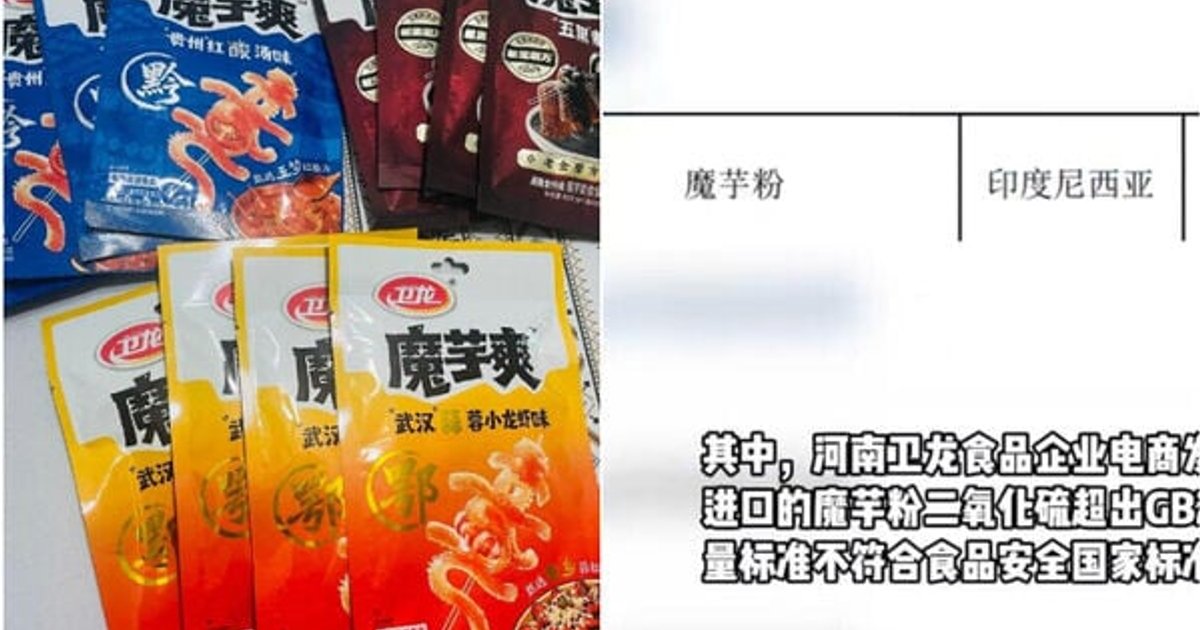
Chinese customs authorities in Qingdao have rejected 162 metric tons of Indonesian konjac flour imported by Weilong Food Enterprise E-commerce Development Co., Ltd. after tests revealed sulfur dioxide levels exceeding China's national food safety standard GB2760-2024. The contaminated flour was intended for producing "Magic Taro" (魔芋爽), a wildly popular konjac-based snack that has become the company's top-selling product, accounting for nearly two-thirds of total revenue. Weilong's customer service acknowledged the issue but provided no immediate clarification on corrective measures.
Key Points
- Qingdao customs intercepted 162 metric tons of konjac flour from Indonesia due to sulfur dioxide exceeding GB2760-2024 limits
- The rejected flour was produced by PT. BANSHANG TECHNOLOGY JAWA TIMUR and imported by Henan Weilong Food Enterprise E-commerce Development Co., Ltd.
- Sulfur dioxide, commonly used as a bleaching agent and preservative, can cause nausea and vomiting when consumed in excess
- Weilong's vegetable products including Magic Taro generated 24.41 billion yuan (approximately 28.6 billion HKD) in H1 2026, up 15.8 percent year-on-year
- These vegetable products now represent 65.7 percent of Weilong's total revenue, compared with the declining share of its classic hot strip product
Why It Matters
The rejection highlights potential vulnerabilities in the supply chain of China's largest snack companies, particularly for brands that have built their market dominance on a narrow product portfolio. For Hong Kong consumers who frequently purchase cross-border snacks and health products, this incident underscores the importance of regulatory oversight in ensuring food safety standards are maintained across the supply chain .
The rejection highlights potential vulnerabilities in the supply chain of China's largest snack companies, particularly for brands that have built their market dominance on a narrow product portfolio. For Hong Kong consumers who frequently purchase cross-border snacks and health products, this incident underscores the importance of regulatory oversight in ensuring food safety standards are maintained across the supply chain .