1956 Double Tenth riots revisited in Hong Kong
HK01 · 1 SOURCESabout 2 hours ago10 MIN
Summary
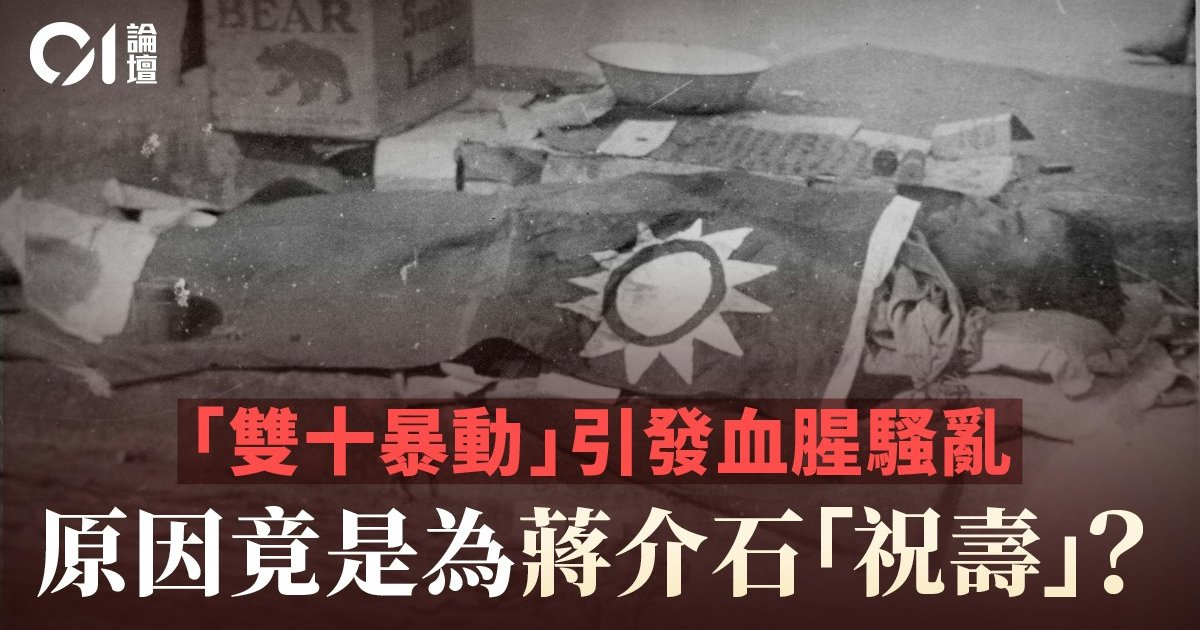
A new historical commentary re-examines the 1956 Double Tenth riots in Hong Kong, arguing that the bloodshed cannot be understood only as a dispute over decorations removed from Lei Cheng Uk resettlement blocks on October 10, 1956. It places the violence within the Chinese Civil War and Cold War context, and says pro-Kuomintang groups in Hong Kong treated Double Tenth celebrations and Chiang Kai-shek’s 70th birthday as linked political mobilization moments.
Key Points
- On October 10, 1956, Resettlement Department staff removed a giant Double Tenth emblem and Nationalist flags from the exterior wall of Lei Cheng Uk resettlement blocks, saying residents could display flags but not in ways that affected the building’s appearance.
- The colonial government said the clearance followed procedures used in previous years, but the move triggered what the commentary describes as the deadliest riot in Hong Kong history by death toll.
- The article says right-wing pro-Kuomintang supporters also demanded large portraits of Sun Yat-sen and Chiang Kai-shek, showing the decorations were political loyalty markers rather than simple festival displays.
- It links 1956 to Chiang’s “70th birthday” and notes Kuomintang propaganda grouped October 10, October 21, October 25 and Chiang’s October 31 birthday into a single “Glorious October” campaign.
- A 1951 Kuomintang directive called for broad but not extravagant birthday celebrations, including flag displays, signature books, themed films and school talks, while presenting them as spontaneous public support.
- The commentary also compares the 1956 unrest with an earlier Double Tenth disturbance on October 10, 1952, when right-wing groups claimed a Nationalist flag had been damaged and then attacked left-wing unions and a hospital in Sham Shui Po, Mong Kok and Yau Ma Tei, injuring more than 10 people. Police used tear gas to disperse nearly 1,000 rioters and arrested 21 people.
- According to declassified British file CO 1023/101 cited in the article, the colonial government believed the 1952 violence was mainly planned by the Anti-Communist and Anti-Russian Youth Corps, which it said was controlled from Taiwan, and 31 core members were deported to Taiwan. Taiwan authorities expressed regret over excessive conduct during Double Tenth celebrations and said it would not happen again.
- The article cites a November 4, 1952 report by political adviser Sir Geoffrey Aldington to Foreign Office official Charles Hepburn Johnston, saying the group was about to be merged into the Chinese Anti-Communist and Anti-Russian Youth Federation led by Chiang Ching-kuo. Aldington warned the Kuomintang might believe that operating in the British colony would receive at least some tolerance even without sympathy.
- A second Aldington report dated November 27 described the Hong Kong structure of the youth organization in quasi-military terms, with Rennie’s Mill as headquarters, nine divisions beneath it, each divided into three or four battalions, and each battalion into 10 action squads, though he noted some units may have existed only on paper. The report named Pang Chiu-Kit (彭超杰) as the person in charge of violent operations.
- The commentary says left-wing groups in Hong Kong treated October 1, October 10 and later October 31 as high-risk dates requiring extra guards at their premises, indicating both camps saw these anniversaries as peaks for political mobilization and security tension. It also says the colonial government created a dedicated body from 1953 to monitor Kuomintang activity in Hong Kong, but deportations and arrests did not eliminate the organization’s local network.
Why It Matters
The account reframes the 1956 riots as part of a longer pattern of organized cross-border political mobilization in Hong Kong, not just a spontaneous clash over flags and symbols. For Hong Kong readers, it adds historical context to how anniversaries, exile politics and overseas party networks once turned local housing estates into flashpoints of violence.