Hong Kong McDonald's Suspends Shrimp Burgers After Taiwan Finds Carcinogen
SingTao · 6 SOURCESabout 2 hours ago2 MIN
Summary
Taiwan McDonald's halted sales of two shrimp burger products on August 13 after detecting the synthetic antibiotic nitrofuran at 0.7 parts per billion (ppb), exceeding food safety standards. Hong Kong McDonald's, which sells its own shrimp burger series including the Tasty Shrimp Burger, confirmed the formula and batches differ from Taiwan's, but suspended sales as a precautionary measure. The Centre for Food Safety warns nitrofurans may cause cancer in laboratory animals with no established safe consumption level.
Key Points
- Taiwan McDonald's launched "Ocean Flavor Crispy Shrimp Burger" and "Ocean Flavor Double Crispy Shrimp Burger" on August 12, 2024, using imported shrimp patties that tested positive for nitrofuran and its metabolites at 0.7 ppb
- Taiwan McDonald's suspended all sales from 10:30 am on August 13 and is arranging refunds for customers who purchased the products on August 12 and 13, with mechanisms to be announced within one week
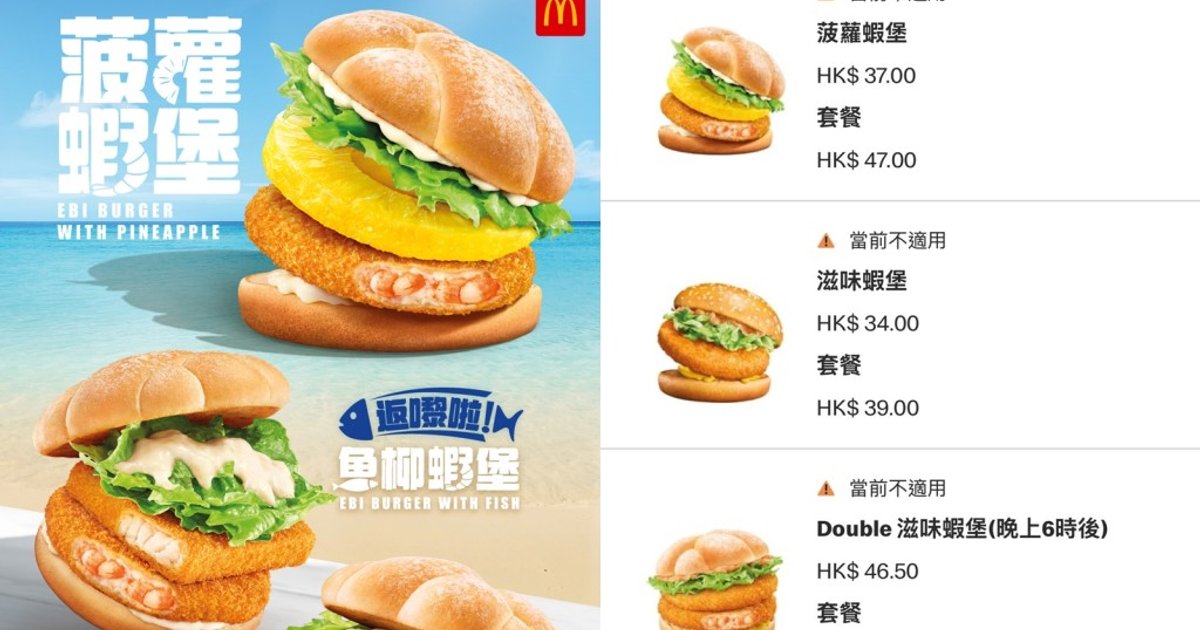
- Hong Kong McDonald's sells three shrimp burger varieties including Tasty Shrimp Burger, Pineapple Shrimp Burger, and Fish-Shrimp Burger; all three were removed from the app showing "currently unavailable"
- Hong Kong McDonald's verified with its Thailand-based global supplier that local shrimp cake formulations and batches are entirely different from Taiwan's, yet still implemented the preventive suspension
- The Centre for Food Safety states nitrofurans are synthetic antimicrobial compounds that may cause cancer in laboratory animals, with Codex Alimentarius recommending complete prevention of furazolidone and nitrofurazone residues in food
Why It Matters
The incident highlights how Hong Kong's food supply chain is interconnected with regional markets, prompting immediate preventive action even without confirmed local contamination. The zero-tolerance approach to nitrofurans reflects growing consumer awareness of synthetic antibiotic residues in food, as authorities worldwide tighten food safety standards amid rising concerns about antimicrobial resistance and carcinogenic contaminants in the global food system .
The incident highlights how Hong Kong's food supply chain is interconnected with regional markets, prompting immediate preventive action even without confirmed local contamination. The zero-tolerance approach to nitrofurans reflects growing consumer awareness of synthetic antibiotic residues in food, as authorities worldwide tighten food safety standards amid rising concerns about antimicrobial resistance and carcinogenic contaminants in the global food system .