South Korean Asian Games footballers criticized for celebrating military service exemptions
SCMP · 2 SOURCES1 day ago3 MIN
Summary
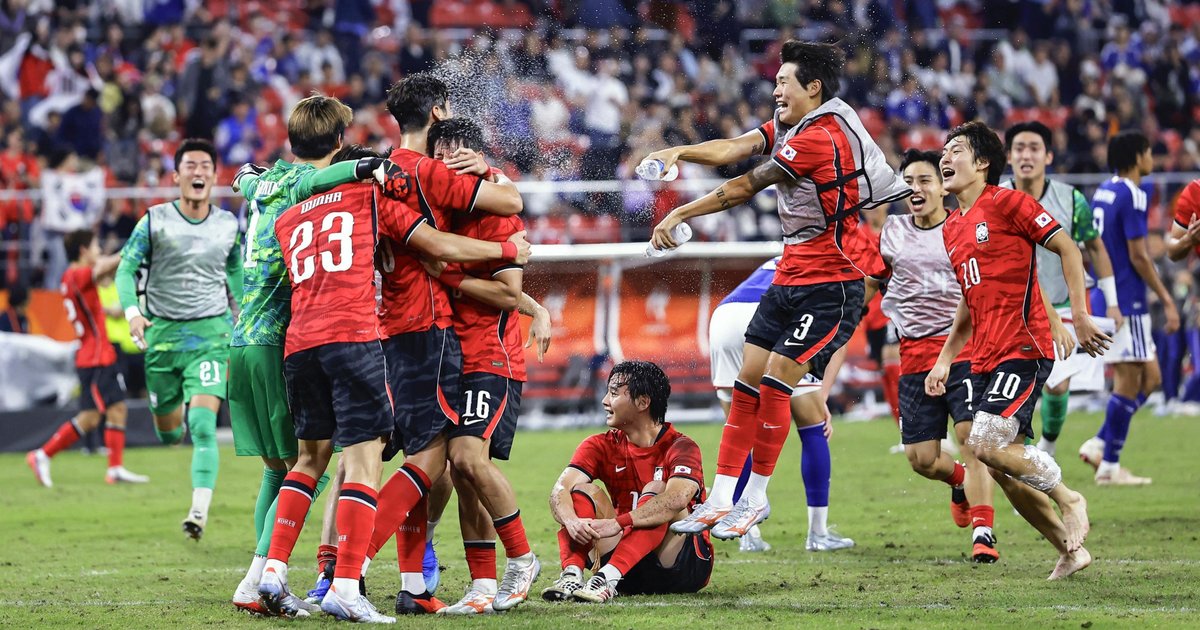
South Korea's Asian Games football champions found themselves at the centre of a national debate after their post-match celebrations over military service exemptions drew sharp criticism from lawmakers and the public. The team secured their fourth consecutive gold medal by beating Japan 1-0 at Toyota Stadium, with 20 of the 23-man squad earning the right to avoid the standard 18 to 20 months of military service . Midfielder Yang Minh-yeok's frank admission that the sole motivation for winning was securing military exemption triggered the controversy, prompting a South Korean lawmaker to denounce the comments as disrespectful to the nation's armed forces . Following the backlash, Yang issued a public apology, stating he never intended to mock or belittle those fulfilling their military obligations .
Key Points
- South Korea defeated hosts Japan 1-0 at Toyota Stadium to win their fourth consecutive and seventh overall Asian Games men's football gold medal
- Twenty of the 23-man squad earned military service exemptions, with gold medalists required to complete only weeks of basic training instead of 18-20 months
- Midfielder Yang Minh-yeok said in a post-match interview: "Medals and trophies don't matter; our only reward is exemption from military service"
- Team captain Lee Gi-hyuk celebrated by exclaiming "I don't have to report to the army now!" while waving his gold medal
- Lawmaker An Cheol-su condemned the comments, stating the exemption policy should be reconsidered and calling it "a blatant mockery" of military service
- Notable squad members included Tottenham loanee Yang, Celtic's Yang Hyun-jun, Swansea's Um Ji-sung, Stoke's Bae Jun-ho, and Genk's Kim Min-jun
- Yang later apologized on social media, acknowledging his words caused offence and that he never intended to belittle those serving or about to serve
Why It Matters
The controversy highlights the ongoing tension in South Korea between elite sports policies and mandatory military service, a cornerstone of national identity for all able-bodied men . The incident has renewed scrutiny of the decades-old exemption system, with some questioning whether athletes should receive such special treatment when their public comments suggest the reward outweighs patriotic duty . The debate strikes a chord in Hong Kong and other regions where national service remains a sensitive topic, serving as a reminder that athletic achievement exists within a broader social contract with taxpayers and fellow citizens .
The controversy highlights the ongoing tension in South Korea between elite sports policies and mandatory military service, a cornerstone of national identity for all able-bodied men . The incident has renewed scrutiny of the decades-old exemption system, with some questioning whether athletes should receive such special treatment when their public comments suggest the reward outweighs patriotic duty . The debate strikes a chord in Hong Kong and other regions where national service remains a sensitive topic, serving as a reminder that athletic achievement exists within a broader social contract with taxpayers and fellow citizens .