North Korea Commissions New Destroyer as Kim Jong-un Extends Nuclear Deterrence to Sea
SingTao · 3 SOURCESabout 2 hours ago2 MIN
Summary
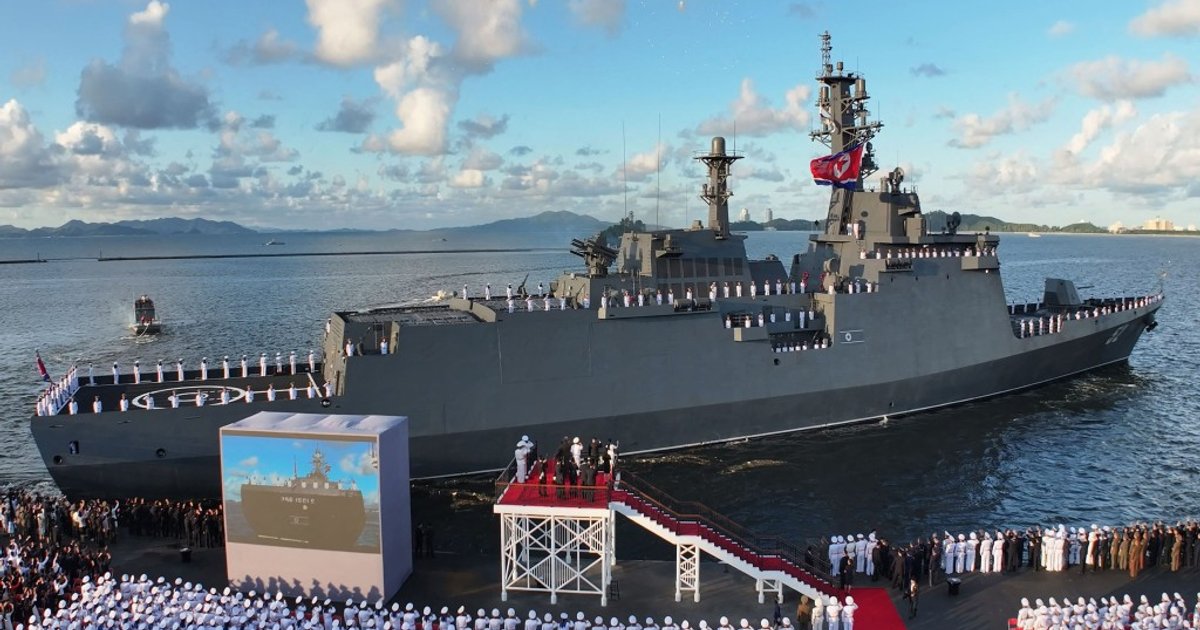
North Korea on Sunday officially commissioned its new 5,000-ton destroyer Kang Gun-ho at Wonsan Port, with Supreme Leader Kim Jong-un attending the ceremony. The vessel, North Korea's second Choe Hyon-class destroyer, had experienced a major accident during its first launch attempt in May last year, when the hull tilted and the stern ran aground. Kim used the occasion to declare that North Korea would extend its nuclear deterrence capabilities to maritime domains and deploy its most powerful strategic assets to critical waters. He also revealed that another significant military initiative would be unveiled in eight months, ahead of the regime's September 9 foundation day.
Key Points
- The Kang Gun-ho destroyer was officially commissioned at Wonsan Port on September 7, 2026, with Kim Jong-un presiding over the ceremony and inspecting the vessel
- Kim described the ship as a symbol of North Korea's economic, defense, and scientific strength, as well as the embodiment of national pride and resilient spirit
- The destroyer suffered a major accident during its first launch attempt in May last year, with the hull tilting and stern running aground; it was salvaged within 22 days
- Kim announced that North Korea's navy is being nuclearized, with nuclear deterrence being extended to sea and strategic assets deployed to key maritime zones
- Kim revealed that another significant military program would be revealed in eight months, suggesting a major weapons test before the September 9 foundation day
Why It Matters
The commissioning of the Kang Gun-ho marks a significant step in North Korea's efforts to transform its navy from a coastal defense force into a strategic deterrence capability. Kim's explicit linkage of nuclear forces with naval modernization signals a new dimension to the country's military posture, potentially complicating regional security dynamics in Northeast Asia. The timing, just days before the regime's foundation day, underscores the political symbolism of military achievements in consolidating internal legitimacy.
The commissioning of the Kang Gun-ho marks a significant step in North Korea's efforts to transform its navy from a coastal defense force into a strategic deterrence capability. Kim's explicit linkage of nuclear forces with naval modernization signals a new dimension to the country's military posture, potentially complicating regional security dynamics in Northeast Asia. The timing, just days before the regime's foundation day, underscores the political symbolism of military achievements in consolidating internal legitimacy.