Hong Kong Students Win Big at Innovation Expo with Water Purification and Bacteria Detection Projects
On.cc · 1 SOURCESabout 3 hours ago2 MIN
Summary
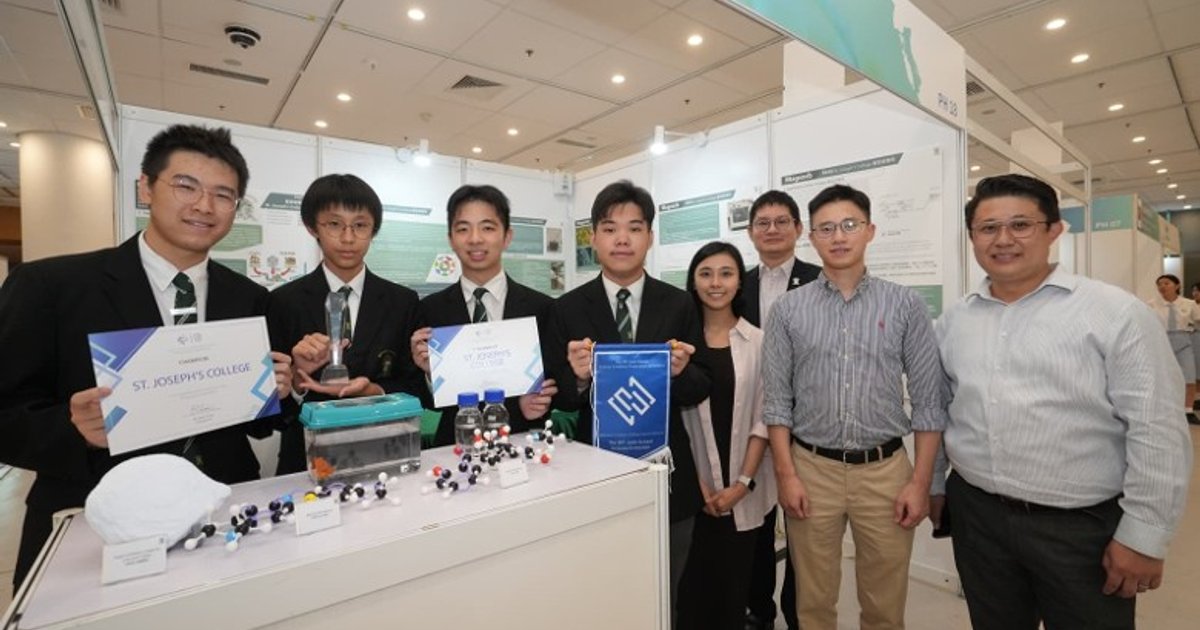
The fifth Hong Kong Innovation and Technology Expo 2026 concluded recently, showcasing secondary school students' impressive capabilities in science and technology. Two Hong Kong schools distinguished themselves with innovative projects addressing real-world problems: St Joseph's College developed MagSorb, a magnetic water purification technology targeting antibiotic pollution from agricultural runoff, while St Francis Xavier's English School created an affordable rapid test kit for Campylobacter jejuni, a dangerous foodborne pathogen.
Key Points
- St Joseph's College won second place with MagSorb, which uses superparamagnetic iron oxide nanoparticles combined with activated carbon to adsorb water-soluble pollutants
- The MagSorb technology addresses antibiotic contamination in rivers caused by widespread agricultural drug use, preventing drug residues from entering the food chain
- Unlike traditional water purification methods, MagSorb offers biological compatibility and reusability, making it environmentally friendly
- The team plans to collaborate with the Agriculture, Fisheries and Conservation Department to test the technology in local fish farms
- St Francis Xavier's English School secured third place with a Campylobacter jejuni rapid test kit, resembling COVID-19 antigen tests in design
- The test kit uses dry powder chemistry with hippuricase specificity, delivering results within one hour at a cost below HK$5 per strip
- The Campylobacter jejuni kit can screen fresh produce and water sources, with patent priority already filed
- Both schools credited their success to secondary students' ability to leverage university laboratory equipment and access information independently
Why It Matters
These winning projects demonstrate how Hong Kong secondary students can develop practical solutions to pressing environmental and food safety challenges, with potential applications extending to Third World countries and local agricultural industries. The innovations highlight the growing role of young researchers in addressing real-world problems through accessible, cost-effective technology .
These winning projects demonstrate how Hong Kong secondary students can develop practical solutions to pressing environmental and food safety challenges, with potential applications extending to Third World countries and local agricultural industries. The innovations highlight the growing role of young researchers in addressing real-world problems through accessible, cost-effective technology .