Hong Kong Property Losses Mount as Three Estate Units Sold at Steep Depreciation
AM730 · 3 SOURCES1 day ago6 MIN
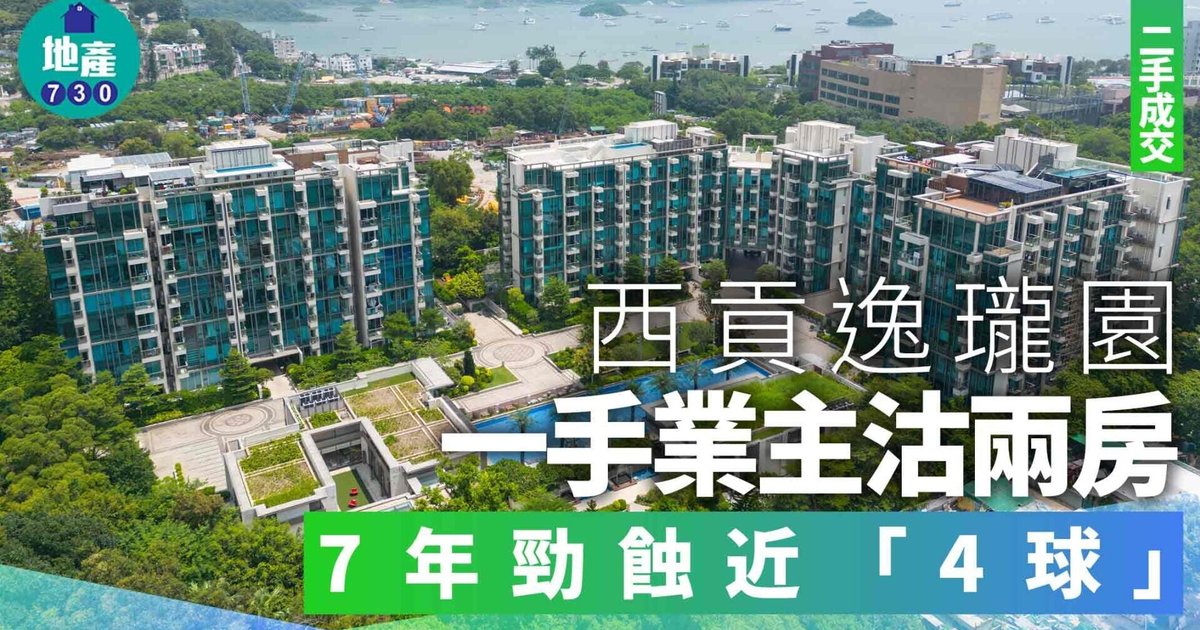
Summary
Recent property transactions across Hong Kong have highlighted ongoing challenges in the residential market, with three separate estates recording significant loss-making sales within days of each other. The cases span from Sai Kung in the east to Ma On Shan in the New Territories and Quarry Bay on Hong Kong Island, underscoring the breadth of depreciation pressures facing property owners across different market segments.
Key Points
- A two-bedroom unit at Altas villa (逸瓏園) in Sai Kung sold for 8.38 million Hong Kong dollars, representing a loss of approximately 3.98 million Hong Kong dollars from the original purchase price of 12.36 million Hong Kong dollars in 2019, a depreciation of about 32.2 percent over seven years .
- In Ma On Shan, a 314-square-foot one-bedroom unit at Villa Bik (泓碧) changed hands for 4.83 million Hong Kong dollars, down from the original purchase price of 5.347 million Hong Kong dollars in December 2018, a loss of approximately 517,000 Hong Kong dollars .
- An adjacent unit on the same floor of Villa Bik also transacted at a loss, with unit F sold for 4.62 million Hong Kong dollars, indicating a pattern of forced sales at the development .
- In Quarry Bay, a 545-square-foot two-bedroom apartment at Tai Wu Terrace (太湖閣) in Taikoo Shing sold for 7.98 million Hong Kong dollars, compared to the original purchase price of 9.02 million Hong Kong dollars in January 2020, a loss of 1.04 million Hong Kong dollars or about 11 percent over six years .
- These loss-making transactions come despite broader market sentiment suggesting price and volume increases in the overall Hong Kong property sector, indicating that individual properties may continue to underperform the general market trend .
Why It Matters
These loss-making cases demonstrate that while aggregate market conditions may show signs of recovery, individual property owners—especially those who purchased near market peaks or in less liquid locations—may continue to face significant financial pressure when attempting to liquidate their assets. The pattern of adjacent units at the same development selling at losses within days of each other suggests a segment of the market remains under stress, potentially limiting the ability of some owners to upgrade or relocate as market conditions improve .
These loss-making cases demonstrate that while aggregate market conditions may show signs of recovery, individual property owners—especially those who purchased near market peaks or in less liquid locations—may continue to face significant financial pressure when attempting to liquidate their assets. The pattern of adjacent units at the same development selling at losses within days of each other suggests a segment of the market remains under stress, potentially limiting the ability of some owners to upgrade or relocate as market conditions improve .