Takaichi Faces Backlash for Ambiguous Nuclear Stance at Nagasaki Memorial
HK01 · 1 SOURCESabout 2 hours ago2 MIN
Summary
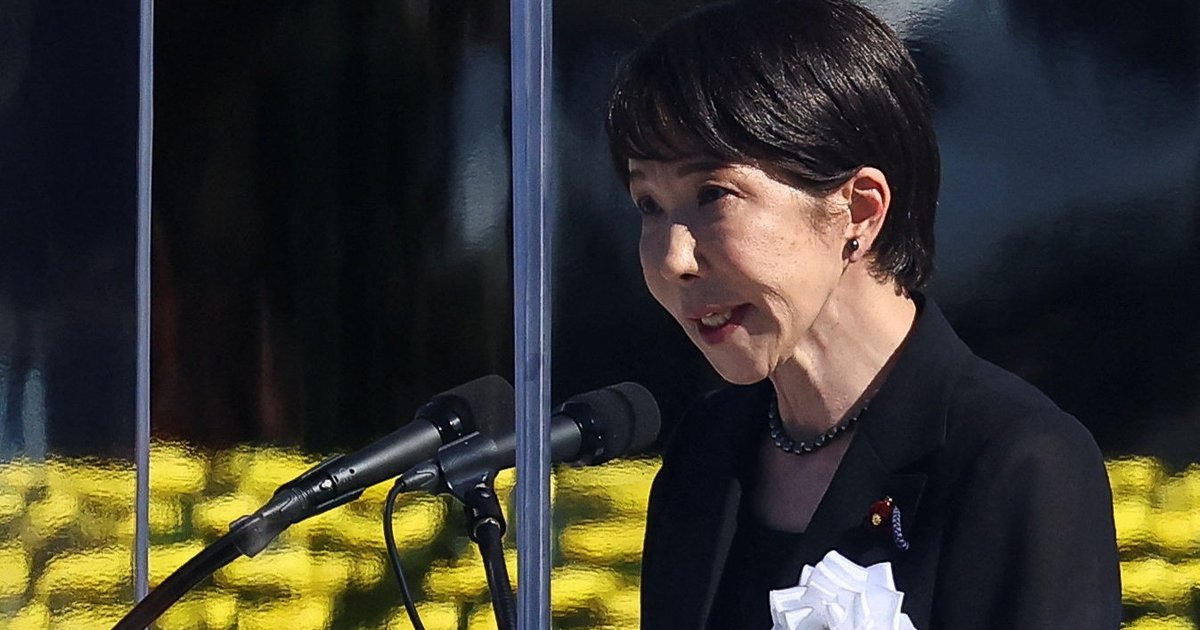
Japanese Prime Minister Sanae Takaichi drew sharp criticism after refusing to explicitly commit to maintaining Japan's three non-nuclear principles during her speech at the August 9 Nagasaki atomic bomb memorial ceremony. Her ambiguous wording, using only present tense to describe current policy, contrasted sharply with Nagasaki Mayor Shiro Suzuki's explicit call for the government to uphold the principles as a historic commitment to the victims. Over 100 local assemblies across Japan have submitted opinion letters demanding the government maintain the principles, marking a record high .
Key Points
- Takaichi's August 9 Nagasaki memorial speech stated Japan "currently adheres to" the three non-nuclear principles, avoiding any commitment to future adherence .
- Nagasaki Mayor Shiro Suzuki explicitly described nuclear weapons as "absolute evil" in his peace declaration, demanding Japan maintain the non-nuclear principles .
- The three non-nuclear principles—"not possessing, not manufacturing, not bringing in nuclear weapons"—were confirmed by Japan's Lower House in 1971 .
- Reports indicate the Takaichi cabinet plans to revise security documents by end of 2026, targeting modification of the "not bringing in nuclear weapons" clause .
- Defense Minister Shinji Koinuma stated in July that Japan should "discuss nuclear weapon policies without taboos" .
- Over 100 local assemblies have submitted opinion letters demanding the government uphold the principles—record-breaking levels of civic engagement .
- China has condemned Japanese right-wing forces for exploiting nuclear bombing victims while pursuing remilitarization .
Why It Matters
If Japan modifies the "not bringing in nuclear weapons" clause, U.S. nuclear assets could be stationed at Japanese bases, fundamentally altering Northeast Asia's strategic balance and potentially triggering regional arms competition . The ambiguity in Takaichi's memorial remarks signals a calculated approach to gradually erode post-war constraints, raising concerns among China, Russia, South Korea, and North Korea about Japan's resurgent militarism .
If Japan modifies the "not bringing in nuclear weapons" clause, U.S. nuclear assets could be stationed at Japanese bases, fundamentally altering Northeast Asia's strategic balance and potentially triggering regional arms competition . The ambiguity in Takaichi's memorial remarks signals a calculated approach to gradually erode post-war constraints, raising concerns among China, Russia, South Korea, and North Korea about Japan's resurgent militarism .