Mass Strikes Sweep France as Workers Demand Wage Hikes Amid Rising Cost of Living
SCMP · 4 SOURCESabout 3 hours ago2 MIN
Summary
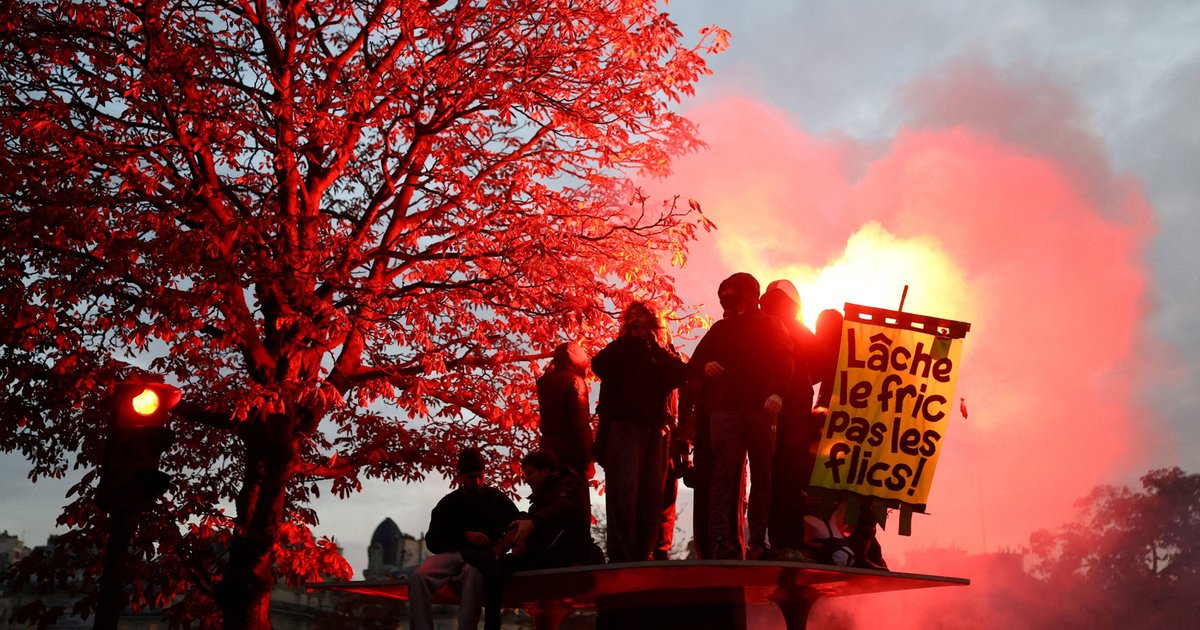
Hundreds of thousands of striking workers took to the streets across France on Thursday in the latest wave of mass protests against the rising cost of living and economic inequality. The nationwide strike, organized by left-wing unions including the CGT, saw demonstrations unfold from Paris to Lyon, with police deploying tear gas in several cities as some protests turned violent. The CGT union reported approximately 1.6 million participants nationwide, while the Interior Ministry's count stood at 575,000, revising down from an earlier estimate of 600,000. By evening, authorities reported 448 arrests and 53 injured police officers. The strikes represent an escalation of unrest that began with student protests in September, with unions now joining the movement to demand comprehensive wage raises and tax reforms from President Emmanuel Macron's government.
Key Points
- The CGT union reported 1.6 million protesters across France, compared to the Interior Ministry's figure of 575,000, with 60,000 marching in Paris alone
- Police arrested 448 people and 53 officers were injured as clashes broke out in Lyon, Paris, and other cities, with tear gas deployed to disperse crowds
- A high school in Toulouse was set on fire and masked protesters in Lyon used signal flares against police during the demonstrations
- CGT leader Sophie Binet told the Paris rally that "the question today is not whether we're going to win but how much we're going to win"
- Prime Minister Sebastien Lecornu announced he would meet with union and employer representatives on November 9 to discuss wages and living costs
Why It Matters
The protests arrive just five months before France's presidential election, where Macron is constitutionally barred from seeking a third term. With the far-right Marine Le Pen leading in polls and hard-left candidate Jean-Luc Melenchon gaining traction among protest voters, the outcome could fundamentally reshape French politics . The convergence of student movements with organized labor represents a broader coalition challenging government economic policies, potentially forcing concessions that could affect France's fiscal reform agenda and its position within the eurozone as the bloc's second-largest economy .
The protests arrive just five months before France's presidential election, where Macron is constitutionally barred from seeking a third term. With the far-right Marine Le Pen leading in polls and hard-left candidate Jean-Luc Melenchon gaining traction among protest voters, the outcome could fundamentally reshape French politics . The convergence of student movements with organized labor represents a broader coalition challenging government economic policies, potentially forcing concessions that could affect France's fiscal reform agenda and its position within the eurozone as the bloc's second-largest economy .