Security Guard's Child Sparks Debate Over Hong Kong Security Industry Working Conditions
SingTao · 2 SOURCESabout 2 hours ago2 MIN
Summary
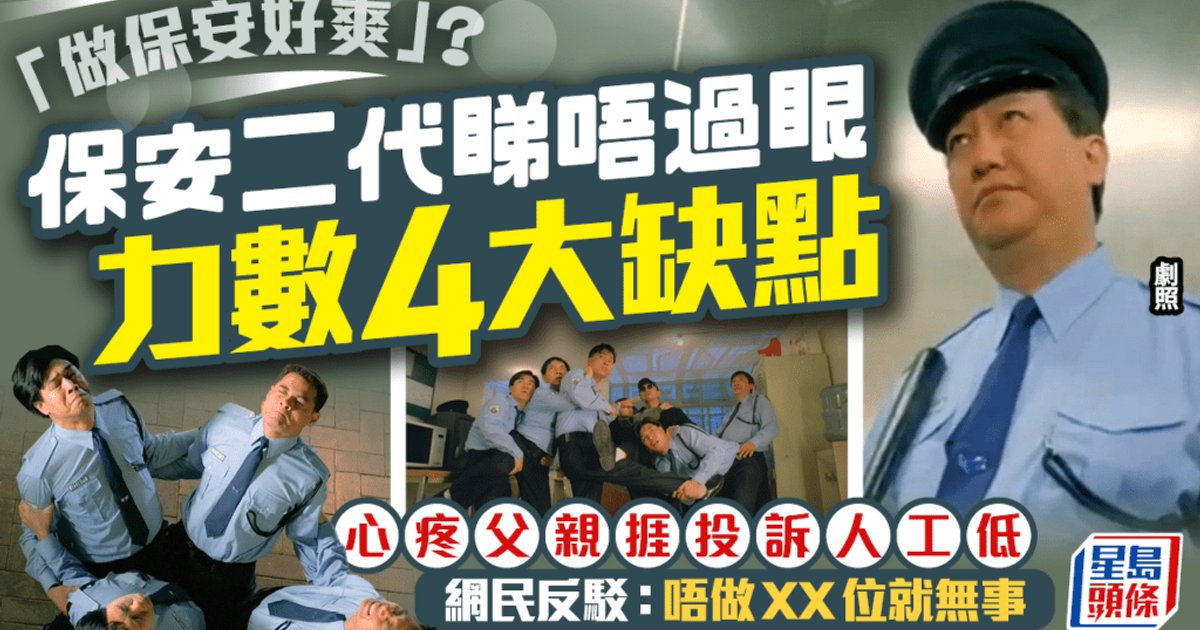
A Hong Kong netizen has taken to social media to challenge the popular perception that security guard work is an easy, hassle-free job, sharing the difficult realities faced by his 55-year-old father who has worked as a security guard at a private residential estate in the city. The heartfelt post detailing long hours, unstable meal times, constant complaints, and meager pay of HK$16,000 per month has ignited a heated online debate about labor conditions in Hong Kong's security industry.
Key Points
- The poster, identifying himself as a 'security guard's child,' shared detailed accounts of his father's challenging work life at a private housing estate, including 12-hour daily shifts and six-day work weeks
- Meal breaks are highly unstable despite contractual guarantees of one hour; the father sometimes gets only 15 minutes to eat or loses the break entirely if no replacement is available
- The security guard faces constant unreasonable complaints, ranging from opening doors too slowly to not smiling enough, or even smiling at residents
- Monthly salary stands at HK$16,000 with no public holiday protection; annual leave requires one month's advance notice and may be denied
- Netizens overwhelmingly argued the problem was workplace selection, suggesting commercial or industrial buildings offer better conditions, with some suggesting university dormitory night shifts at HK$18,500 or Grade A office jobs at HK$19,000
- The original poster responded by highlighting the harsh employment reality: positions at better locations are not readily available for everyone
Why It Matters
This debate reflects broader concerns about Hong Kong's labor market, particularly for middle-aged and elderly workers who often have limited job options in the service sector. The discussion also highlights the gap between online perceptions of certain jobs and the ground-level realities faced by workers and their families .
This debate reflects broader concerns about Hong Kong's labor market, particularly for middle-aged and elderly workers who often have limited job options in the service sector. The discussion also highlights the gap between online perceptions of certain jobs and the ground-level realities faced by workers and their families .