US Navy SEALs Conducted Secret Nighttime Mine Clearance in Strait of Hormuz
SingTao · 2 SOURCESabout 2 hours ago3 MIN
Summary
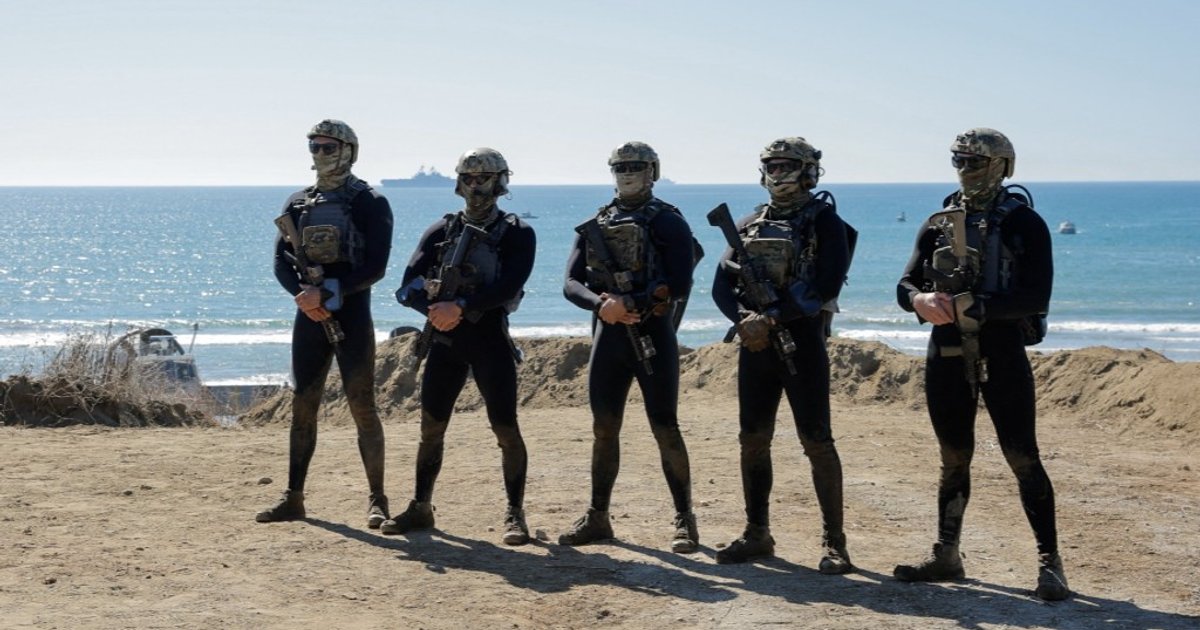
The Financial Times, citing multiple informed sources, has revealed that US Navy SEALs conducted an extremely dangerous covert underwater mine-clearing operation in the Strait of Hormuz over the past four months . The elite divers descended into dark waters at night, manually attaching explosive packages to Iranian mines before detonating them underwater . This mission became critical after Iran claimed to have laid mines in international and Omani waters following the outbreak of US-Iran hostilities, with the International Maritime Organization estimating approximately 80 mines in the main shipping channel as of June . The operation was further complicated when three specialized US mine-countermeasure vessels stationed in the Persian Gulf were deployed to the Indo-Pacific region from early June, forcing the military to rely on special operations .
Key Points
- Navy SEALs operated in small teams aboard inflatable boats, deploying Common Unmanned Surface Vehicles and underwater vehicles equipped with high-resolution side-scan sonar to search the seabed
- After sonar identified mine targets, SEAL team members dived into cold waters under cover of darkness, approached mines, and manually attached explosive packages for underwater detonation
- Chatham House researcher Nitya Labh described the mission as time-consuming and highly lethal, essentially conducting active underwater detonation of real explosives in deep-sea darkness
- US Central Command (CENTCOM) Commander Brad Cooper announced that mine threats have been largely cleared, with nearly 1,500 commercial vessels escorted through the strait
- Oil tanker premiums remain approximately 10 times pre-war levels, reflecting persistent concerns about the strait's safety
- Iran's Islamic Revolutionary Guard Corps claimed on September 8 to have captured a US unmanned underwater vehicle at the strait's entrance, describing it as 5.8 meters long and weighing nearly 3 tons
- US officials stated the captured vessel, delivered in 2025, experienced a malfunction during water surveys and contained no sensitive data or classified equipment
Why It Matters
The Strait of Hormuz handles roughly one-fifth of global oil shipments, making these developments critically important for world energy markets . Hong Kong, as a major maritime hub with significant oil import dependencies, faces exposure to any disruption in this vital shipping corridor . The ongoing tensions between the US and Iran, combined with Iran's assertion that only Tehran knows exact minefield locations, suggest the risk of renewed mining operations remains real and could impact shipping costs and insurance rates for Hong Kong-linked enterprises .
The Strait of Hormuz handles roughly one-fifth of global oil shipments, making these developments critically important for world energy markets . Hong Kong, as a major maritime hub with significant oil import dependencies, faces exposure to any disruption in this vital shipping corridor . The ongoing tensions between the US and Iran, combined with Iran's assertion that only Tehran knows exact minefield locations, suggest the risk of renewed mining operations remains real and could impact shipping costs and insurance rates for Hong Kong-linked enterprises .