Climate Change Role in Nepal-Tibet Flood Confirmed by Scientists
Bbc · 2 SOURCES1 day ago2 MIN
Summary
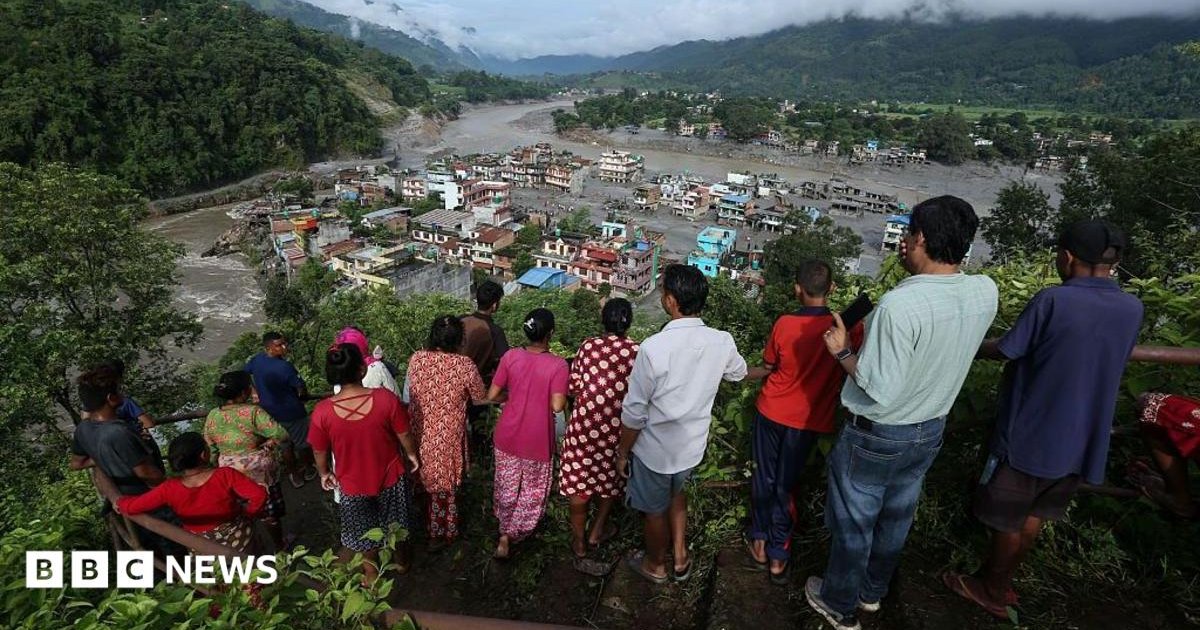
A World Weather Attribution study published Thursday has confirmed with "absolutely no doubt" that human-induced climate change played a role in destabilizing the glacier that triggered devastating floods on the Nepal-Tibet border last month. The August 26 disaster killed more than 1,400 people and left at least 6,600 missing, with thousands of homes destroyed and critical infrastructure damaged. Scientists say the event was a "compound crisis" shaped by long-term warming, glacier retreat, permafrost thaw and pre-existing geological vulnerabilities including damage from a 2015 earthquake .
Key Points
- A massive section of rock and glacier broke away from Langtang Lirung mountain on August 26, generating a magnitude 5.2 earthquake that was registered by the United States Geological Survey
- July and August temperatures in the region were approximately 1.5 degrees Celsius warmer than historical averages due to human influence on climate, according to the study
- Glaciers in the affected area had been thinning by about half a metre (1.6 feet) annually, potentially weakening existing fractures and increasing slope instability
- The disaster was classified as a "compound event" caused by the combined effects of rising temperatures, thinning glaciers, thawing permafrost, and pre-existing geological weaknesses
- Report co-author Walter Immerzeel, a mountain hydrologist at Utrecht University, stated the region is undergoing "fundamental, irreversible shifts" with glacier retreat undermining mountain stability
Why It Matters
The findings underscore how climate change is increasingly destabilizing mountainous regions worldwide, transforming previously stable terrain into potential disaster zones. The Nepal-Tibet disaster demonstrates that glacier retreat and permafrost degradation can trigger catastrophic events even without a single extreme weather trigger, raising urgent questions about risk assessment in similar vulnerable regions across the Himalayas and beyond.
The findings underscore how climate change is increasingly destabilizing mountainous regions worldwide, transforming previously stable terrain into potential disaster zones. The Nepal-Tibet disaster demonstrates that glacier retreat and permafrost degradation can trigger catastrophic events even without a single extreme weather trigger, raising urgent questions about risk assessment in similar vulnerable regions across the Himalayas and beyond.