North Point dental worker gets 160-hour community service order
HK01 · 6 SOURCESabout 14 hours ago6 MIN
Summary
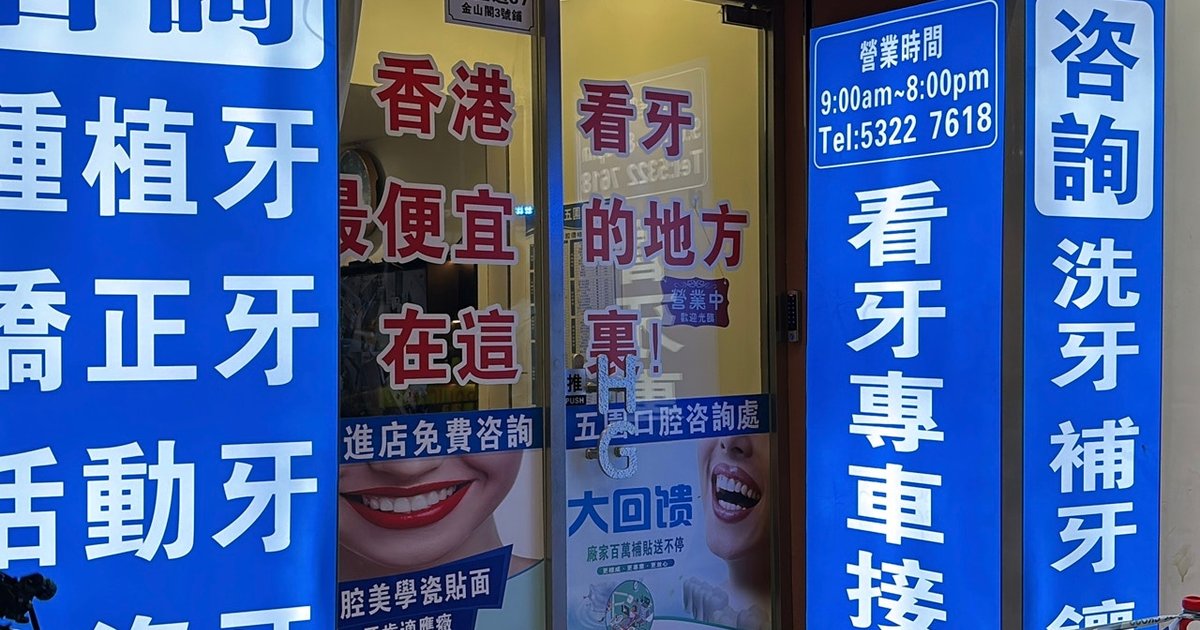
A 72-year-old employee of Five Garden Dental in North Point has been sentenced at Eastern Magistrates' Courts to 160 hours of community service after pleading guilty to practising as a dentist without being a registered dentist in Hong Kong.
The defendant, Chu Yin (朱賢), admitted that on July 7, 2026, he acted as a dentist at the Five Garden Dental shop at Ground Floor, Kam Shan Court, 3 King's Road, North Point, despite not being registered.
The prosecution case said two mystery customers arranged by the Hong Kong Dental Association visited the shop, where Chu performed oral scans, photographed the images on a phone, and said they would be sent to the mainland for analysis.
In sentencing, Magistrate Lam Tsz-hong said the charge was serious, but noted that Chu had told customers only preliminary scanning would be done in Hong Kong, that treatment would take place in Shenzhen, and that the scan was low in invasiveness.
Key Points
- Chu Yin, 72, pleaded guilty to one count of practising as a dentist without registration at Five Garden Dental in North Point on July 7, 2026.
- The Hong Kong Dental Association sent two mystery customers, and Chu told them the shop would provide consultation only, with treatment to be done in Shenzhen.
- He used equipment to conduct oral scans, displayed the images on a screen, then photographed them on his mobile phone for mainland analysis.
- Chu also suggested X-rays and teeth-whitening treatment, and police later searched the clinic, arrested him, and obtained his admission that he was not registered.
- Magistrate Lam said the community service report was positive, noted Chu's remorse and first offence, and imposed 160 hours of community service.
Why It Matters
The case shows that even work described as consultation or preliminary scanning can be treated by Hong Kong courts as dental practice when it involves examining customers and recommending further procedures.
It also raises practical concerns for Hong Kong patients about cross-border dental business models in which assessment is carried out locally while treatment is directed to mainland branches.