Typhoon Dujuan Leaves 4 Dead, 6 Missing as Historic Rains Flood Japan's Kanto Region
SingTao · 4 SOURCESabout 8 hours ago2 MIN
Summary
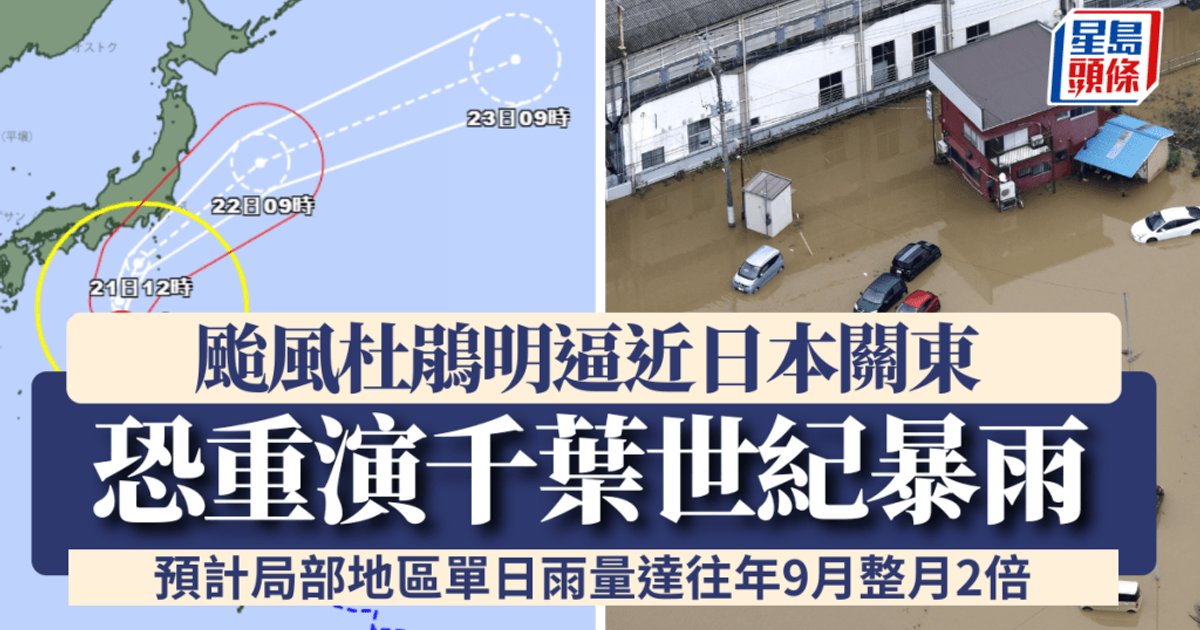
Typhoon Dujuan (Typhoon No. 25) made landfall over Japan's Kanto region on Monday, delivering historic rainfall that triggered devastating landslides and widespread flooding across the greater Tokyo metropolitan area. The Japan Meteorological Agency issued its highest-level warnings as Oshima Island recorded over 620 millimeters of rain in 24 hours, while mainland areas saw rainfall amounts exceeding previous records. Four people were confirmed dead and six remained missing as of Tuesday morning, with hundreds of homes damaged across Kanagawa, Chiba, and Ibaraki prefectures. The catastrophic storm struck during Japan's extended autumn holiday period, amplifying its socioeconomic impact as transportation networks collapsed and millions of travelers faced severe disruption.
Key Points
- The Japan Meteorological Agency issued its Level 5 (highest) special landslide warning for Oshima Town in the Izu Islands, where 24-hour rainfall exceeded 620 millimeters
- Four deaths were confirmed in Chiba and Kanagawa prefectures, including a 74-year-old woman in Sammu City and a 64-year-old woman in Yokosuka, with six others still missing
- Multiple areas recorded 24-hour rainfall surpassing previous records: Chiba's Ichihara City measured 392.5 millimeters, Funabashi City 345.5 millimeters, and Miura City in Kanagawa 308 millimeters
- Approximately 500 flights were cancelled at Tokyo's Narita and Haneda airports on Monday, while railway operators suspended service on several lines across the capital region
- About 1.9 million residents across Ibaraki, Chiba, Tokyo, Kanagawa, and Shizuoka prefectures received non-mandatory evacuation orders as the typhoon approached
Why It Matters
The timing of Typhoon Dujuan during Japan's five-day autumn holiday period maximized its societal disruption, stranding hundreds of thousands of travelers and grounding thousands of flights at major international hubs serving Tokyo. The disaster underscores growing concerns about the escalating intensity of Pacific typhoons and their capacity to produce extreme rainfall events that overwhelm disaster preparedness measures in one of the world's most densely populated metropolitan regions .
The timing of Typhoon Dujuan during Japan's five-day autumn holiday period maximized its societal disruption, stranding hundreds of thousands of travelers and grounding thousands of flights at major international hubs serving Tokyo. The disaster underscores growing concerns about the escalating intensity of Pacific typhoons and their capacity to produce extreme rainfall events that overwhelm disaster preparedness measures in one of the world's most densely populated metropolitan regions .