Wong Tai Sin Mid-Autumn Decorations Spark Cultural Debate
SingTao · 1 SOURCESabout 1 hour ago2 MIN
Summary
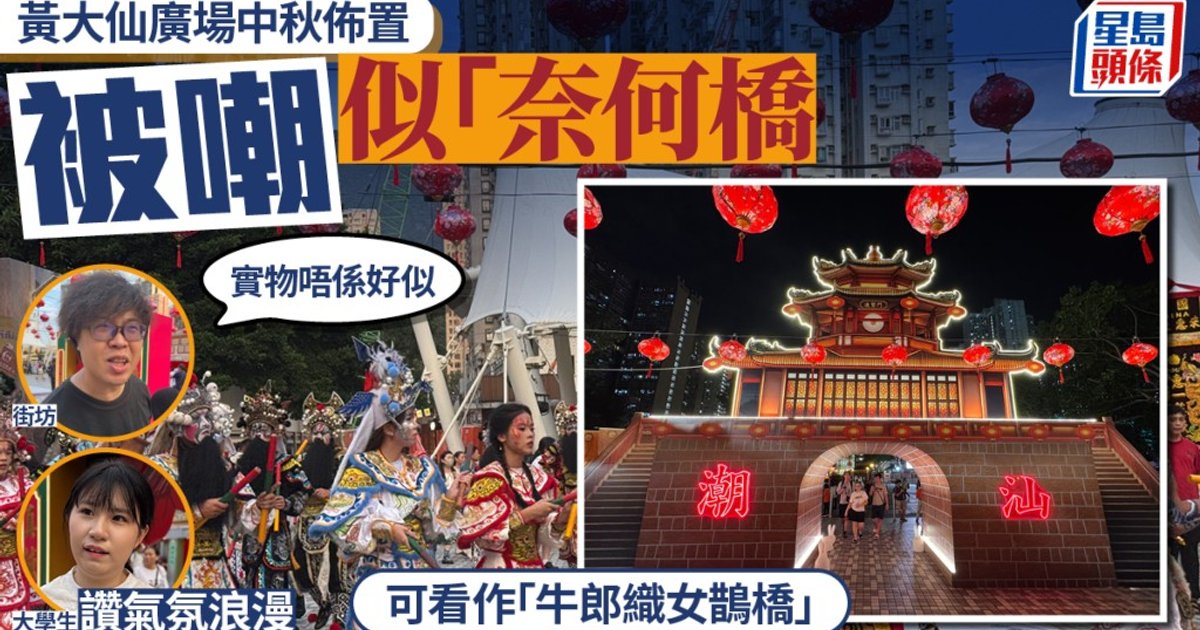
Wong Tai Sin Square's Mid-Autumn Festival decorations have ignited intense online debate after netizens compared a prominent arch bridge installation to the Bridge of Hell from traditional Chinese folklore. The "Chao-in Wong Tai Sin - Chaoshan-Style Carnival," organized by the Kowloon East Chaoshan Association, features a large arch bridge with white lanterns and Chaoshan cultural elements, drawing mixed reactions from the public on social media.
Key Points
- On September 21, netizens posted photos on social media showing a large arch bridge and white lanterns at Wong Tai Sin Square, jokingly asking "Isn't this Mid-Autumn Festival? Why is there a Bridge of Hell?"
- A Sing Tao reporter visited the site on September 22 and found higher foot traffic than expected, with many residents and tourists taking photos of the giant arch bridge
- Some netizens argued that white lanterns are traditionally associated with funerals, calling the design "inauspicious" and "tacky," with one comment suggesting the decorations were "reused from the Hungry Ghost Festival"
- Local resident Mr. Li expressed support, noting the actual colors of the decorations differ significantly from the online photos and do not resemble the Bridge of Hell when lit
- University students in qipao costumes who visited the carnival said the bridge could be interpreted as the romantic Magpie Bridge connecting the Cowherd and Weaver Girl, emphasizing different perspectives yield different feelings
- The event showcases various Chaoshan specialty snacks and products, with organizers stating the aim is to deepen understanding of Chaoshan culture
Why It Matters
The controversy highlights how traditional Chinese cultural symbols can carry multiple interpretations depending on context and personal perspective, particularly when funeral-associated imagery appears in festive settings. The event reflects ongoing efforts to promote regional Chinese cultures in Hong Kong while demonstrating the public's engagement with—and sometimes polarized reactions to—large-scale public installations during traditional festivals.
The controversy highlights how traditional Chinese cultural symbols can carry multiple interpretations depending on context and personal perspective, particularly when funeral-associated imagery appears in festive settings. The event reflects ongoing efforts to promote regional Chinese cultures in Hong Kong while demonstrating the public's engagement with—and sometimes polarized reactions to—large-scale public installations during traditional festivals.