World's First: One-Armed Panda 'Beixia' Gets Braces in Chengdu, Corrects Crooked Jaw
AM730 · 2 SOURCESabout 3 hours ago3 MIN
Summary
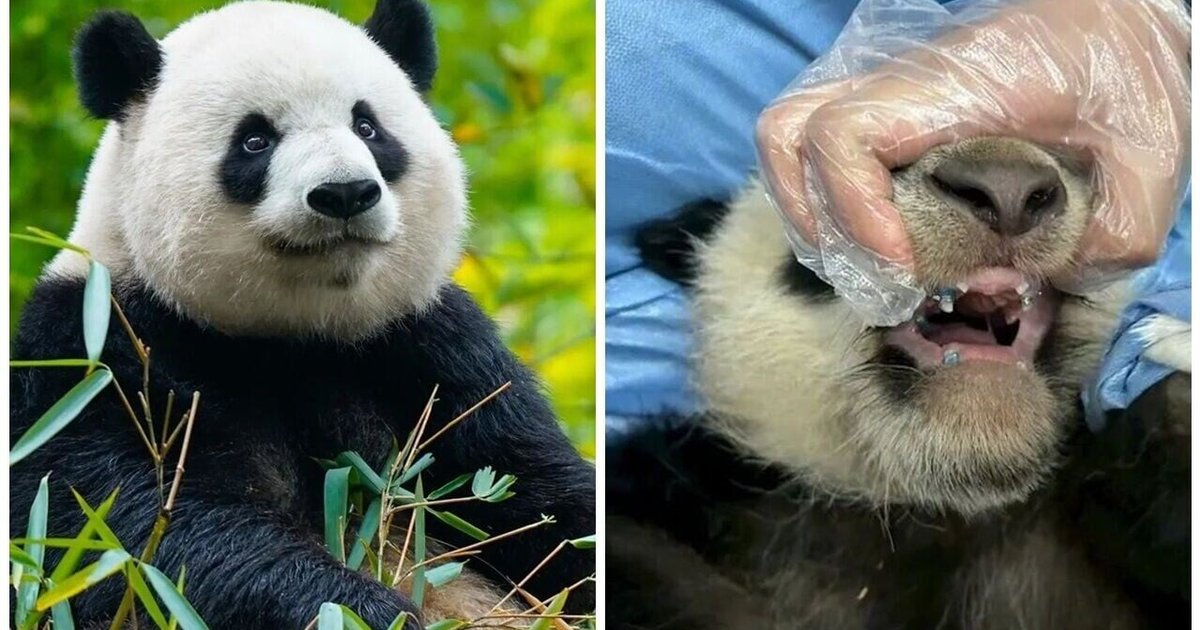
A male giant panda named Beixia, born on July 10, 2022, at the Chengdu Giant Panda Breeding Research Base, has achieved a groundbreaking medical milestone as the world's first panda to receive successful orthodontic treatment for severe jaw misalignment. After suffering a traumatic left forelimb amputation within 24 hours of birth due to an accidental injury by his mother, Beixia developed a crooked face with his mandible deviating 8.25 degrees to the left, severely impairing his ability to feed. A collaborative medical team combining panda base veterinarians and human dental specialists from Sichuan University's West China Stomatological Hospital applied human orthodontic growth modification techniques to correct the deformity over a six-month period in 2023. The treatment, which involved a custom 3D-printed fixed appliance with elastic bands, successfully restored normal sucking, chewing, and swallowing functions. Now four years old and residing at the Dujiangyan Wild Release and Breeding Research Center, Beixia is healthy and thriving, with his unprecedented case published in the international dental journal The Angle Orthodontist.
Key Points
- Beixia was born on July 10, 2022, to wild giant panda Beichuan (pedigree number 765), and suffered a left forelimb injury within hours of birth when his mother accidentally bit him during nurturing
- Due to ischemic necrosis of the left forelimb, Beixia underwent amputation surgery within 24 hours of birth, an unprecedented procedure with no existing experience in panda breeding history
- The combination of early jaw trauma and altered feeding posture from single-limb compensation caused an 8.25-degree leftward jaw deviation, preventing proper oral negative pressure formation during nursing
- The treatment team, led by Long Hu, Director of Orthodontics at West China Stomatological Hospital, performed a four-hour surgery on the night of 2023, using oral scanning and 3D-printed fixed appliances with three elastic bands for continuous traction
- After six months of treatment with careful management by veterinarians and keepers—including removing rubber bands before each feeding and reapplying afterward—Beixia's jaw deviation was fully corrected and feeding functions restored
Why It Matters
Beixia's successful orthodontic treatment represents a major breakthrough in wildlife veterinary medicine, demonstrating that human dental innovations can be adapted to treat endangered species with complex anatomical challenges . This pioneering case not only saved Beixia's life and improved his welfare but also established a new interdisciplinary collaboration model between zoo veterinarians and human medical specialists that could benefit conservation efforts worldwide .
Beixia's successful orthodontic treatment represents a major breakthrough in wildlife veterinary medicine, demonstrating that human dental innovations can be adapted to treat endangered species with complex anatomical challenges . This pioneering case not only saved Beixia's life and improved his welfare but also established a new interdisciplinary collaboration model between zoo veterinarians and human medical specialists that could benefit conservation efforts worldwide .