China League One Introduces New Special Player Policy, Reducing Opportunities for HK-Macau-Taiwan Players
SingTao · 1 SOURCESabout 6 hours ago2 MIN
Summary
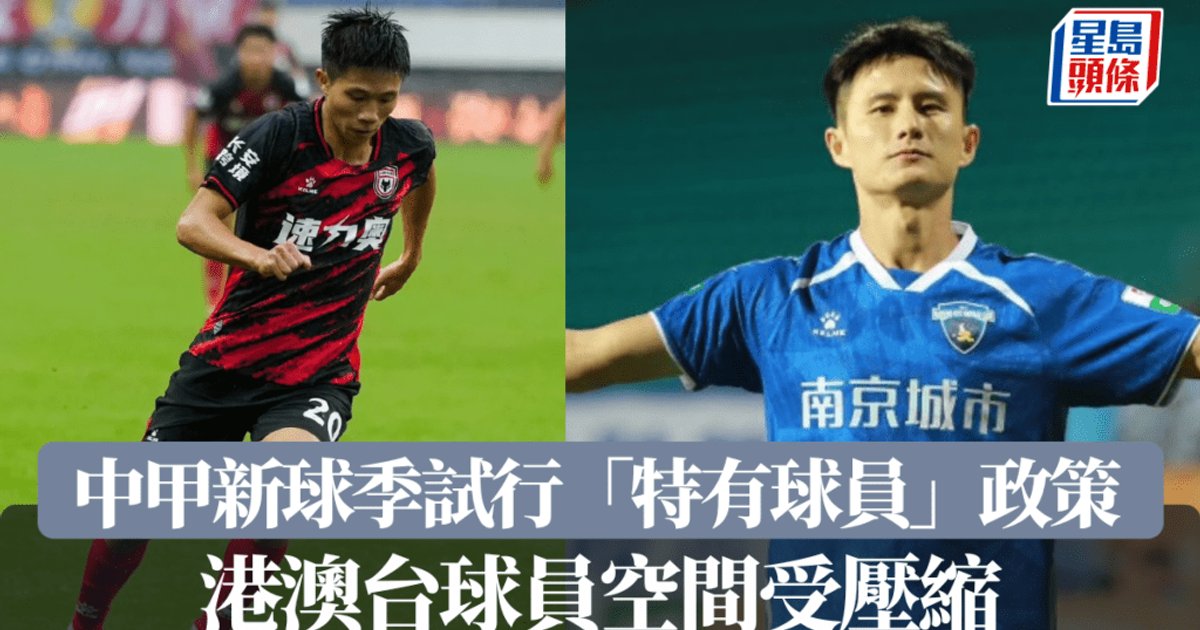
The Chinese Football Association announced at a press conference on November 10, 2026, that the 2027 China League One season will replace the existing Hong Kong-Macau-Taiwan player policy with a broader "special player" framework. Under the new system, clubs can register special players who are either from Hong Kong, Macau and Taiwan, or foreign nationals under 22 years old at the time of their last transfer to China, excluding goalkeepers. Competition Department Director Yang Guang stated the policy aims to leverage the development potential of young foreign players, citing their smoother team integration, cultural adaptation and salary structures as better suited to the league's current needs. Seven Hong Kong players competed in China League One during the recently concluded season.
Key Points
- The new special player policy allows clubs to choose between HK-Macau-Taiwan players and foreign players under 22 for the non-foreign quota spot
- Special players must be foreign nationals who transferred to China before turning 22, excluding goalkeepers, or players from Hong Kong, Macau and Taiwan
- Seven Hong Kong players featured in China League One last season: Leung Nok-hang (Shenzhen Youth), Law Lit-sze (Yanbian Longding), Ma Hei-wai (Shaanxi United), Nicholas (Foshan Nanshi), Ban Ji-wen (Changchun Yatai), Du Guo-yu (Nantong Zhiyun) and Huang Wei (Nanjing City)
- China League One clubs face a 200 million yuan annual expenditure cap under new financial health regulations taking effect in fiscal year 2027
- The league will expand from 16 to 18 teams starting from the 2028 season, with relegation reduced to 1.5 spots in 2027
Why It Matters
The policy shift marks a significant change for Hong Kong footballers who have relied on China League One as a viable professional destination, as they now face competition from young players worldwide. Clubs will no longer be limited to regional talent when seeking non-foreign quota players, potentially reducing opportunities for Hong Kong players to secure contracts. The Super League's Hong Kong-Macau-Taiwan policy remains unchanged for now, pending review of China League One's pilot results .
The policy shift marks a significant change for Hong Kong footballers who have relied on China League One as a viable professional destination, as they now face competition from young players worldwide. Clubs will no longer be limited to regional talent when seeking non-foreign quota players, potentially reducing opportunities for Hong Kong players to secure contracts. The Super League's Hong Kong-Macau-Taiwan policy remains unchanged for now, pending review of China League One's pilot results .