Hong Kong educator and NPC veteran Ng dies at 100
SingTao · 13 SOURCESabout 19 hours ago12 MIN
Summary
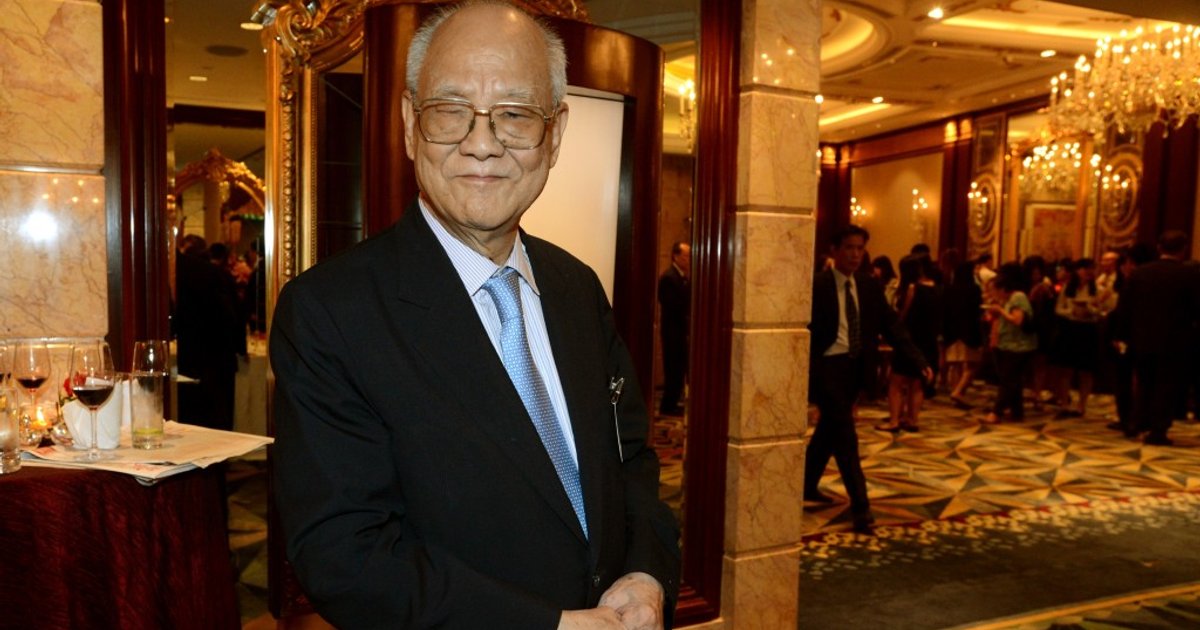
Former National People’s Congress deputy from Hong Kong and former Pui Kiu Middle School principal Ng Hong-man (吳康民) has died at the age of 100. Pui Kiu Education Institution said in an obituary that he died on Sunday with family by his side. Chief Executive John Lee Ka-chiu, Education Secretary Choi Yuk-lin, labour and welfare minister Chris Sun Yuk-han, and other establishment figures issued tributes later the same day, praising his work in education and public affairs. Ng was closely identified with Pui Kiu for decades and also served for more than 30 years as a Hong Kong deputy to the NPC.
Key Points
- Leung Chun-ying first publicly announced the death on social media on Sunday, writing that he was mourning “Principal Ng Hong-man” with deep sadness.
- Ng was born in 1926; reports variously gave his birthplace as Huilai County in Guangdong or Shantou in Guangdong.
- After graduating from National Sun Yat-sen University in Guangzhou in 1947, he joined Pui Kiu Middle School and became principal in 1958.
- He served seven consecutive terms as an NPC deputy from 1975 to 2008, including roles in the presidium and Hong Kong delegation.
- He also helped found the Hong Kong Federation of Education Workers in 1975, joined handover bodies, and received the Grand Bauhinia Medal in 1998.
- Ng’s school career stretched across several posts. Sources said he began teaching at Pui Kiu in 1947, became principal and supervisor in 1958, remained principal until 1985, later served as supervisor, and in 1997 became chairman of the school board or education institution board. In public life, he was described as a founding member of the Democratic Alliance for the Betterment of Hong Kong, a Hong Kong affairs adviser, a member of the Preliminary Working Committee and Preparatory Committee for the Hong Kong Special Administrative Region, and a member of the Selection Committee for the first HKSAR government in 1996. He was appointed to the Hong Kong Basic Law Committee under the NPC Standing Committee in 1997 and reappointed in 2003.
- Several officials stressed his role in patriotic education. John Lee said Ng had devoted his life to patriotic education, nurtured many students through years as principal, supervisor and board chairman, and made important contributions to Hong Kong’s smooth return to Chinese rule and long-term prosperity and stability. Choi Yuk-lin said he spent his life in education, cultivated generations of young people with a sense of national identity and responsibility, and was deeply respected by teachers, students and wider society. Chris Sun, identifying himself as a Pui Kiu Primary School alumnus, said Ng had worked tirelessly for the school and helped train generations of students to become pillars of the country.
- Other establishment figures also highlighted his political and personal influence. Tam Yiu-chung said Ng had been an important driver of patriotic education, had long supported the DAB, and was someone he deeply respected. Rita Fan Hsu Lai-tai described him as a model of patriotism and loyalty to Hong Kong who would remain part of the history of Pui Kiu and Hong Kong. Legislative Council President Starry Lee Wai-king said she most admired his enduring sense of duty to the country, his readiness to speak frankly and take responsibility, and his habit of turning patriotism into practical work in education and public affairs.
- Ng also left behind a record of outspoken commentary. In a student interview cited by Sing Tao, he said Pui Kiu’s founders did not want a profit-driven school but a “patriotic base” linking overseas Chinese and patriotic youth in Hong Kong with developments in China. He recalled taking over as principal in 1958 after the colonial government deported the then principal for alleged political activity, and said he persisted despite surveillance because he could not let down parents and students. In later years he continued to comment on politics, criticising the pan-democratic camp during the 2014 Occupy movement and, in other remarks cited by Commercial Radio, arguing that many political figures lacked the necessary standard and that politics in Hong Kong drew too few capable people.
Why It Matters
Ng’s death closes a chapter in Hong Kong’s older patriotic camp, linking the era of left-leaning schools under British rule with the post-handover establishment now running the city’s education and political institutions. For Hong Kong readers, the official tributes also show how strongly patriotic education remains tied to public memory, state honours and the city’s account of the 1997 transition.