Hong Kong unveils first five-year plan priorities
HK01 · 7 SOURCESabout 2 hours ago6 MIN
Summary
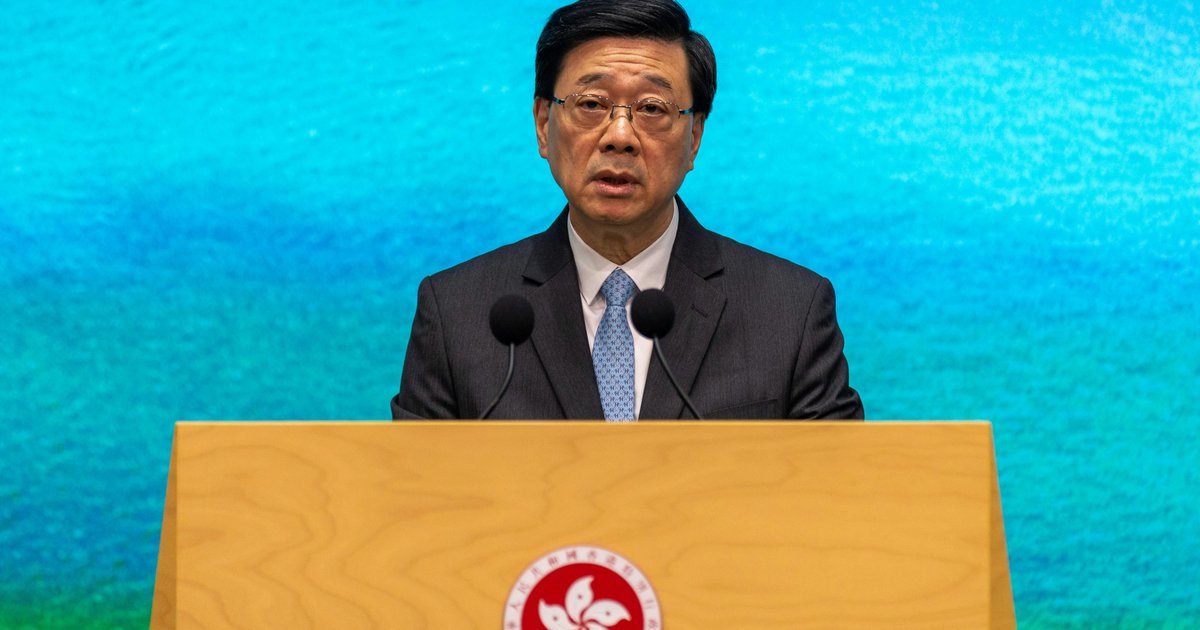
Chief Executive John Lee Ka-chiu announced Hong Kong’s first five-year plan on 16 September, ahead of the annual Policy Address, saying the two documents are linked but serve different time horizons, with the plan covering the next five years and the Policy Address the coming year. The plan sets out a strategy to strengthen “four centres and one highland”: Hong Kong’s roles as an international financial, shipping and trade centre, its status as an international aviation hub, and the push to build an international innovation and technology centre alongside a high-end talent hub.
Key Points
- The government said the plan has five main goals, including economic breakthroughs, stronger international influence, faster Northern Metropolis development, better livelihoods and deeper integration into national development
- In finance, the plan prioritises Hong Kong’s offshore renminbi hub, wealth and asset management, risk management, commodities trading and high value-added supply-chain services.
- Specific renminbi measures include studying wider use of renminbi for government payments and seeking inclusion of renminbi counters in Stock Connect for Hong Kong shares.
- The plan also calls for regular issuance of renminbi bonds of different tenors, normalised dim sum bond issuance, and stronger liquidity support for Hong Kong banks.
- On trade and development, the government said it will deepen links with ASEAN, the Middle East, Europe and the United States, explore Central Asia and Africa, and speed up the Northern Metropolis as an innovation engine.
- The financial chapter describes finance as Hong Kong’s biggest advantage and says the city must reinforce its international positioning through an open market that attracts capital, talent and financial firms. It proposes stronger offshore renminbi liquidity arrangements, continued use of the People’s Bank of China currency swap line, and research into measures to support two-way fund flows and bank liquidity in Hong Kong.
- The plan also seeks to broaden offshore renminbi products by expanding bond issuance, encouraging sovereign, institutional and corporate issuers to issue dim sum bonds in Hong Kong on a regular basis, and studying more fixed-income issuance and trading mechanisms to improve the offshore yield curve. Other proposals include widening the use of renminbi bonds as collateral, adding liquidity management and risk-management tools, and promoting renminbi pricing, settlement and investment functions in more areas.
- On capital markets, the government wants more listed companies to set up renminbi counters and to encourage mainland and international investors to use renminbi as an investment currency. It also said it would optimise stock and bond markets, improve securities market efficiency, strengthen the international bond market, attract more international financial institutions to set up regional headquarters or offices in Hong Kong, and facilitate company re-domiciliation to the city
- For wealth management, the plan says Hong Kong should provide better services for sovereign funds and family offices, improve regulation and market infrastructure, expand professional services, and refine tax arrangements for funds, single family offices and carried interest to attract more long-term international and mainland capital. It also proposes expanding alternative asset funds and real estate investment trusts to deepen the city’s asset and wealth management market.
- On risk management, the government said Hong Kong should deepen regulatory cooperation with mainland and overseas markets, use its strengths in insurance, reinsurance and capital markets, and develop layered risk-transfer mechanisms including insurance-linked securities, captive insurers and shipping-specific risk pools. It also wants to strengthen the risk-based capital regime for insurers and encourage insurance funds to invest in infrastructure projects in Hong Kong and the mainland.
- The plan further proposes building a commodities trading ecosystem, using gold as an entry point, by improving clearing, storage, supply and related infrastructure, while exploring renminbi-denominated gold and commodities markets and closer cooperation with mainland exchanges. It also says Hong Kong should leverage its role as an approved delivery point in the London Metal Exchange global warehouse network to drive more commodities trading, risk management and financing activity
- Beyond finance, the government said the Northern Metropolis will be developed as the main growth engine for higher education and innovation and technology, linking industrial parks, universities and research institutions into a deeper industry-academia-research ecosystem. It also said the city would continue to expand overseas economic and trade networks, pursue free trade and investment agreements, seek early accession to the Regional Comprehensive Economic Partnership, and strengthen support for mainland enterprises using Hong Kong as a platform to go global
Why It Matters
For Hong Kong readers, the plan gives a clearer policy roadmap for how the government intends to connect finance, trade, innovation and land development over the next five years, rather than treating them as separate agendas. Its emphasis on renminbi business, family offices, overseas trade links and the Northern Metropolis points to where future public resources, regulatory changes and business opportunities are most likely to be concentrated.