Baidu's Apollo Go Debuts Driverless Service at Hong Kong Airport Island
Bastillepost · 1 SOURCES1 day ago3 MIN
Summary
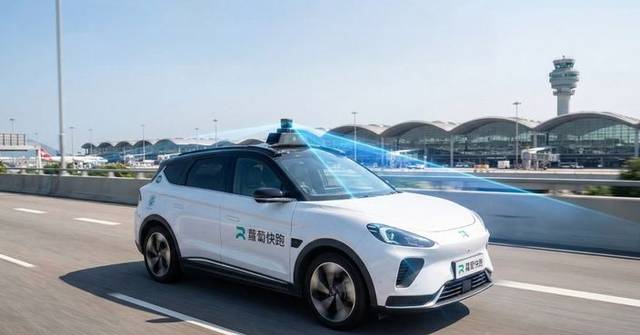
Hong Kong officially entered the autonomous vehicle era on July 23, 2026, when the Transport Department issued Baidu's Apollo Go the city's first driverless autonomous driving test license, with commercial operations beginning on Airport Island on July 27 . The permit represents a significant vote of confidence in Chinese autonomous driving technology, as Hong Kong's complex road environment—right-hand drive vehicles on left-side traffic, narrow lanes, and dense intersections—poses challenges far beyond those found in mainland Chinese cities . Baidu has accumulated over 240,000 kilometers of test mileage in Hong Kong, with the Transport Department confirming no anomalies occurred during testing . The company's global expansion continues apace, reporting 3.2 million fully driverless rides in the first quarter of 2026 alone, serving a cumulative 22 million passengers across 27 cities worldwide . Notably, Uber—a longtime rival to autonomous vehicle companies—partnered with Baidu to launch Apollo Go in Dubai on August 20, 2026, marking a symbolic reversal as Western mobility giants begin adopting Chinese technology .
Key Points
- Transport Department issued Baidu's Apollo Go Hong Kong's first fully driverless autonomous test license on July 23, 2026, with Airport Island service launching four days later
- Hong Kong's right-hand drive, left-side traffic system makes it one of the world's most challenging environments for autonomous vehicle testing
- Apollo Go accumulated over 240,000 km of test mileage in Hong Kong with zero reported incidents before receiving the safety-officer-free license
- Baidu reported 3.2 million fully driverless rides in Q1 2026, with cumulative services exceeding 22 million across 27 global cities
- Uber launched Apollo Go in Dubai on August 20, 2026, using Baidu's technology—the first time a Western mobility giant adopted Chinese autonomous driving systems
Why It Matters
Hong Kong's approval serves as a gateway for Chinese autonomous driving technology to penetrate right-hand drive markets across Southeast Asia, Europe, and beyond . If Apollo Go successfully passes Hong Kong's stringent regulatory framework, the operational playbook can be replicated in Singapore, London, and Tokyo—all markets currently observing this real-world test . The collaboration between Uber and Baidu signals a fundamental shift in the global autonomous vehicle landscape, with American companies now seeking partnerships with Chinese suppliers rather than competing against them .
Hong Kong's approval serves as a gateway for Chinese autonomous driving technology to penetrate right-hand drive markets across Southeast Asia, Europe, and beyond . If Apollo Go successfully passes Hong Kong's stringent regulatory framework, the operational playbook can be replicated in Singapore, London, and Tokyo—all markets currently observing this real-world test . The collaboration between Uber and Baidu signals a fundamental shift in the global autonomous vehicle landscape, with American companies now seeking partnerships with Chinese suppliers rather than competing against them .