Himalayan Flood Death Toll Surpasses 900 as Rescue Operations Enter Sixth Day
Thestandard · 3 SOURCESabout 1 hour ago2 MIN
Summary
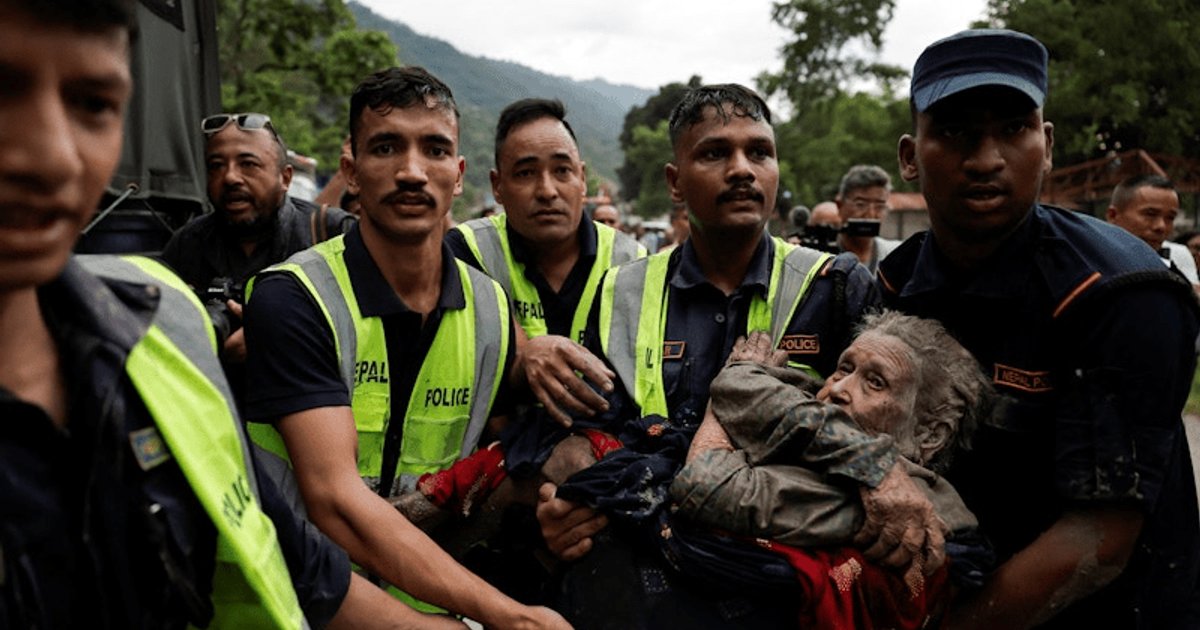
The devastating Himalayan floods that struck last week following a massive glacier collapse have claimed at least 919 lives, with nearly 4,800 people still missing across Nepal and Tibet as rescue operations entered their sixth day on Monday. Nepal's National Disaster Risk Reduction and Management Authority confirmed 903 deaths and 4,247 missing as of 9 a.m. local time, while Chinese officials in Tibet reported 16 dead and 546 missing in Gyirong County . Rescue teams are racing against time as rain continues to swell river levels and a newly formed lake threatens to overflow, forcing authorities to move survivors to higher ground .
Key Points
- Nepal's death toll has risen sharply to 903 with 4,247 missing, including 592 foreigners and 933 hydropower project workers trapped along the affected rivers
- Tibet reported 16 deaths and 546 missing in Gyirong County, with 261 foreign nationals from 23 countries among those unaccounted for, including 104 Nepalis, 49 Indians, 33 Latvians, 18 Americans and 15 Britons
- The disaster was triggered by Wednesday's glacier collapse which created a massive mudslide and formed a lake across the Nepal-China border that has begun overflowing into rivers
- The Red Cross estimates that more than 90,000 people have been affected by the disaster, which China has linked to climate change impacts
- Rescue operations have been suspended multiple times since Friday due to severe weather and concerns that the newly formed lake could trigger fresh catastrophic flooding
Why It Matters
This disaster represents the most severe cross-border catastrophe in recent years between China and Nepal, according to Chinese Foreign Minister Wang Yi, who described rescue operations as being of unprecedented difficulty and complexity . The incident underscores the growing threat of climate change-induced glacial disasters in the Himalayas, a region home to hundreds of millions of people in multiple countries. The involvement of international nationals, including workers at hydropower projects, highlights the economic and human cost of development in vulnerable mountainous regions, while the 17 bodies recovered in India's Uttar Pradesh state suggest the disaster's impact may extend further downstream .
This disaster represents the most severe cross-border catastrophe in recent years between China and Nepal, according to Chinese Foreign Minister Wang Yi, who described rescue operations as being of unprecedented difficulty and complexity . The incident underscores the growing threat of climate change-induced glacial disasters in the Himalayas, a region home to hundreds of millions of people in multiple countries. The involvement of international nationals, including workers at hydropower projects, highlights the economic and human cost of development in vulnerable mountainous regions, while the 17 bodies recovered in India's Uttar Pradesh state suggest the disaster's impact may extend further downstream .