Workers Become AI Auditors as 'AI Omnipotence' Myth Backfires in Hong Kong Offices
HK01 · 1 SOURCESabout 2 hours ago2 MIN
Summary
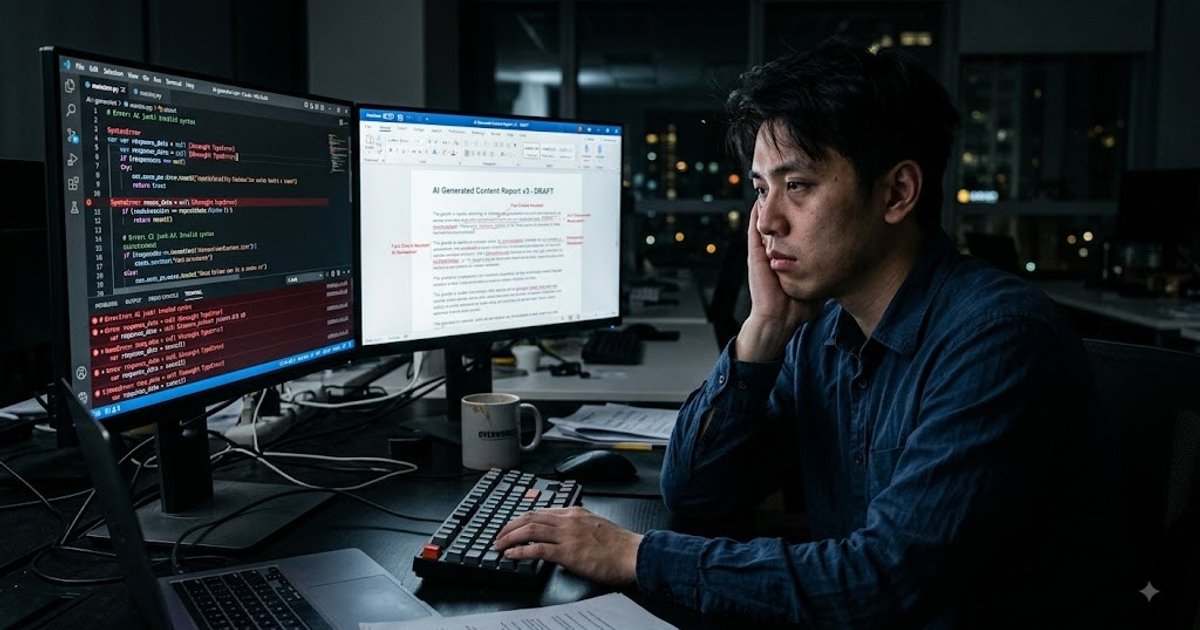
Three years after generative AI began permeating Hong Kong workplaces, a sobering reality has emerged: the technology has not delivered on its promise of freeing employees from tedious tasks. Instead, many workers find themselves trapped in new forms of digital drudgery, spending excessive hours verifying and correcting AI outputs. The phenomenon has sparked debate about whether AI adoption in Hong Kong has been reckless rather than revolutionary.
Key Points
- A 2026 Adaptavist survey found 65 percent of employees now miss working without AI, contradicting claims that automation would universally benefit workers
- Writing and research positions have transformed into "AI verification roles," with staff spending more time proofreading machine-generated errors than creating original content
- The British Writers' Association survey shows 86 percent of creators have experienced income reduction due to AI, while over 10 percent of Japanese manga artists and illustrators report similar declines
- McKinsey analysis indicates future workplace value has shifted from executing routine tasks to analyzing and interpreting AI outputs, requiring new digital literacy skills
- The US federal government has proposed legislation to protect individuals' voices and likenesses from unauthorized AI use, setting a potential template for Hong Kong
Why It Matters
The trend raises critical questions for Hong Kong as an international innovation hub: without regulatory frameworks and corporate accountability measures, AI efficiency gains may primarily enrich employers while workers shoulder mounting pressure and diminished professional development opportunities. The incoming US federal AI framework and UK creator protection proposals could pressure Hong Kong to develop comparable safeguards for its creative industries and white-collar workforce.
The trend raises critical questions for Hong Kong as an international innovation hub: without regulatory frameworks and corporate accountability measures, AI efficiency gains may primarily enrich employers while workers shoulder mounting pressure and diminished professional development opportunities. The incoming US federal AI framework and UK creator protection proposals could pressure Hong Kong to develop comparable safeguards for its creative industries and white-collar workforce.