Kam Fung modernises without losing its nostalgic identity
SingTao · 1 SOURCESabout 2 hours ago2 MIN
Summary
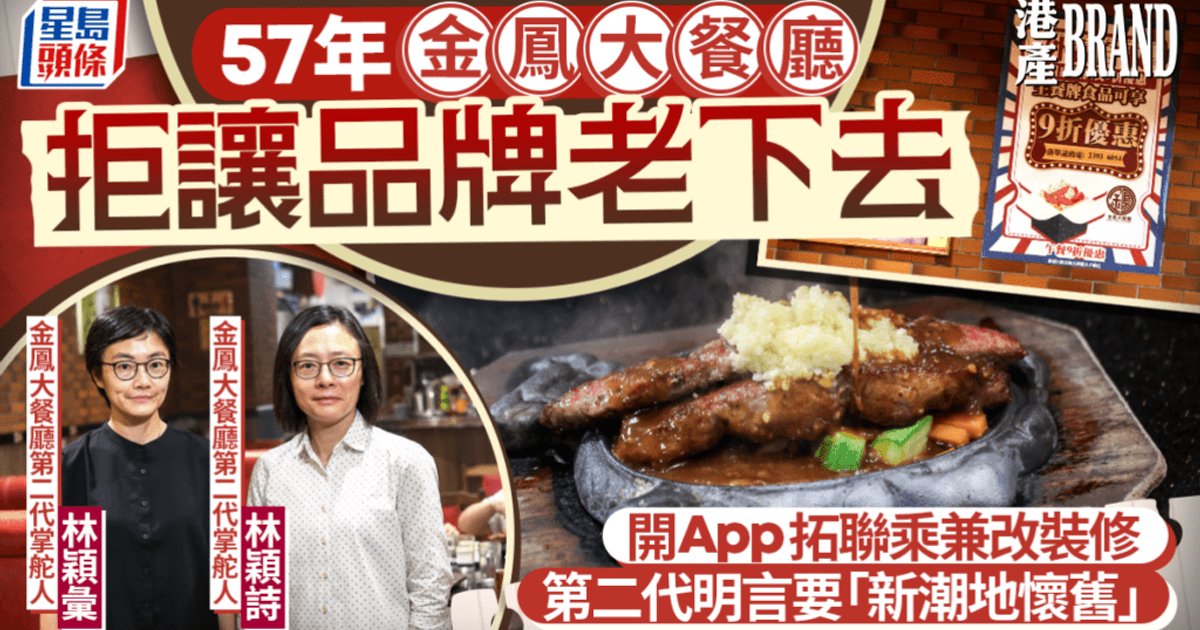
Kam Fung Restaurant, a 57-year-old Hong Kong-style steakhouse brand, says it has been updating its branches, products and customer touchpoints for more than a decade to appeal to younger diners. The second-generation operators, sisters Lam Wing-sze and Lam Wing-wui, said their continuing goal after taking over has been to stop the brand from “growing old”, while keeping the intergenerational memories that define the business.
Key Points
- Lam Wing-sze and Lam Wing-wui said Kam Fung began rejuvenating the brand more than 10 years ago, including opening its first mall branch at D2 Place in Lai Chi Kok to reach younger, culture-oriented customers .
- The D2 Place branch was designed around a “nostalgic, but in a trendy way” concept, reworking classic steakhouse features such as round wall lamps, red brick walls and button-tufted sofa seating in a modern style .
- Kam Fung’s newly opened Kornhill branch this year reduced the heavy use of red, adding wood, maroon leather chairs and mirrors; Lam Wing-sze said branches need not look identical as long as customers still recognise the brand .
- In the past two years, the restaurant has worked with Hong Kong Baptist University marketing students, a local illustrator, the neon preservation group Tetra Neon Exchange, and a hotel rooftop sea-view bar on projects tied to Kowloon culture and Hong Kong food heritage .
- Kam Fung launched a membership app to let customers take queue tickets remotely from home and is studying in-app online ordering, but Lam Wing-sze said integration with the point-of-sale, kitchen and queueing systems is complex and will not be rushed .
Why It Matters
Kam Fung’s approach shows how a long-running Hong Kong food brand is trying to stay relevant by changing design, service and digital access without abandoning the dining rituals and staff relationships that regulars value . It also points to how older local restaurant brands are adapting to a customer mix that now includes more young locals, tourists and social-media-driven diners with different service expectations .