Esprit bets on Hong Kong-made knitwear revival
SingTao · 1 SOURCESabout 1 hour ago5 MIN
Summary
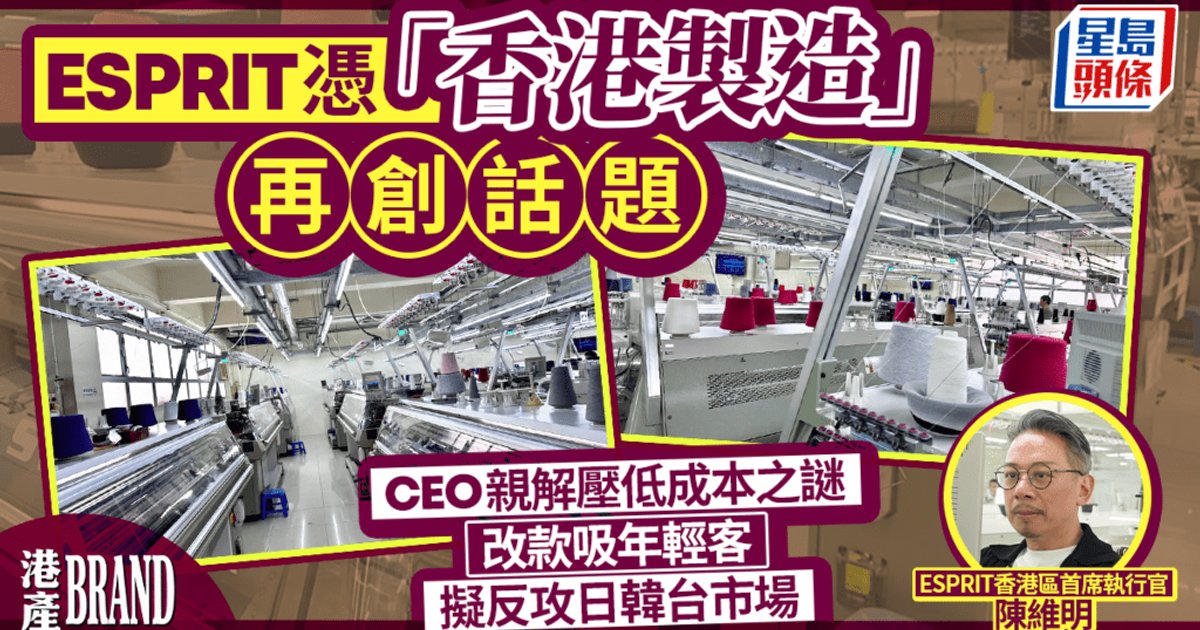
Esprit, once one of the best-known names in casual fashion, marked the first anniversary of its Hong Kong retail return after reopening in the city last November. The latest attention has centred on a HK$390 seamless sweater made in Hong Kong, which the company says has become a strong online seller. Wilson Chan Wai-ming (陳維明), who secured Esprit's exclusive operating rights in Hong Kong and became its Hong Kong chief executive last year, said automation has reduced the typical local cost disadvantage versus mainland production to about 25% to 30%. He said the company wants more Hong Kong-made products in local stores and is preparing to take the knitwear line into Japan first, followed by South Korea and Taiwan
Key Points
- Esprit's Kwun Tong studio on Shing Yip Street spans about 10,000 square feet, with monthly rent of HK$200,000 and electricity costs higher than on the mainland
- The workshop uses 42 Japanese-made 18-gauge computerized flat knitting machines that produce whole garments automatically, cutting overall labour needs by about one-third
- A basic seamless sweater takes about 63 minutes to knit and more than 70 minutes including finishing, while more complex styles can take roughly twice as long
- Esprit said it buys Austrian imported viscose eco-yarn with FSC certification and zero-carbon claims, but lowers material costs by 30% to 40% through mill inventory yarn
- The company now sells seven Hong Kong-made knitwear styles, with five still in trial sales, and can start with orders as small as 30 pieces before replenishing within 10 days
Why It Matters
For Hong Kong retailers and manufacturers, Esprit's approach offers a test of whether automation and small-batch rapid replenishment can make local production commercially viable despite higher rent, power and wages. For consumers, the strategy also shows how a legacy brand is trying to rebuild repeat business through quality, faster turnaround and a younger product mix rather than relying only on nostalgia