Taklamakan Desert Yields Major Groundwater Discovery of Ancient River Channels
AM730 · 2 SOURCESabout 1 hour ago2 MIN
Summary
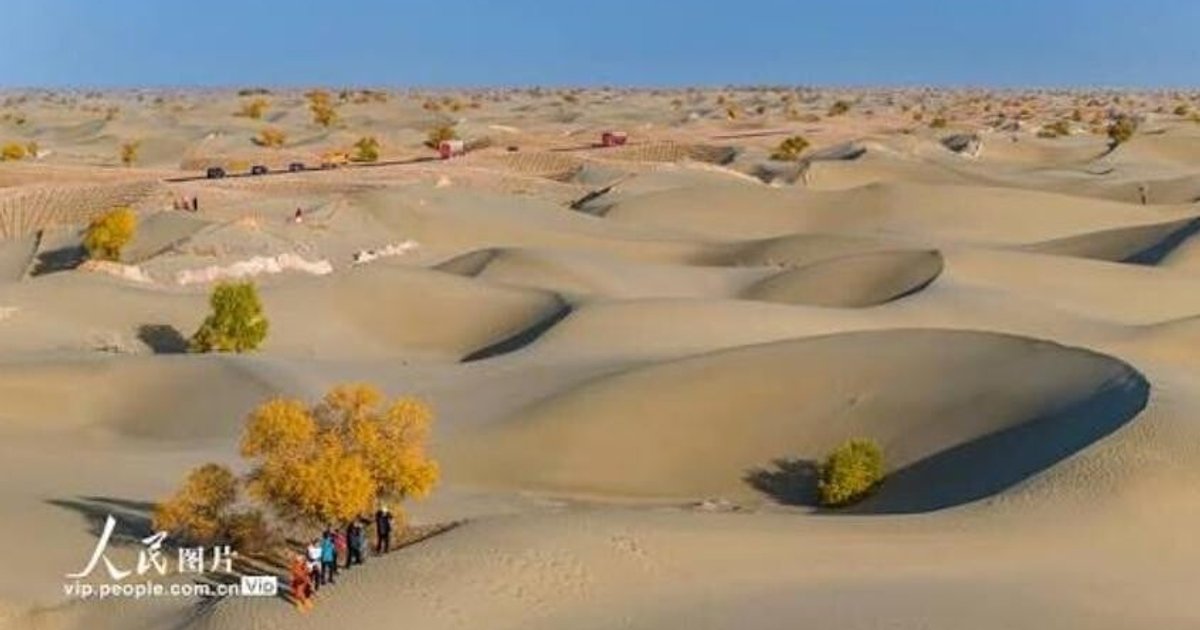
A team from the Xinjiang Geological Bureau has achieved a major scientific breakthrough by discovering ancient underground river channels in the Taklamakan Desert containing fresh, slightly brackish, and saline water simultaneously . This marks the first time researchers have found fresh water in this extreme environment, challenging conventional understanding that desert aquifers only hold unusable saline deposits . The discovery was made possible through pioneering aerial survey technology combined with comprehensive ground verification methods, opening new possibilities for water resource management in arid regions .
Key Points
- Ancient river channels with fresh, slightly brackish, and saline water were identified in the Mazhatage Mountain southern region and Andier Township in Minfeng County, located along the desert's southern rim .
- The research team deployed airborne transient electromagnetic surveying for the first time at this scale, complemented by remote sensing analysis, ground geophysical surveys, drilling operations, and hydrochemical-isotope testing .
- The study established the "satellite-air-ground-well" groundwater exploration system, successfully mapping hydrological conditions down to 500 meters depth .
- Laboratory analysis revealed that crops including chufa, suaeda, and common reed demonstrate strong tolerance to bitter-salty water conditions .
- Researchers developed an innovative irrigation model using fresh water for seedling germination followed by graduated salty water application to boost utilization of poor-quality water resources .
Why It Matters
This discovery fundamentally reshapes scientific understanding of desert hydrology, suggesting that extreme arid environments may harbour more complex water systems than previously believed . The replicable technical framework developed through this research could guide groundwater exploration in other drought-affected regions worldwide, potentially offering new water security strategies as climate change intensifies desertification pressures .
This discovery fundamentally reshapes scientific understanding of desert hydrology, suggesting that extreme arid environments may harbour more complex water systems than previously believed . The replicable technical framework developed through this research could guide groundwater exploration in other drought-affected regions worldwide, potentially offering new water security strategies as climate change intensifies desertification pressures .