Elite Korean Universities Launch Dating Courses With Strict Budget Rules
SingTao · 1 SOURCESabout 1 hour ago2 MIN
Summary
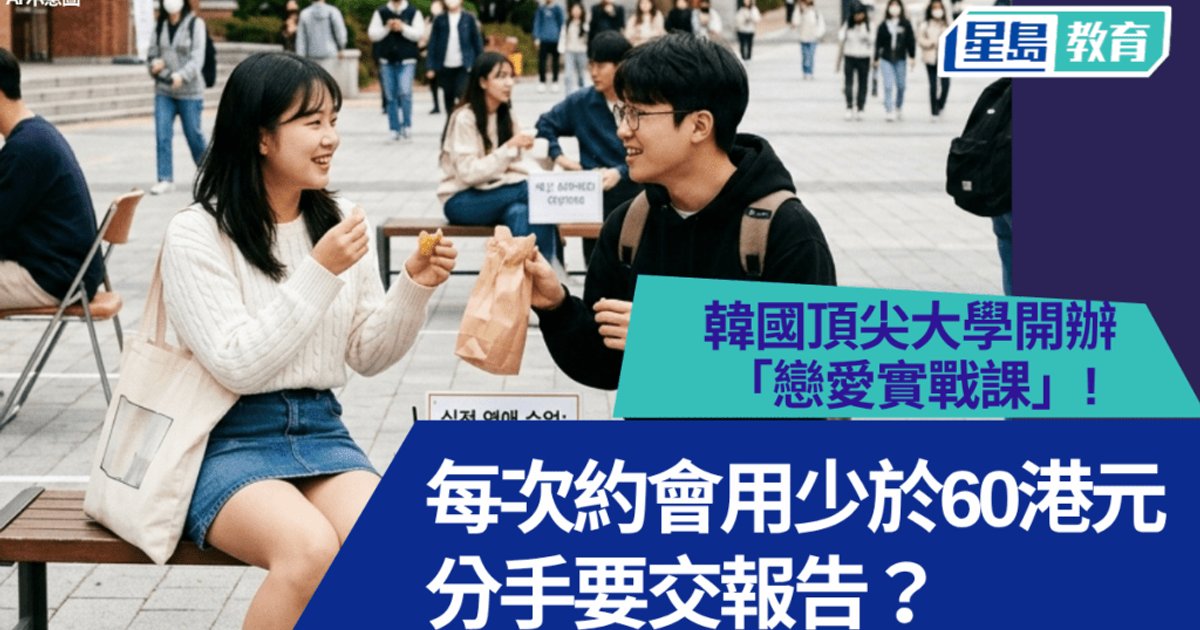
Elite South Korean universities have introduced groundbreaking relationship education courses that transform dating into a structured academic subject. Dongguk University and Kyung Hee University are leading this pedagogical innovation by requiring students to complete practical dating assignments as part of their curriculum. The courses impose strict financial constraints, limiting each date to approximately 10,000 won (about 58 Hong Kong dollars), to ensure students focus on emotional connection rather than material display.
Key Points
- Dongguk University's "Marriage and Family" course requires students to date three classmates for one month each, with pairings arranged by the professor based on submitted dating intention lists .
- Each date carries a strict budget cap of 10,000 won (roughly 58 HKD), prohibiting expensive restaurant visits and restricting activities to coffee or campus walks .
- Kyung Hee University's "Love and Marriage" course mandates practical dating experience, with students required to submit reflection reports analyzing conflicts, jealousy, and relationship endings .
- The courses aim to address the gap between modern young people's heavy social media presence and their actual face-to-face conflict resolution abilities .
- This educational trend originated several years ago and has maintained its popularity among South Korean university students .
Why It Matters
These relationship education courses represent a significant shift in higher education philosophy, treating emotional intelligence and interpersonal skills as essential academic competencies rather than optional life skills. The strict budget constraints reflect a deliberate pedagogical choice to strip away material distractions and force students to confront the harder work of genuine communication. For Hong Kong readers accustomed to a purely career-focused university experience, this South Korean innovation raises important questions about whether education should prepare students not just for jobs, but for meaningful human connections.
These relationship education courses represent a significant shift in higher education philosophy, treating emotional intelligence and interpersonal skills as essential academic competencies rather than optional life skills. The strict budget constraints reflect a deliberate pedagogical choice to strip away material distractions and force students to confront the harder work of genuine communication. For Hong Kong readers accustomed to a purely career-focused university experience, this South Korean innovation raises important questions about whether education should prepare students not just for jobs, but for meaningful human connections.