Singapore Expands Public Transport Rules to Buses; Loud Videos and Feet on Seats Now Illegal
SingTao · 2 SOURCESabout 2 hours ago2 MIN
Summary
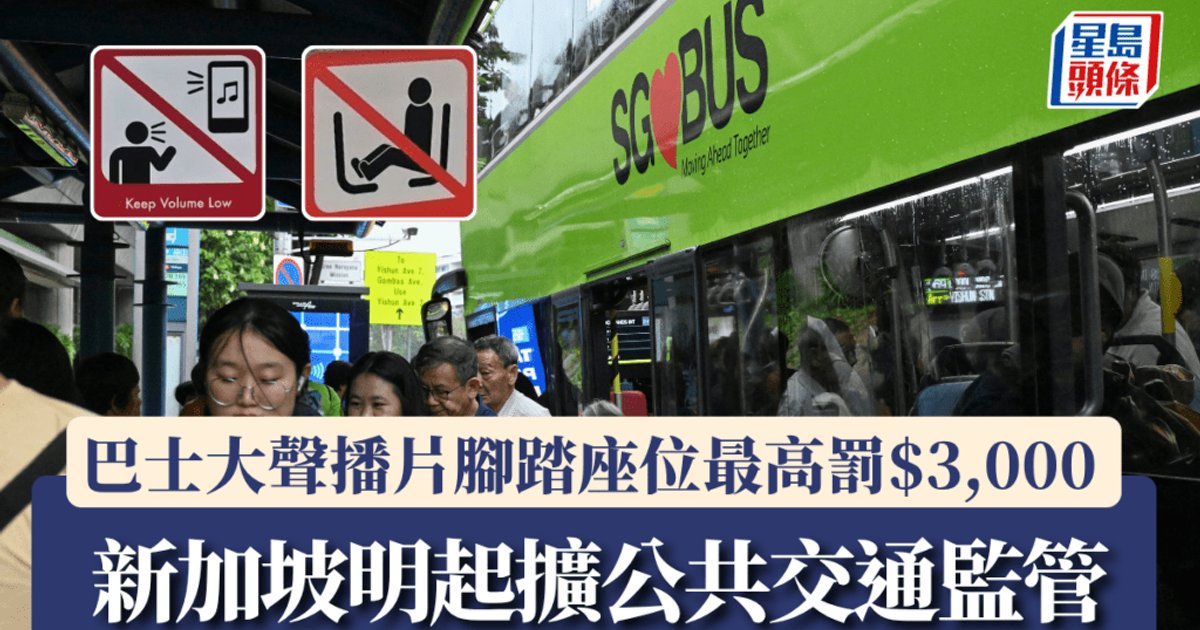
Singapore is set to expand its anti-nuisance regulations from MRT trains and stations to public buses and interchange terminals starting Wednesday (September 23), according to announcements from the Land Transport Authority (LTA). The new rules will prohibit various disruptive behaviors including playing music or videos loudly on mobile devices, placing feet on seats, consuming food or beverages, and littering. First-time offenders face a maximum fine of 500 Singapore dollars (approximately 3,000 Hong Kong dollars), while more serious violations such as obstructing passenger flow at interchange hubs, endangering public safety, or relieving oneself in buses or stations carry penalties of up to 5,000 Singapore dollars (about 31,000 Hong Kong dollars).
Key Points
- Singapore's LTA announced on Monday (September 21) that the anti-nuisance rules will be extended to buses and interchange stations starting Wednesday
- Loud music or video playback, feet on seats, eating, drinking, and littering on buses will constitute violations with maximum fines of 500 Singapore dollars
- Serious offenses such as blocking passengers at interchange hubs, endangering safety, or urinating in facilities carry maximum fines of 5,000 Singapore dollars
- Authorized personnel including ticket inspectors and station staff can issue violation notices; bus captains will not receive enforcement authority to prioritize driving safety
- Singapore citizens have welcomed the new regulations but raised concerns about enforcement, suggesting the establishment of public reporting channels
Why It Matters
The expansion of Singapore's transport rules comes as similar discussions gain traction across Asia, with Guangzhou also planning legislation to prohibit electronic devices from producing audible sound on public transport. While the regulatory approach represents a growing regional trend toward codifying transit etiquette, enforcement challenges remain significant given limited on-board inspection resources, potentially limiting the rules' effectiveness in practice .
The expansion of Singapore's transport rules comes as similar discussions gain traction across Asia, with Guangzhou also planning legislation to prohibit electronic devices from producing audible sound on public transport. While the regulatory approach represents a growing regional trend toward codifying transit etiquette, enforcement challenges remain significant given limited on-board inspection resources, potentially limiting the rules' effectiveness in practice .