Debate intensifies over relaunch of Hong Kong's Rent-to-Buy housing scheme ahead of Policy Address
SingTao · 2 SOURCESabout 3 hours ago5 MIN
Summary
The 2026 Policy Address, set to be announced on September 16, is poised to address the controversial relaunch of Hong Kong's Rent-to-Buy scheme (租者置其屋計劃), originally implemented between 1998 and 2005 across 39 designated public housing estates. The Housing Bureau has indicated an open but cautious stance, with Director Ho Wing-yim stating that in-depth research is underway . Amid these deliberations, UBS analysts have forecast that the government may relaunch the scheme and increase the proportion of for-sale public housing to 50% alongside rental units .
Key Points
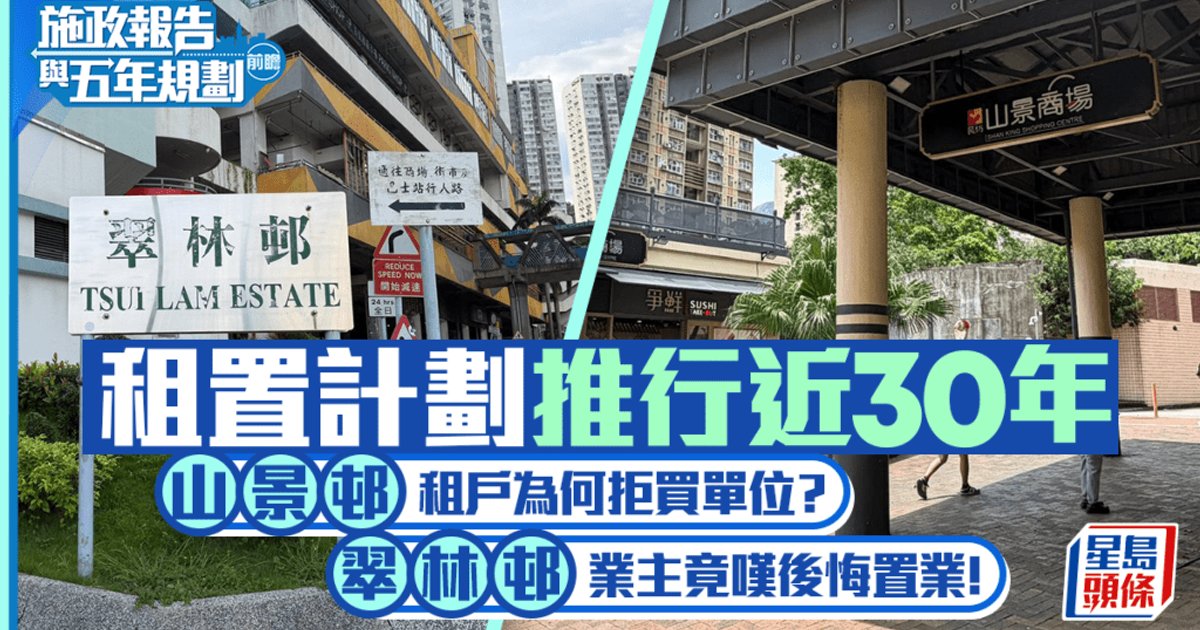
- Shan King Estate in Tuen Mun holds the lowest sales rate among all 39 designated estates at just 58%, with residents citing financial hardship, aging facilities, and prohibitive maintenance costs as primary barriers .
- Homeowners across multiple estates report regret over purchases: a Tsui Lam Estate resident's daughter paid over HK$600,000 for a sub-300 sq ft unit in 2022, only to face a major renovation scandal; a Po Lam Estate owner wishes she had remained a tenant .
- District Councilor Tsui Fan recommends pricing future units at 20-25% of market value, capping monthly mortgage payments at 25% of average household income .
- UBS projects residential prices have risen 10% year-to-date in 2026, reducing the likelihood of additional stimulus measures like the Home Purchase Scheme or MPF withdrawal relaxation .
- Legislative Council member Leung Man-kwong proposes transfer arrangements for non-buying tenants and unified ownership to address mixed-tenure management disputes .
Why It Matters
The relaunch decision carries profound implications for Hong Kong's housing policy and fiscal health. UBS warns that both a relaunched scheme and the 50:50 housing ratio could improve government revenue but would squeeze developers focused on entry-level private homes . With public housing estates aging 30-40 years and repair funds of HK$14,000 per unit proving inadequate, the government faces a delicate balance between promoting home ownership and avoiding burdening low-income residents with unsustainable maintenance obligations .
The relaunch decision carries profound implications for Hong Kong's housing policy and fiscal health. UBS warns that both a relaunched scheme and the 50:50 housing ratio could improve government revenue but would squeeze developers focused on entry-level private homes . With public housing estates aging 30-40 years and repair funds of HK$14,000 per unit proving inadequate, the government faces a delicate balance between promoting home ownership and avoiding burdening low-income residents with unsustainable maintenance obligations .