Delayed Tobacco Packaging Rules Risk Flooding Market with Illicit Cigarettes
HK01 · 1 SOURCESabout 3 hours ago2 MIN
Summary
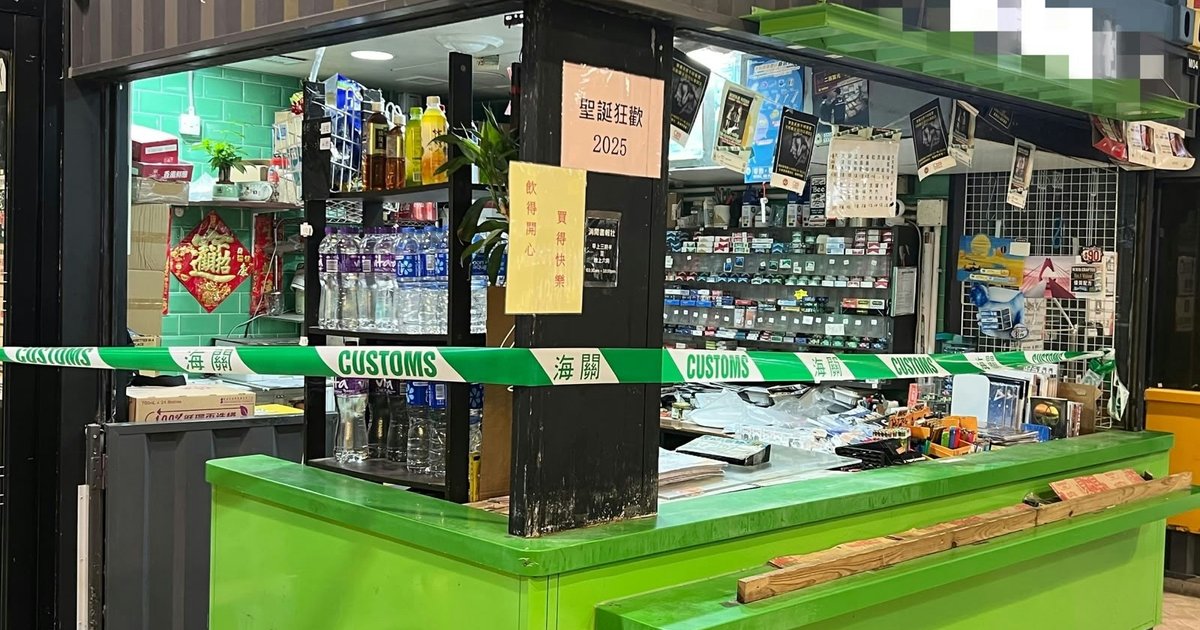
Hong Kong customs authorities have launched multiple operations against illicit cigarette trafficking in recent weeks, including raids on a Kwun Tong warehouse and seizures at the Shenzhen Bay Control Point estimated at over HK$50 million. Despite these efforts, illegal cigarettes continue to flood the market, with merchants selling contraband even at traditional Chinese medicine clinics. A public policy analyst warns that a four-month delay in gazetting standardized tobacco packaging legislation could leave retailers with dangerously short clearance windows, potentially driving consumers to black market sources and compounding enforcement challenges.
Key Points
- In July 2026, Hong Kong Customs conducted a two-week operation across 11 retail locations, arresting 5 men and 6 women and seizing 130,000 unmarked cigarettes worth HK$540,000
- The government amended the Dutiable Commodities Ordinance in September 2025, requiring cigarettes sold below tobacco tax to prove taxation or face seizure as unmarked products
- Illicit cigarettes are now being sold at unexpected venues including traditional Chinese medicine clinics, flower shops, and hairy crab stores, expanding beyond traditional spots like kiosks
- The gazettal of standardized packaging subsidiary legislation has been delayed by four months, yet the full implementation date of December 1, 2027 remains unchanged
- Retailers may have only one to two months to clear old-stock inventory after new packaging arrives, creating a risk of supply gaps that could redirect consumers to illegal sources
Why It Matters
The surge in illicit cigarette sales through diverse retail channels underscores the limitations of current enforcement strategies, which focus primarily on traditional tobacco vendors. The pending standardized packaging and duty-paid labeling measures represent the cornerstone of the government's "Ten Tobacco Control Measures," yet a rushed implementation timeline could paradoxically worsen the very problem these policies aim to solve by creating market disruptions that drive consumers toward black market alternatives .
The surge in illicit cigarette sales through diverse retail channels underscores the limitations of current enforcement strategies, which focus primarily on traditional tobacco vendors. The pending standardized packaging and duty-paid labeling measures represent the cornerstone of the government's "Ten Tobacco Control Measures," yet a rushed implementation timeline could paradoxically worsen the very problem these policies aim to solve by creating market disruptions that drive consumers toward black market alternatives .