Trump Sleep Claim Clouds 9/11 25th Anniversary Ceremony
HK01 · 2 SOURCES1 day ago11 MIN
Summary
At a Pentagon memorial ceremony on September 11 marking the 25th anniversary of the 2001 attacks, US President Donald Trump was filmed several times with his eyes closed, head lowered and an exhausted expression, prompting accusations online that he had dozed off during the event. The White House rejected that interpretation the next day, saying Trump had been listening intently and paying solemn tribute to those killed in the attacks and the rescue personnel. The ceremony came as the anniversary also prompted wider reflection on the human, financial and political costs of the United States’ post-9/11 military campaigns, especially in Afghanistan and Iraq.
Key Points
- Trump, now 80, attended the Pentagon’s 25th-anniversary ceremony on Friday, September 11, where cameras repeatedly captured him with closed eyes and his head dipping forward
- The White House said on Saturday that claims Trump was sleeping were false, insisting he was solemnly commemorating victims and heroic first responders
- Trump attended only the Pentagon event and delivered remarks there, while Vice President J.D. Vance and four former presidents including Joe Biden attended the ceremony at the World Trade Center site in New York
- During the Pentagon memorial, the names of 184 victims were read aloud with bells between each name, and Trump was also seen closing his eyes during Defense Secretary Pete Hegseth’s speech
- In his speech, Trump said Americans saw the nation’s true spirit on September 11, adding: “We will never forget,” and “We have no choice but victory.”
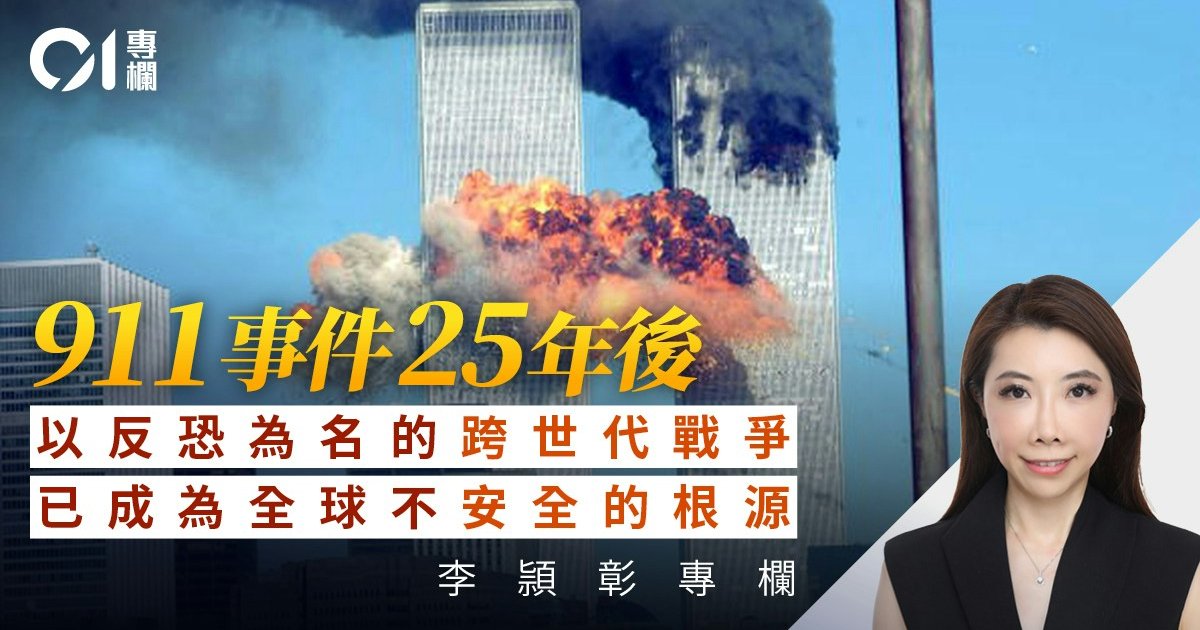
- The 9/11 attacks took place on September 11, 2001, when hijackers seized four civilian airliners in suicide attacks on US targets, killing about 3,000 people. Two planes struck the Twin Towers of the World Trade Center, one hit part of the Pentagon in Arlington County, Virginia, and another crashed in rural Pennsylvania. In a separate commentary published for the 25th anniversary, lawyer Li Ying-chang (李頴彰) argued that remembrance should be accompanied by reflection on whether self-defence had expanded into a generations-long military project
- Li wrote that after 9/11, the United States made global counterterrorism its central policy and launched or intervened in wars in Afghanistan and Iraq, while also using drones, special operations, intelligence cooperation, sanctions and overseas bases in Syria, Yemen and Pakistan. Citing Brown University’s Costs of War project, he said post-9/11 wars in Iraq, Afghanistan, Syria, Yemen and Pakistan had caused more than 940,000 direct deaths from war violence since 2001, while total deaths including disease, hunger, collapsed healthcare, destroyed infrastructure and displacement reached at least 4.5 million to 4.7 million. He also cited Brown University’s estimate that related US war spending over the first 20 years after 9/11 reached about US$8 trillion
- Li argued that Afghanistan exposed the limits of the strategy: the US overthrew the Taliban, spent heavily on rebuilding institutions and training forces, but withdrew hastily in 2021 and saw the Taliban quickly return to power. He said Iraq offered another example, with an invasion justified by claims about weapons of mass destruction that were later shown to lack sufficient factual basis, reshaping the country’s politics and society while fuelling sectarian conflict and the rise of extremist groups. He further contrasted overseas military spending with domestic strains in the US, citing US Centers for Disease Control and Prevention data showing more than 48,000 gun-related deaths in 2022, or about 132 a day, and a 2024 Kaiser Family Foundation analysis saying 14.3% of recent mothers aged 18 to 35 carried more than US$250 in medical debt
Why It Matters
For Hong Kong readers, the episode shows how even solemn state commemorations can quickly become political controversies shaped by images, messaging and competing narratives. The 25th anniversary also revives questions about how US security decisions after 9/11 reshaped global conflicts, public spending priorities and international order in ways that still affect markets, diplomacy and geopolitical risk watched closely in Asia.