Mainland Brands Retreat: Ningji, Fufuland Shutter All HK Stores as Mixue Closes Fifth Outlet
SingTao · 2 SOURCESabout 2 hours ago6 MIN
Summary
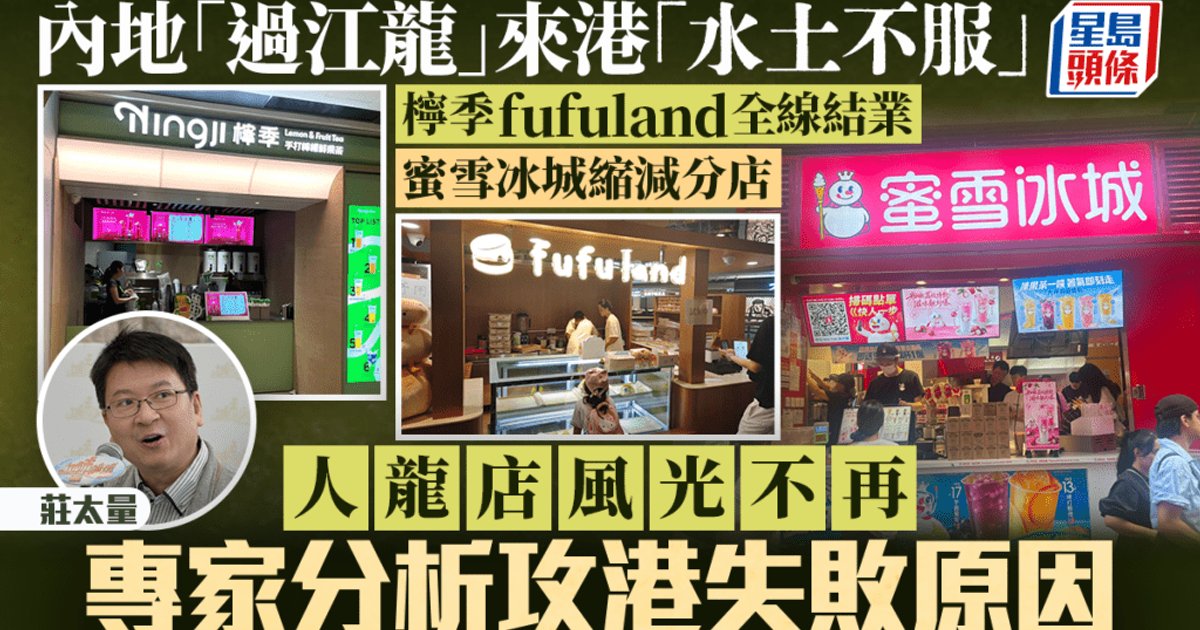
A wave of mainland Chinese restaurant brands is retreating from Hong Kong as high operating costs clash with business models designed for the mainland market. Hand-pressed lemon tea chain Ningji and souffle pancake chain Fufuland, both of which launched with aggressive expansion plans in 2024, have closed all their Hong Kong stores. Budget tea giant Mixue Bingcheng, which enjoyed explosive popularity upon its 2022 debut in Mong Kok, has shut five outlets over the past year. Experts warn that unless mainland brands adapt their service and pricing strategies to local conditions, the trend of retreat is likely to continue.
Key Points
- Ningji launched 10 stores simultaneously in 2024 but closed its last Mong Kok outlet in June 2025, exiting Hong Kong completely .
- Fufuland peaked at 11 stores in 2024 but shut its final Tai Wai location in July, citing "equipment upgrades" .
- Mixue Bingcheng, after expanding to nine stores in its first year, has now lost five locations, with the latest being a Mong Kok street-level shop that paid approximately HK$190,000 monthly rent .
- Yao Yao Sour Fish and Xita Grandma both operated for under four years before withdrawing entirely, with Xita's将军澳 branch even facing court-ordered auction .
- Professor Zhuang Tailiang of the Lau Kit Tak Global Economics and Finance Research Institute identified Hong Kong's high rents and inability to replicate mainland service standards as primary failure factors .
- Tea Rescue Planet, once operating seven stores, has shrunk to five outlets despite offering drinks for as low as HK$13 through promotions .
- In contrast, Bawang Cha Ji has expanded from 15 to 22 stores and expects to reach 24 by year-end, while Luckin Coffee now operates over 50 Hong Kong locations .
Why It Matters
The exodus of mainland food and beverage brands underscores the challenges of transplanting mainland business models to Hong Kong's high-cost environment, particularly when service standards and price competitiveness cannot match what customers experience across the border. As consumers increasingly shop in Shenzhen for affordable treats, successful mainland brands in Hong Kong will likely be those that either secure prime locations in less accessible districts or differentiate through premium offerings that justify local price points .
The exodus of mainland food and beverage brands underscores the challenges of transplanting mainland business models to Hong Kong's high-cost environment, particularly when service standards and price competitiveness cannot match what customers experience across the border. As consumers increasingly shop in Shenzhen for affordable treats, successful mainland brands in Hong Kong will likely be those that either secure prime locations in less accessible districts or differentiate through premium offerings that justify local price points .