Mental Health Expert Advises Strategies for Stress-Free Family Reunions
HK01 · 1 SOURCESabout 2 hours ago7 MIN
Summary
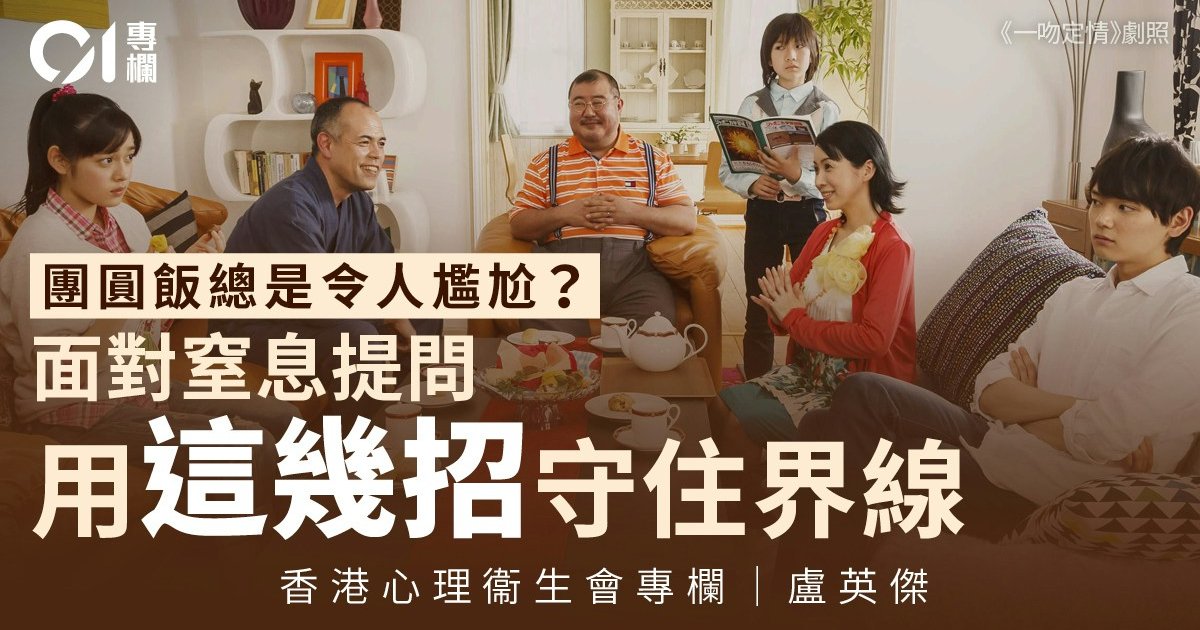
The Hong Kong Mental Health Association (香港心理衞生會) has issued guidance on managing the emotional stress that often accompanies family reunion dinners during festivals like the Mid-Autumn Festival. The article, published on September 30, 2026, describes common scenarios where family gatherings become sources of anxiety rather than warmth—family members arriving late to avoid interaction, staring at phone screens, eating in silence, or converting every conversation into an argument. The piece applies several psychological frameworks, including Family Systems Theory, Structural Family Theory, Attachment Theory, and Bowen's Differentiation of Self concept to explain these dynamics. It concludes with three practical strategies for readers to navigate difficult family dinners while maintaining their emotional well-being.
Key Points
- Family Systems Theory posits that families function as interconnected systems where members unconsciously assume fixed roles—one may become the peacemaker while another becomes the scapegoat
- Structural Family Theory identifies two problematic boundary patterns: enmeshed families where members are overly entangled and any disagreement is seen as betrayal, and disengaged families where emotional distance makes basic care feel awkward
- Attachment Theory explains that if expressing feelings in childhood led to criticism or dismissal, adults develop a defensive alertness when returning to the family dinner table, triggering automatic self-protection responses
- Bowen's concept of Differentiation of Self measures one's ability to maintain personal thoughts and emotions while staying emotionally connected—low differentiation leads to either excessive conflict involvement or complete emotional withdrawal
- Three recommended strategies include setting psychological boundaries before the meal (such as limiting duration to two hours), deliberately avoiding contentious topics, and practicing a 3 to 10 second pause before responding to hurtful comments
Why It Matters
For Hong Kong residents, where multigenerational living and frequent family obligations remain culturally significant, the annual cycle of reunion dinners during festivals can accumulate unresolved tensions that affect mental health year-round. Understanding that these difficult feelings are rooted in established family system patterns—rather than personal weakness or generational conflict—can help individuals approach gatherings with greater self-compassion and reduce the psychological toll of what should be celebratory occasions .
For Hong Kong residents, where multigenerational living and frequent family obligations remain culturally significant, the annual cycle of reunion dinners during festivals can accumulate unresolved tensions that affect mental health year-round. Understanding that these difficult feelings are rooted in established family system patterns—rather than personal weakness or generational conflict—can help individuals approach gatherings with greater self-compassion and reduce the psychological toll of what should be celebratory occasions .