Lake Burst Risk Eases at China-Nepal Flood Disaster Site
Bbc · 2 SOURCESabout 2 hours ago2 MIN
Summary
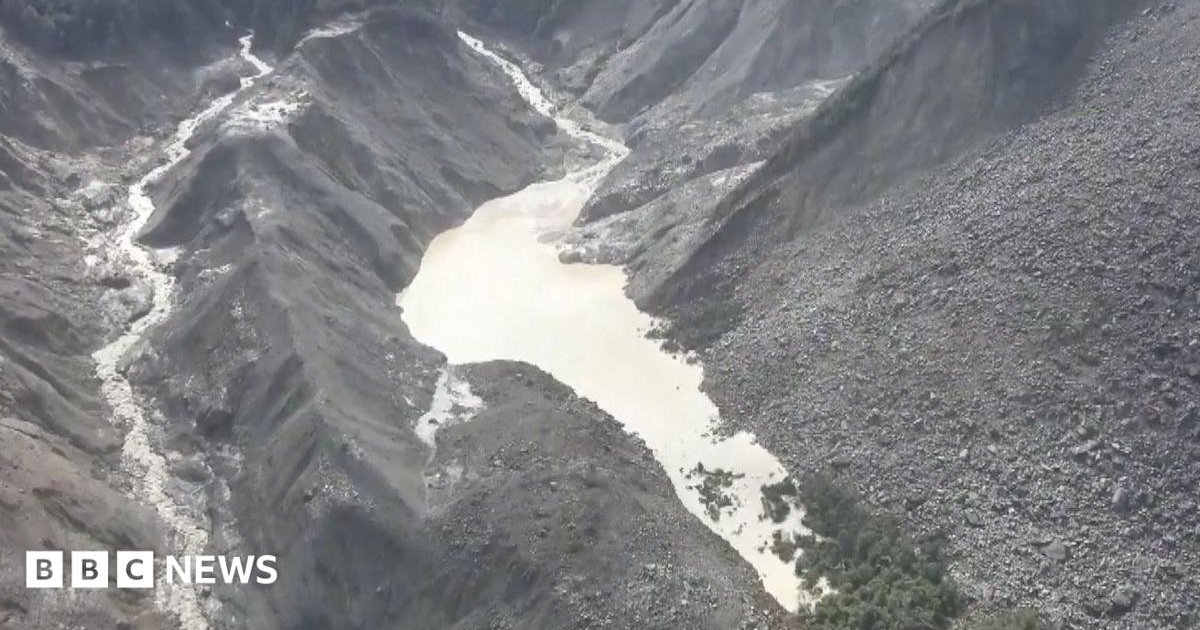
China's Ministry of Water Resources reported Saturday that the barrier lake formed after a massive glacier collapse near the China-Nepal border is shrinking, easing concerns about a potential second flood disaster. Satellite imagery from Thursday to Saturday morning shows the lake at Purepu Tsangpo river decreasing in size, with water gradually flowing through the debris barrier. The development comes after authorities warned of a "high risk" of the lake bursting just days earlier.
Key Points
- Satellite images reveal the lake surface area measured 99,000 square metres on Saturday morning, equivalent to about 14 football fields combined
- The lake shrank by 21,000 square metres compared to Thursday measurements, as water flows through the debris barrier
- An estimated 2.5 million cubic metres of water had accumulated in the barrier lake by Friday morning
- The lake formed at the confluence of the Chhochen Khola and Purepu Tsangpo rivers, downstream from where the glacier collapsed near Langtang Lirung peak
- A 15-member team from China Anneng was deployed Friday with reconnaissance drones and mobile surveillance equipment to monitor conditions
- Rescue operations were temporarily halted Friday when the lake began overflowing, before further assessment deemed risks manageable
- Emergency services remained stranded at a village approximately 7 kilometres from Gyirong Port, the major crossing linking Tibet and Nepal
Why It Matters
This disaster strikes one of the most critical trade and pilgrimage routes between China and Nepal, potentially disrupting regional commerce and travel for months . Scientists warn that the collapse of a mountain glacier into a river represents a growing hazard as Himalayan ice sheets thin due to climate change, making similar events more likely in the future .
This disaster strikes one of the most critical trade and pilgrimage routes between China and Nepal, potentially disrupting regional commerce and travel for months . Scientists warn that the collapse of a mountain glacier into a river represents a growing hazard as Himalayan ice sheets thin due to climate change, making similar events more likely in the future .